Fencing Dublin, Wicklow and Kildare.
New fencing and gates across Dublin, Wicklow and Kildare. Closeboard, panel, picket and composite fencing on posts concreted to depth, with gravel boards where the run meets the ground and galvanised hardware on every gate. Old fencing taken out and away.
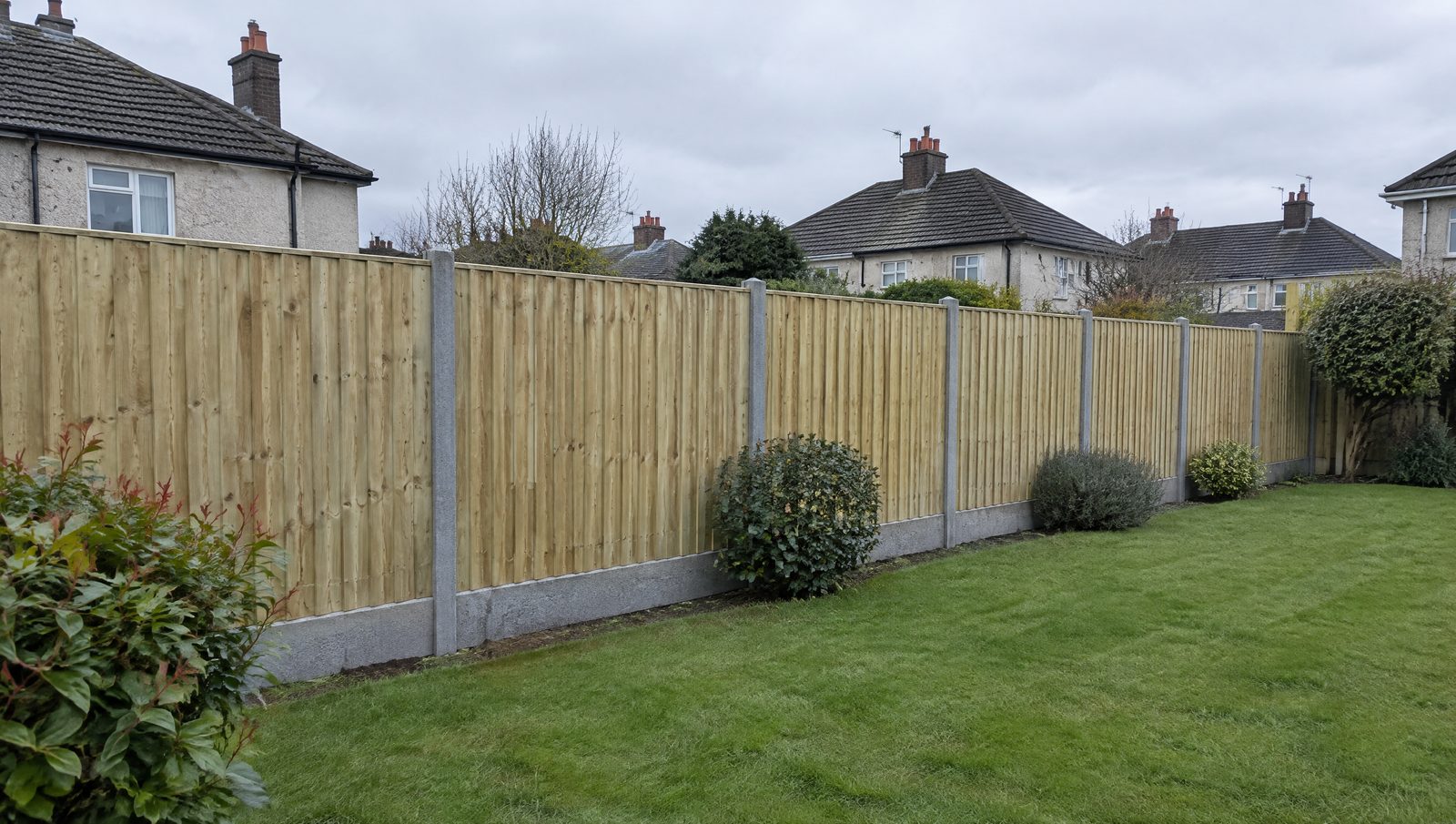
A fence is only as good as its posts. Panels blow out when the posts they hang on have rotted at the ground.
We install fencing and gates for houses across the three counties: boundary fences, side and rear fences, front picket fences, and side, garden and driveway gates in timber, composite and metal.
We walk the boundary with a tape and a string line, pressure-test any existing posts, agree the style and height, and send a written quote within 48 hours.
Fencing pages.
Timber, composite and metal fencing, plus gates.
Composite fencing Dublin
See the details
Garden and side gates Dublin
See the details
Fence repairs Dublin
See the detailsFencing Kildare
See the detailsFencing Wicklow
See the detailsWhat a new fence costs in Ireland
See the detailsFence height and planning in Ireland
See the detailsChoosing a fence.
Closeboard, also called featheredge, is the strongest timber fence: vertical boards nailed to arris rails between posts, built on site so it follows the ground and there are no panel gaps. It suits an exposed boundary and it takes wind better than a panel. Panel fencing, whether overlap or the heavier slatted and hit-and-miss panels, is quicker to put up and easier to replace a section of, and it is the common choice between houses in Dublin's estates. Picket is for the front: low, open and there for the look rather than privacy.
Composite fencing is boards of recycled plastic and wood fibre slotted between posts. It costs more than timber and it does not rot, warp or need staining, so over the years it evens out, and it is the answer where a fence is hard to get at for maintenance. We go through all of these on the walk-around against the boundary, the wind, the neighbours and the budget.
Posts and the ground.
Every post goes into a hole dug to depth, six hundred millimetres as a minimum and deeper on soft or made ground, and is set in concrete with a fall on the top so water runs away from the timber. Timber posts are pressure-treated; concrete posts are used where the fence is high, exposed, or where you want the panels to be replaceable without touching the posts. A concrete gravel board runs along the bottom of any fence that sits on earth or grass, so the timber never touches the ground and the bottom of the fence does not rot early.
Before quoting we push on any existing posts. Where they are sound, new panels can go on them and the price is smaller. Where they move, they come out. There is no point hanging a new fence on a post that is going to fail.
Gates.
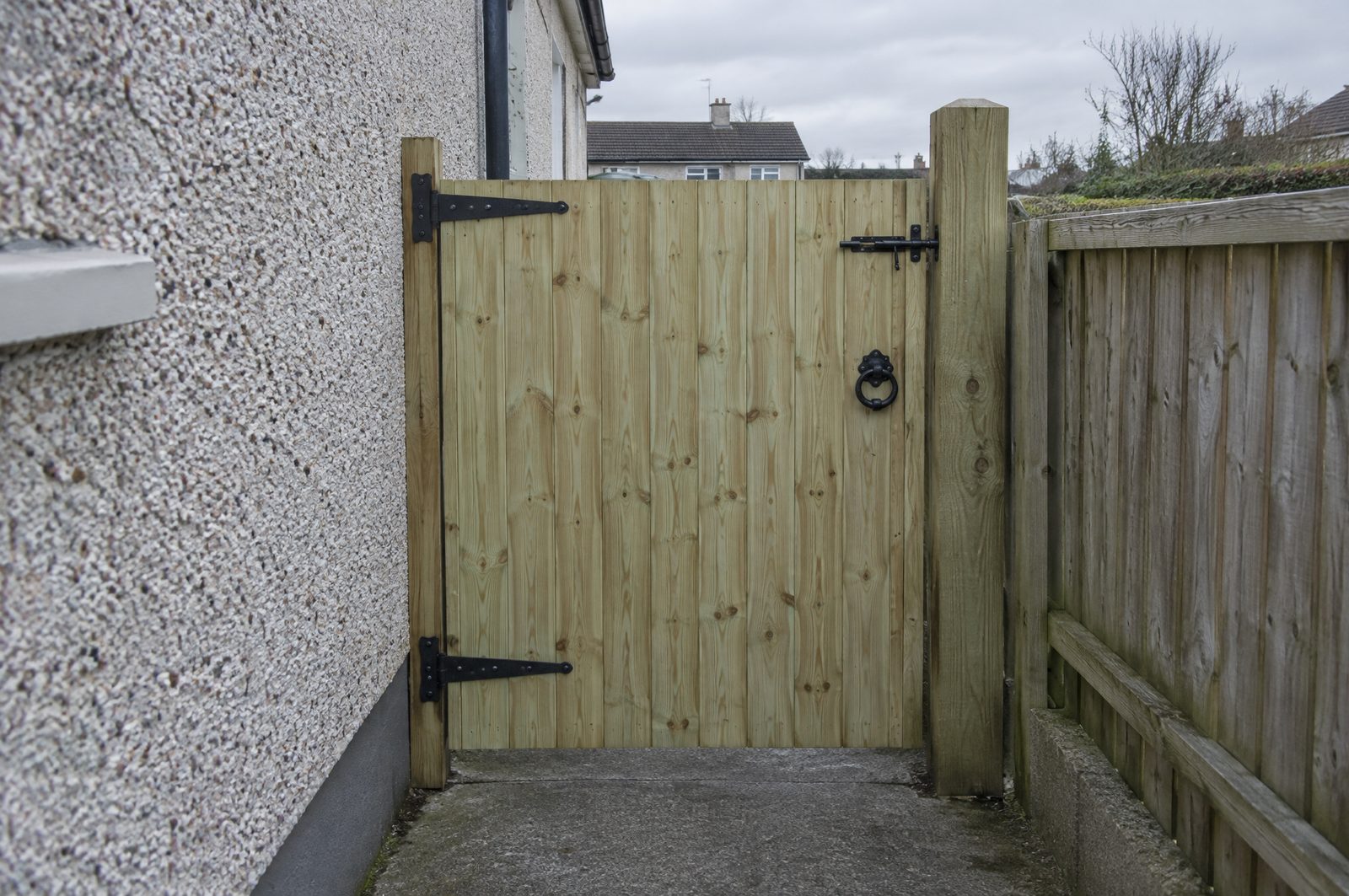
Side gates, garden gates and driveway gates in timber, composite or metal, single or double, made to the opening. The posts are set for the weight of the gate, which is more than a fence post carries, and the hardware is galvanised: hinges, latch, drop bolt and, on a double gate, a centre stop. Automation on a driveway gate is a separate trade, but we can set the posts and run the ducting so an installer has what they need.
Finishing and taking away.
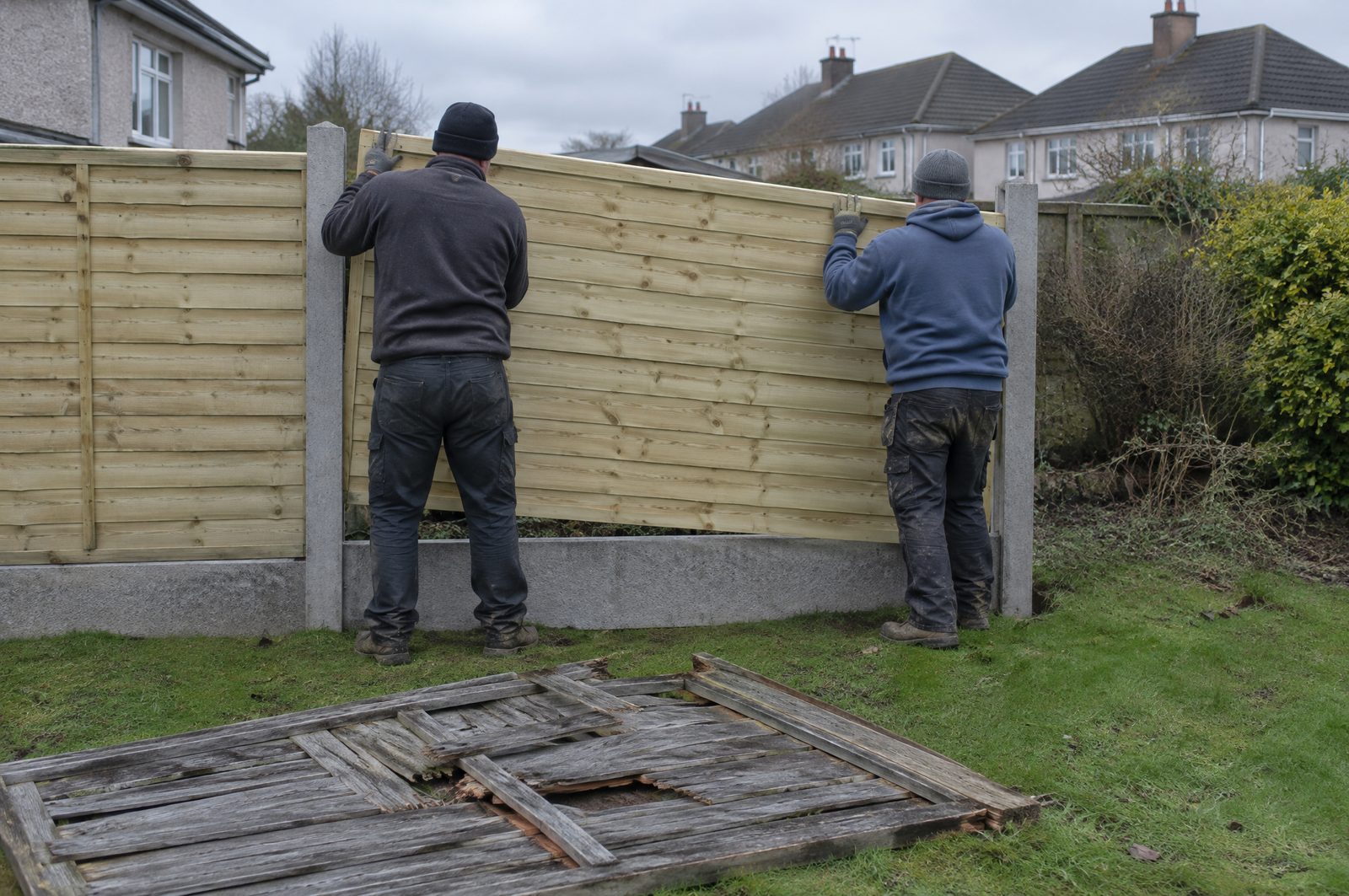
A timber fence gets a coat of treatment or stain before we leave, in the colour you choose, and cap rails go on where the style has them. The old fence, the old posts and their concrete come out and away with us, stumps are ground out where they are in the way, and the line is swept. Before and after photos are sent on the day.
Fencing across Dublin, Wicklow and Kildare.
In Dublin the usual job is the boundary between two semis or the rear fence of a terrace, with the panels going in through the side passage and the old ones coming out the same way. Boundary disputes are between neighbours, not something we can settle; where the line is not clear we will say so before a post goes in. In Wicklow and Kildare the runs are longer, the ground is more varied and the wind has more room, which is where closeboard and concrete posts earn their keep. Rural boundaries, paddock fencing and post-and-rail are all in scope.
Included as standard.
The following is included on every fencing quote. Anything outside it is itemised separately on the written estimate.
- 01Boundary walk and pressure-test of any existing posts before quoting
- 02Posts concreted to depth: 600mm minimum, deeper on softer ground
- 03Concrete gravel boards where the run sits on grass or earth
- 04Galvanised hardware on all gates: hinges, latches and drop-bolts
- 05Old fencing and posts removed, stumps ground out, site swept
- 06A treatment or stain coat included on timber installations
From first call to handover.
The same crew runs the job from the site visit through to sign-off.
- First01.
Walk and measure.
Tape, string line and a photo record. Material spec agreed before the quote goes out.
- Then02.
Strip and install.
Old fencing removed, new posts concreted in, panels fitted plumb and lined to a tight reveal.
- Last03.
Finish.
Cap rails fixed, stain or treatment applied, gates hung and adjusted, site cleared.
Where we draw the line.
We install fencing and gates on residential boundaries. Anything over two metres in height on a boundary usually needs planning permission and we will say so before quoting. We do not build walls in block or stone as fencing; that is landscaping work and we can quote it separately. Gate automation is fitted by a specialist installer; we prepare the posts and ducting for them.
Fencing questions.
Anything else, ring 085 781 4603.
Can you replace just the panels and keep the posts?
Sometimes. We pressure-test every post before quoting. Where they're sound the panels go on, where they're rotten or loose the post goes too.
Do you make custom gates?
Yes. Timber, metal or composite, single or double, with automation prep included if you want it.
How tall a fence can you build?
Up to two metres on a residential boundary. Anything taller usually needs planning permission, which we'll talk through before quoting.
Whose fence is it, mine or my neighbour's?
Your deeds or the site map usually show which boundary is yours. It is worth checking before work starts, and telling the neighbour, because we will need access to both sides of the line to build it properly.
How long does a new fence take?
A standard rear or side boundary on a Dublin semi is normally a day or two, including taking out the old fence. Longer runs and gates take longer, and the quote gives the days.
One crew, every trade.
The same crew, the same written quote, across the rest of the work we do.
Roofing
Roof repairs, leaks, flashing, chimneys and gutters.
See the trade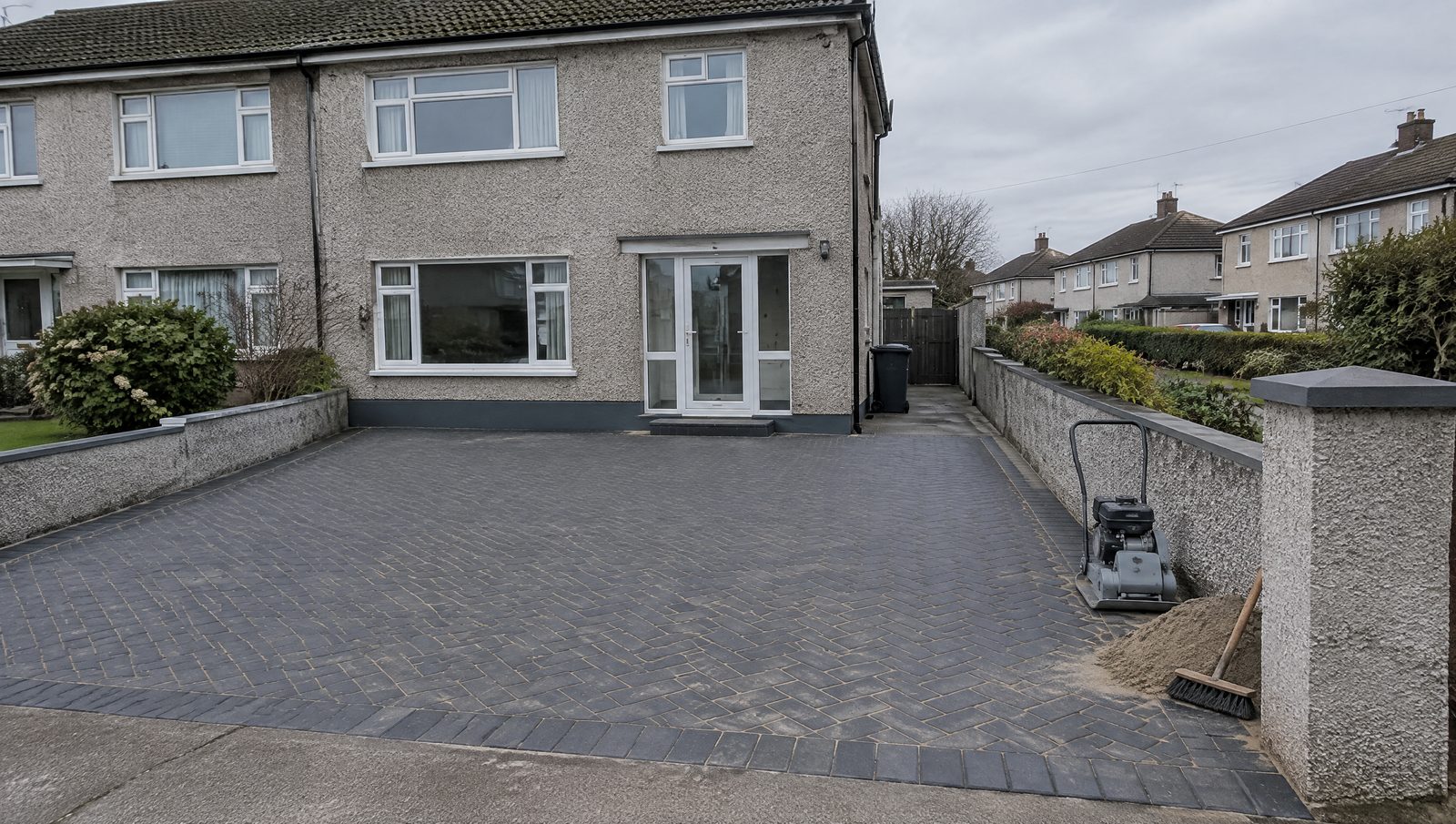
Driveways
Block paving, tarmac, gravel and resin-bound driveways.
See the trade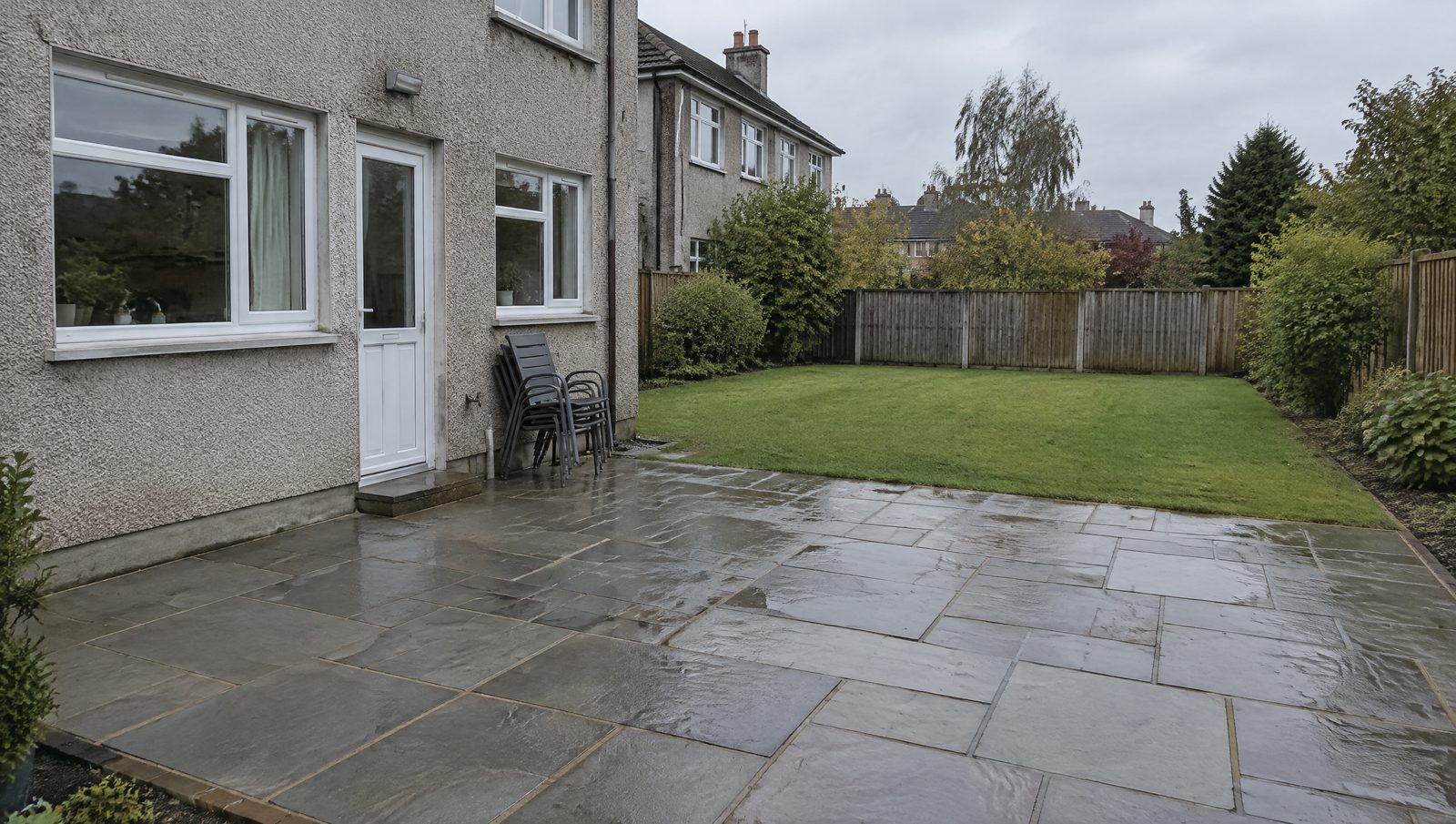
Patios
Indian sandstone, porcelain, granite and limestone patios.
See the trade
Gardening
Scheduled garden maintenance for residential and commercial sites.
See the trade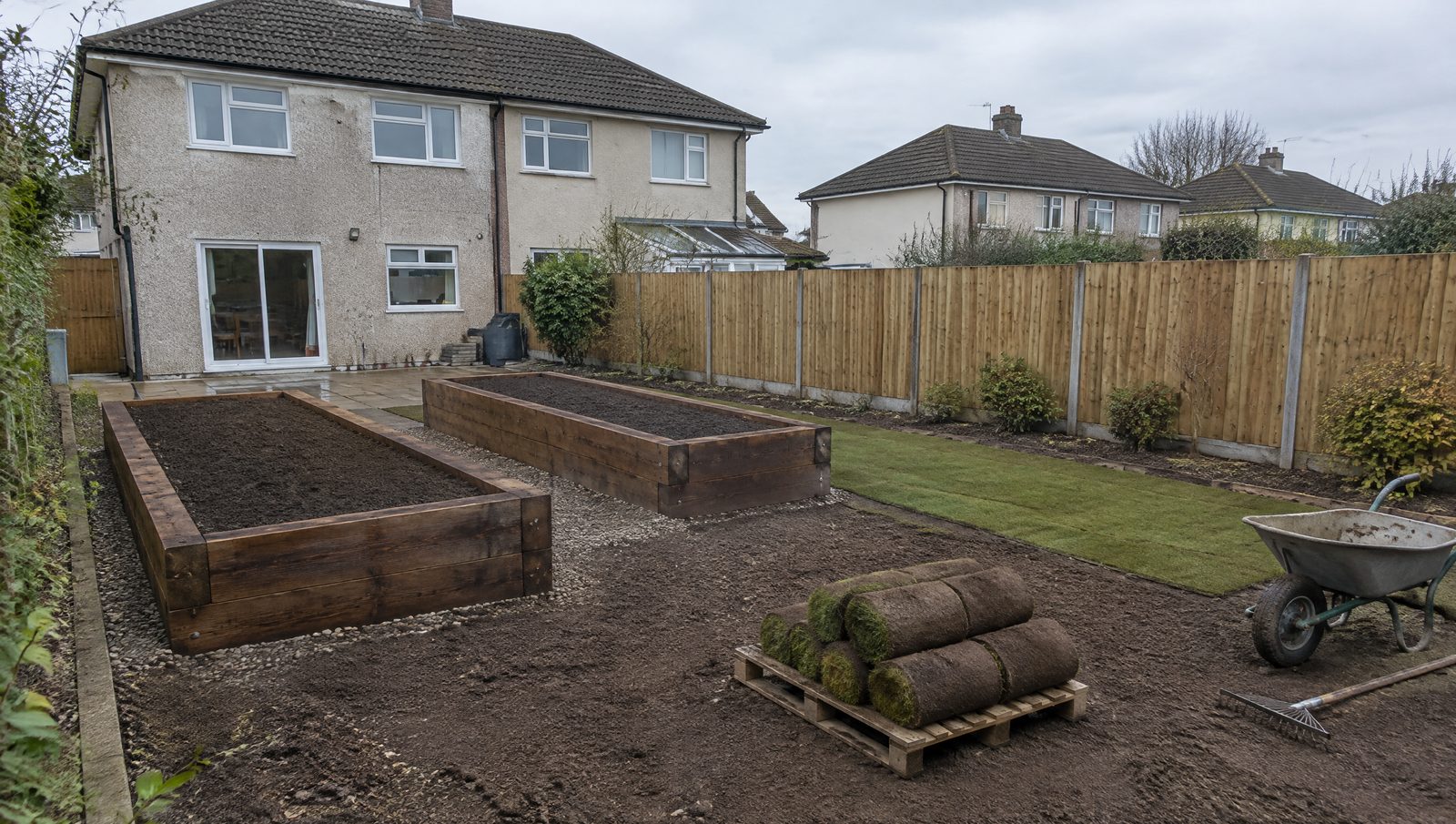
Landscaping
Garden design and full landscaping builds.
See the trade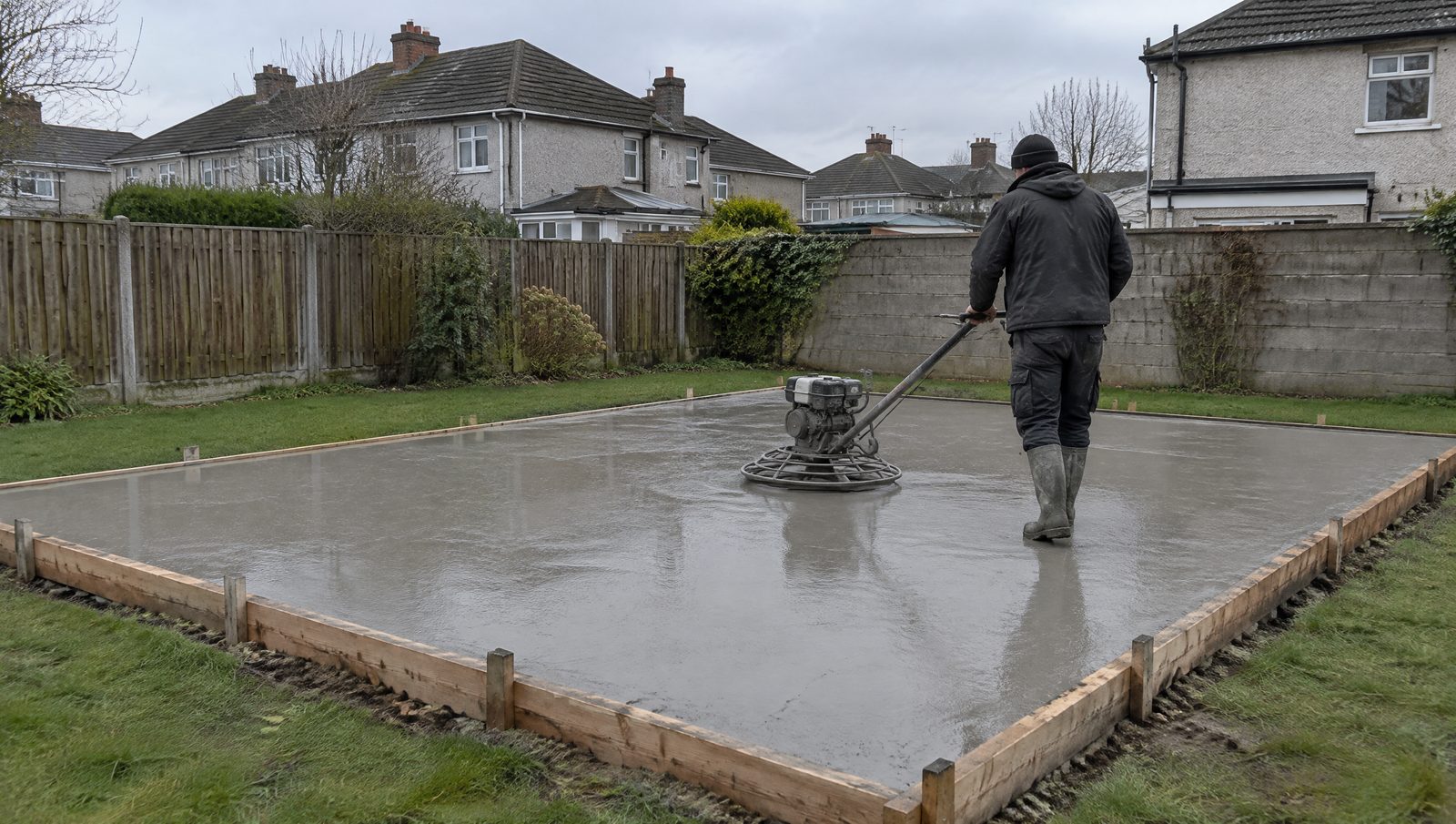
Concrete
Shed bases, garden building foundations and concrete paths.
See the tradeGet your fencing job priced.
Tell us what needs doing and where. Free site visit, then one written price inside 48 hours, with no pressure to go ahead.