Driveways Dublin, Wicklow and Kildare.
New driveways across Dublin, Wicklow and Kildare in block paving, tarmac, gravel and resin-bound finishes. The surface is the part you see; the sub-base and the drainage underneath are the part that decides whether it is still flat in ten years, and that is where we spend the time.
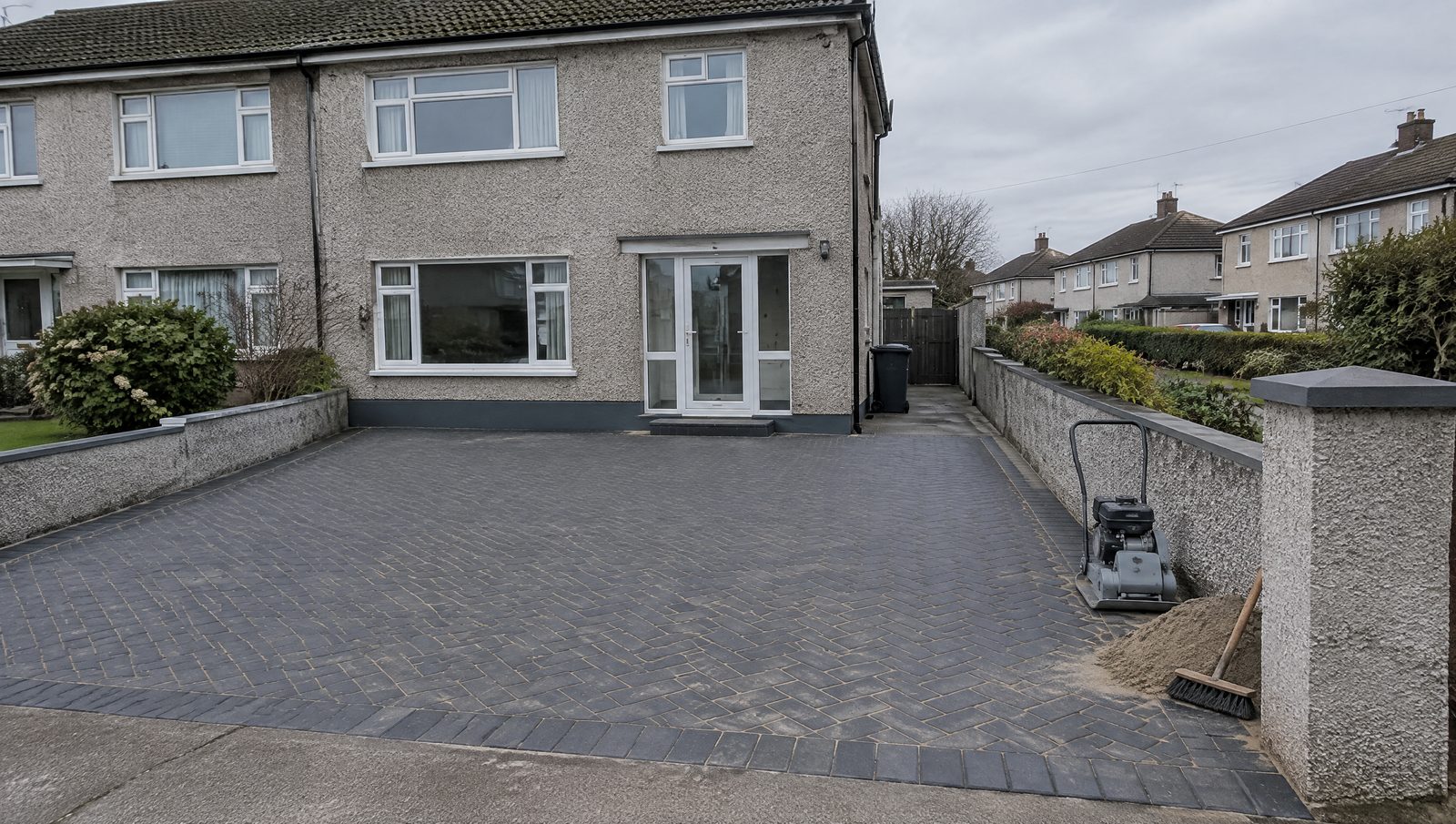
A driveway is a base with a surface on top. Get the base wrong and no surface will save it.
We build driveways for houses across the three counties: excavation, a compacted Type 1 sub-base, drainage planned for the site, edge restraints, and then the finish you want, laid to falls that take the water away from the house.
We measure on site, check the levels and where the water goes, and send a written quote within 48 hours with the build-up described so you can compare it with any other price you get.
Choosing a driveway surface.
Block paving is the most common choice across Dublin's semi-detached estates, and for good reason: it suits the houses, it can be lifted and relaid if a service ever needs to go under it, and a damaged block is replaced on its own. It comes in a wide range of colours and sizes, and the laying pattern and the edging make as much difference to the look as the block does.
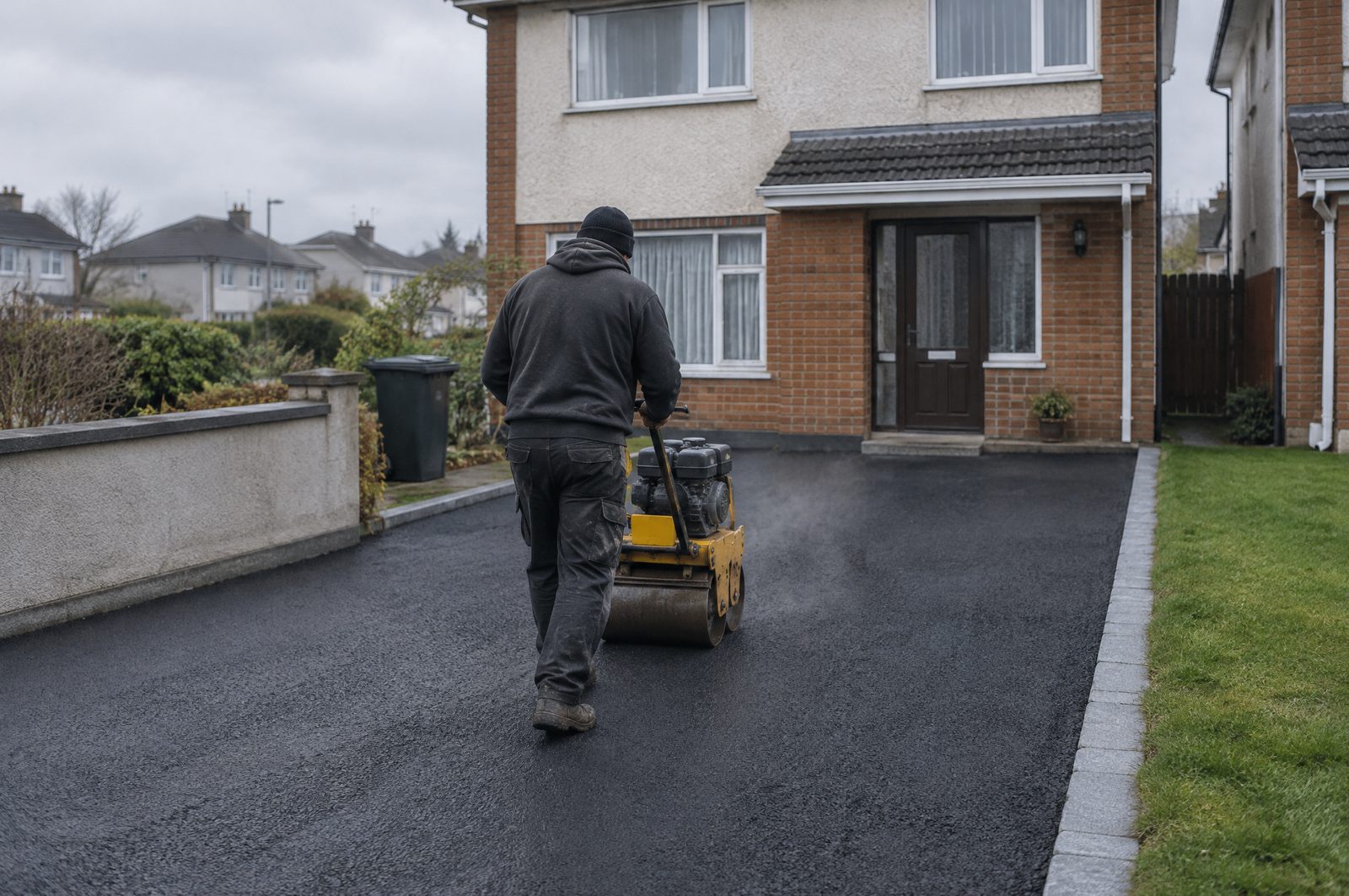
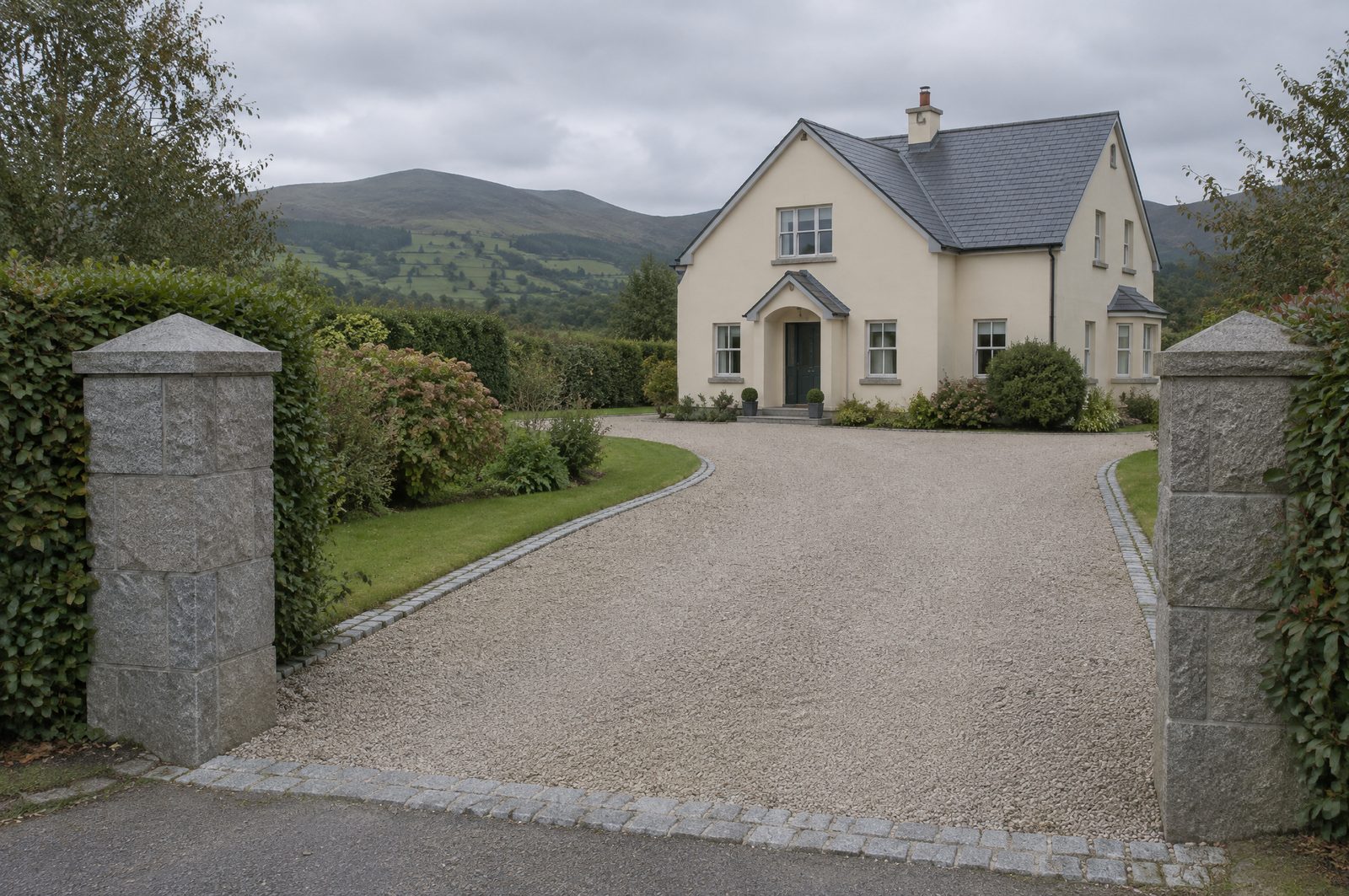
Tarmac is the quickest and usually the least expensive per square metre for a larger drive, and it wears well if the base under it is right. It is one colour and it does not like heavy point loads, so a caravan jack or a skip will mark it. Gravel costs the least of the four and drains freely, but it moves, it needs topping up, and on a slope it ends up on the road; a resin-bound finish is gravel that has been bound in resin so it stays put, drains through, and looks clean. It is the dearest of the four and it needs the most careful base.
We will talk through all four on the site visit against the house, the slope, the cars and what you want to spend. There is no right answer for every drive.
What goes under it.
The old surface comes out, and so does anything soft under it, down to a depth that suits the finish. A geotextile membrane goes over the formation to keep the sub-base and the ground apart. Then Type 1 crushed stone, laid and compacted in layers with a plate compactor, not tipped in and driven over. That layer is photographed before anything goes on top of it, because once the surface is down nobody can see it.
Edges are held with kerbs or concrete haunching so the surface cannot spread. On block paving a screeded bed of sharp sand goes over the sub-base and the blocks are laid on it, cut in around drains and manholes, and vibrated down with kiln-dried sand brushed into the joints.
Drainage.
Every driveway sheds rain, and the rain has to go somewhere that is not your hallway or the road. On most Dublin houses that means the drive falls gently away from the house towards the road, with a linear channel across the threshold where the fall is towards the door. Where a drive cannot fall to the road, a soakaway or a connection to an existing drain does the job. Resin-bound and gravel surfaces drain through themselves onto a permeable base and need less of this, which matters on larger drives where planning rules ask for it.
The drainage plan is decided on the site visit and written into the quote. It is the part of a driveway most often left out by a cheaper price.
Driveways across Dublin, Wicklow and Kildare.
Most of the work is on the front gardens of two-storey semis and terraces across Dublin, Wicklow and Kildare, where a lawn or a cracked concrete apron is being turned into parking for two cars. Access on those houses is from the road, the skip goes on the drive, and the neighbours' side of the boundary is left as we found it. Dropped kerbs are arranged with the council where one is needed; we can advise on the application but the application is yours.
Bigger rural drives in Kildare and Wicklow are usually tarmac or gravel on a wider base, and the job there is more about the ground and the falls than the finish.
Included as standard.
The following is included on every driveways quote. Anything outside it is itemised separately on the written estimate.
- 01Full excavation to the depth required for the chosen finish
- 02Compacted Type 1 sub-base, photographed before the surface goes down
- 03Drainage designed for your levels: linear channel, soakaway or connection to existing
- 04Kerbing, edge restraints and cut-in details to suit the property
- 05Geotextile membrane between sub-base and laying course
- 06Site cleared on completion, surface pressure-washed and swept
From first call to handover.
The same crew runs the job from the site visit through to sign-off.
- First01.
Site visit and quote.
We measure on site, check falls and drainage, and send a written quote within 48 hours.
- Then02.
Excavation and base.
Old surface removed, sub-base laid and compacted in lifts, falls set before the surface goes down.
- Last03.
Surface and handover.
Surface laid, jointing brushed in, site cleaned. Before-and-after photos sent on completion.
Where we draw the line.
We build driveways and the drainage that goes with them. We do not do road or car park surfacing, and we do not lay a new surface over an old one that is failing, because it will fail again. If your existing drive has a sound base and only the surface has gone, we will say so and quote the smaller job. Dropped kerb applications and planning queries are yours to make; we will help with the drawings.
Driveways questions.
Anything else, ring 085 781 4603.
How long does a block-paved driveway last?
A properly installed block-paved driveway will last twenty years or more. The lifespan depends almost entirely on the sub-base and drainage rather than the block itself.
Is resin-bound suitable for an Irish climate?
Yes. Resin-bound surfaces are fully permeable and weather well in Ireland. They suit modern builds and refurbs where a clean, jointless finish is wanted.
Can you work with my existing entrance and kerbs?
Where the existing kerb line is sound we can tie into it. If the kerb is broken or settling we'll quote replacement separately rather than work around it.
Do I need planning permission for a new driveway in Dublin?
Usually not for a driveway on your own front garden, but there are rules on hard surfaces and drainage, and a dropped kerb needs an application to the council. We will tell you what applies to your house on the site visit.
How long does a new driveway take?
It depends on the size and the surface. A typical two-car block-paved drive on a semi-detached house is several days from dig-out to sweeping up. Tarmac is quicker once the base is in. The quote gives the days for your drive.
One crew, every trade.
The same crew, the same written quote, across the rest of the work we do.
Roofing
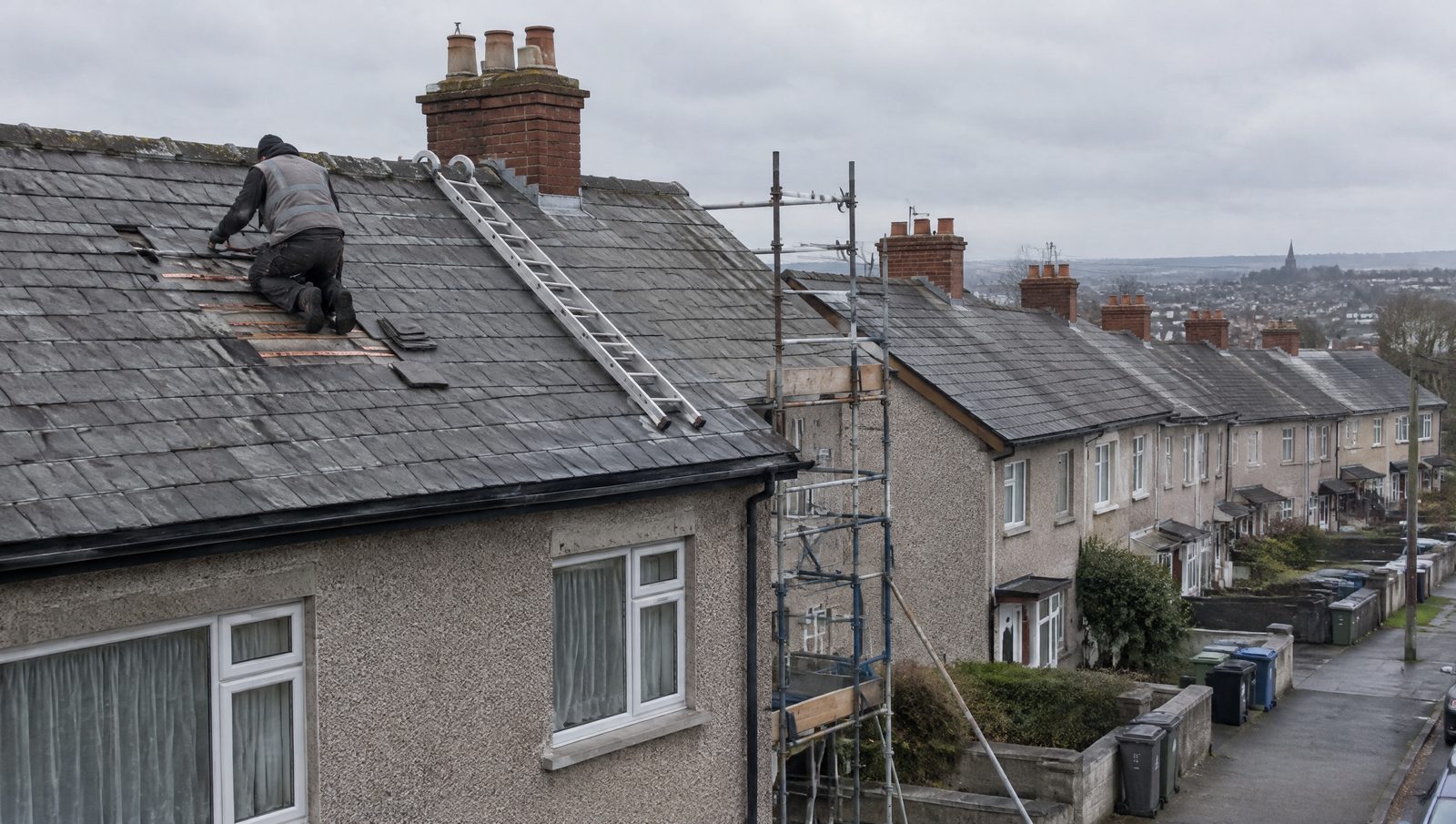
Roof repairs, leaks, flashing, chimneys and gutters.
See the trade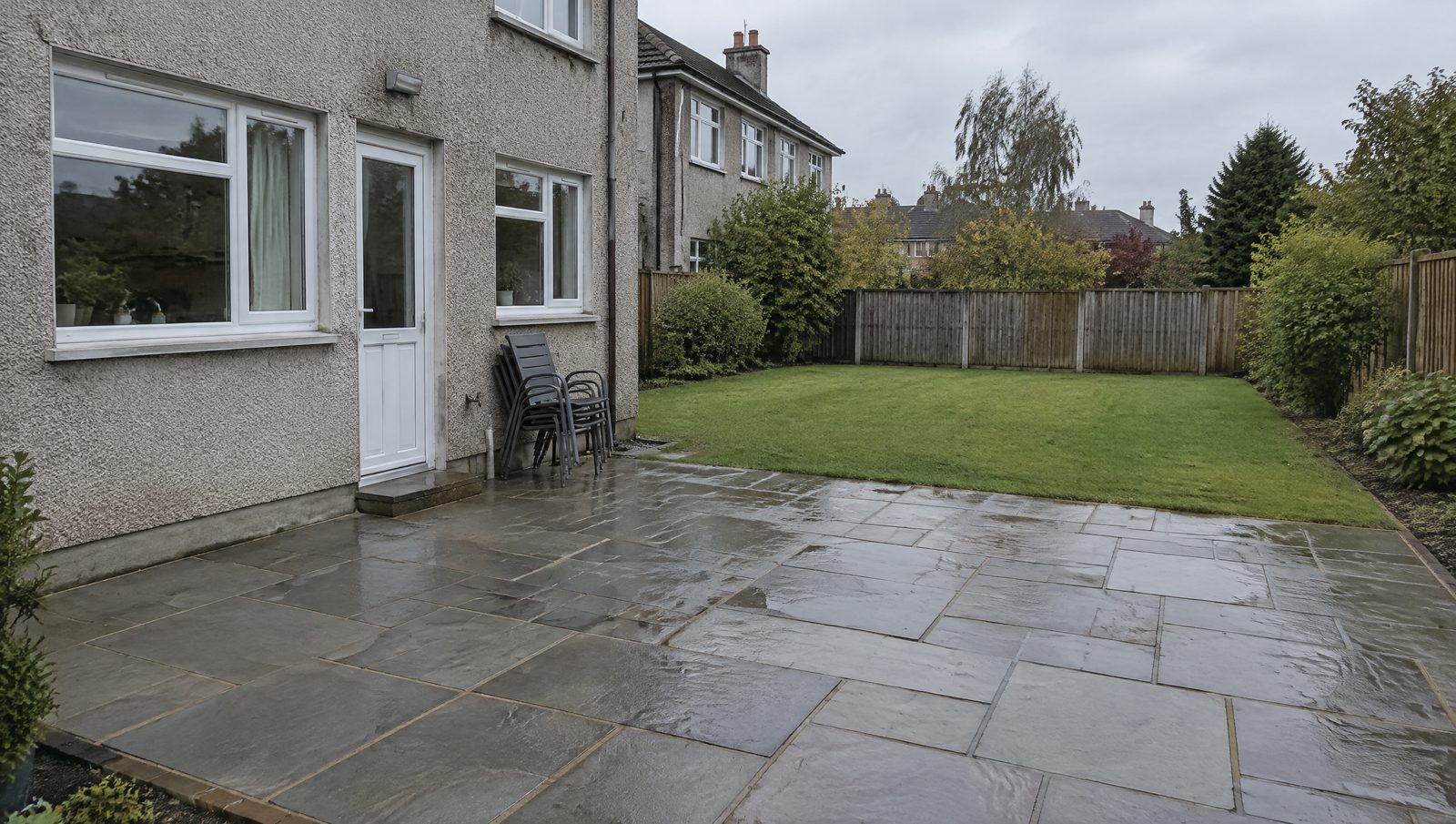
Patios
Indian sandstone, porcelain, granite and limestone patios.
See the trade
Gardening
Scheduled garden maintenance for residential and commercial sites.
See the trade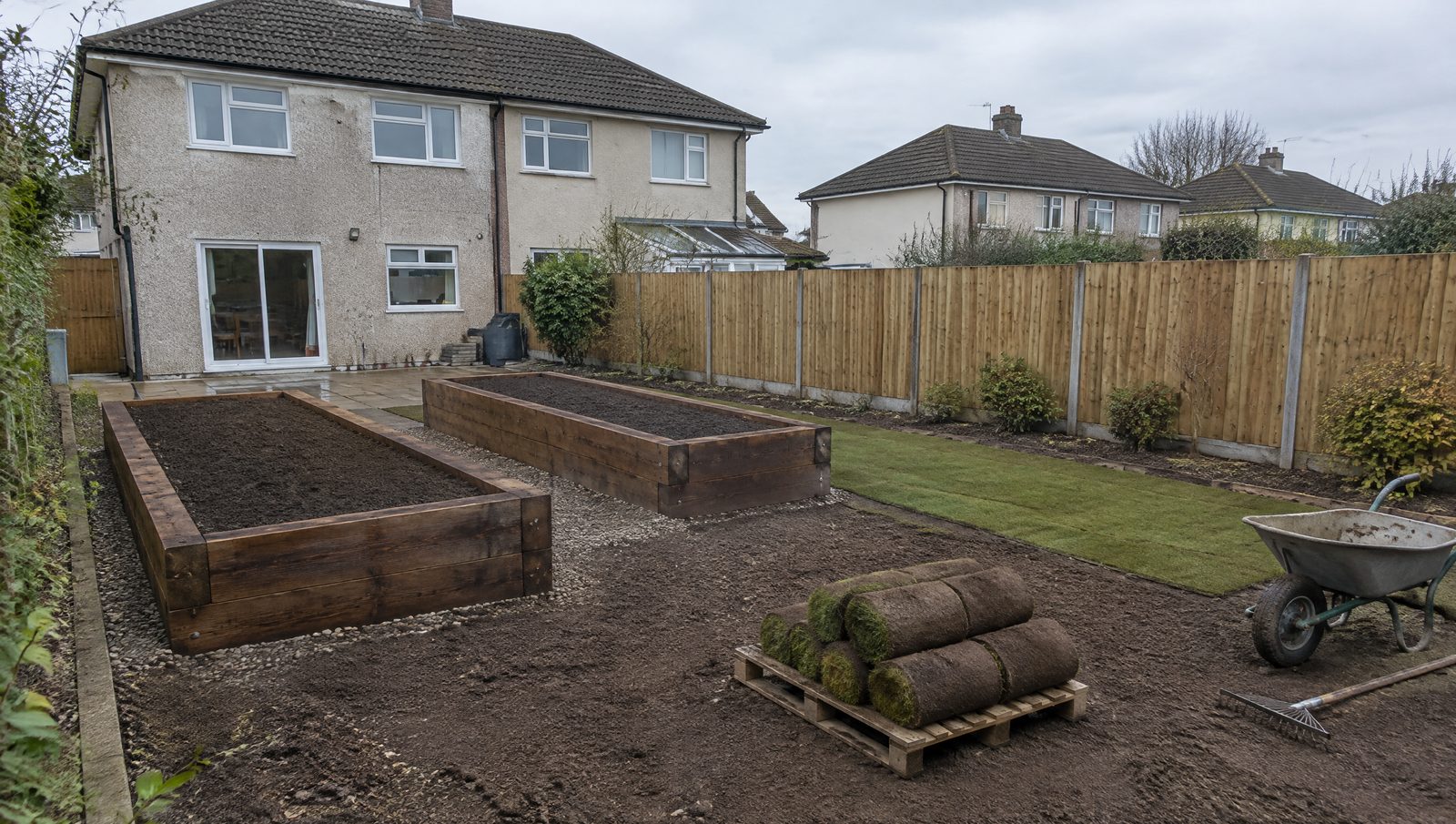
Landscaping
Garden design and full landscaping builds.
See the trade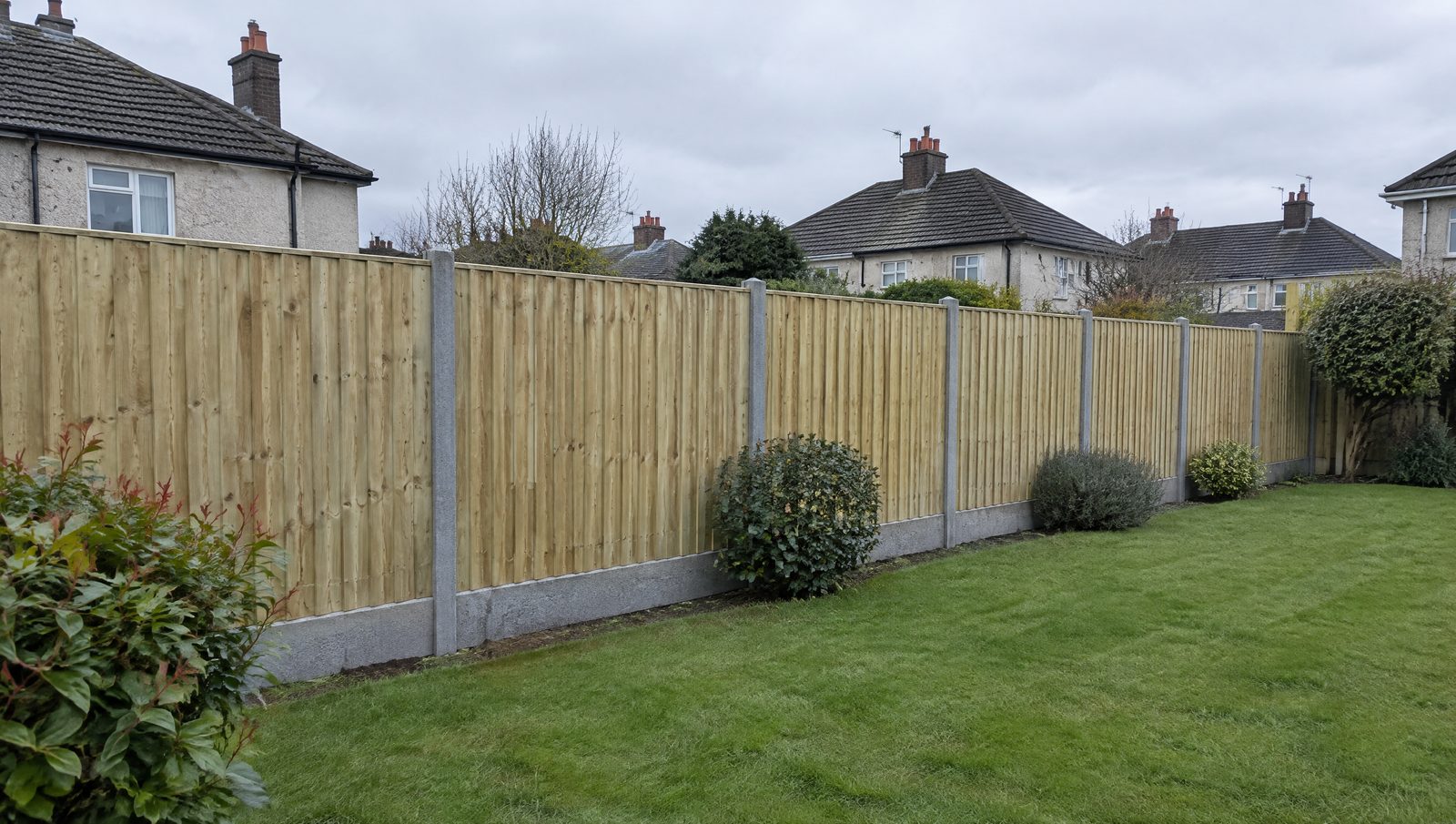
Fencing
Timber, composite and metal fencing, plus gates.
See the trade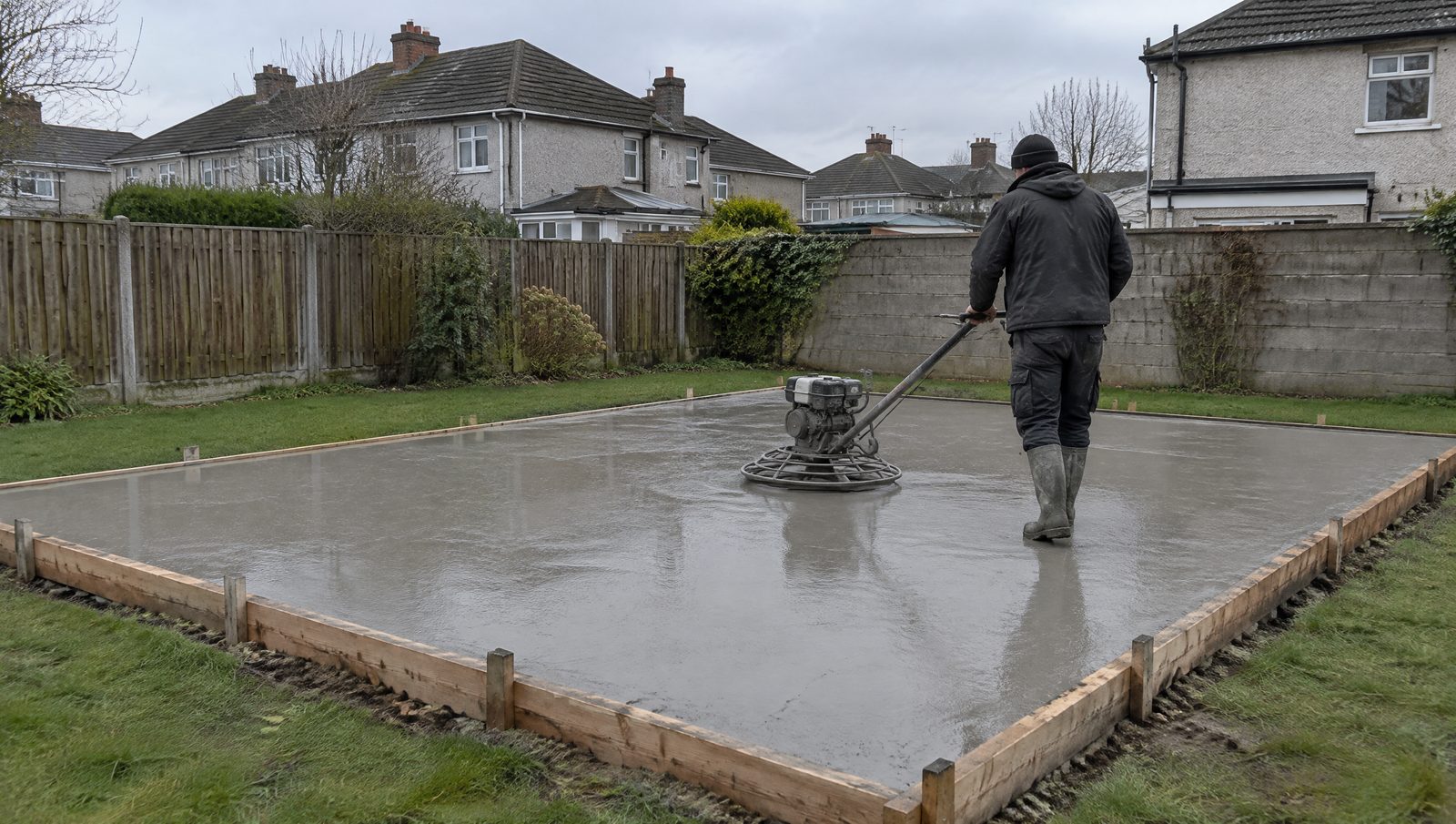
Concrete
Shed bases, garden building foundations and concrete paths.
See the tradeGet your driveways job priced.
Tell us what needs doing and where. Free site visit, then one written price inside 48 hours, with no pressure to go ahead.