Chimney repairs · Dublin
Chimney repairs Dublin
Chimney repairs on houses across Dublin: the lead flashing where the stack meets the roof, the pointing and flaunching on the stack itself, cracked pots and missing cowls. Most chimney leaks are one of those four, and all of them are repairs.
The short answer
The chimney is the tallest thing on the roof and the most exposed, and it is where a lot of Dublin roofs leak.
We repair chimneys across Dublin from a scaffold or roof ladder: renewing the lead flashing and soakers, repointing the brickwork, replacing cracked flaunching, fitting caps and cowls, and rebuilding the top courses where frost has got into them.
A photo from the road showing the stack and the roof around it is usually enough for us to say what is likely wrong. The written quote comes after we have been up and photographed it.
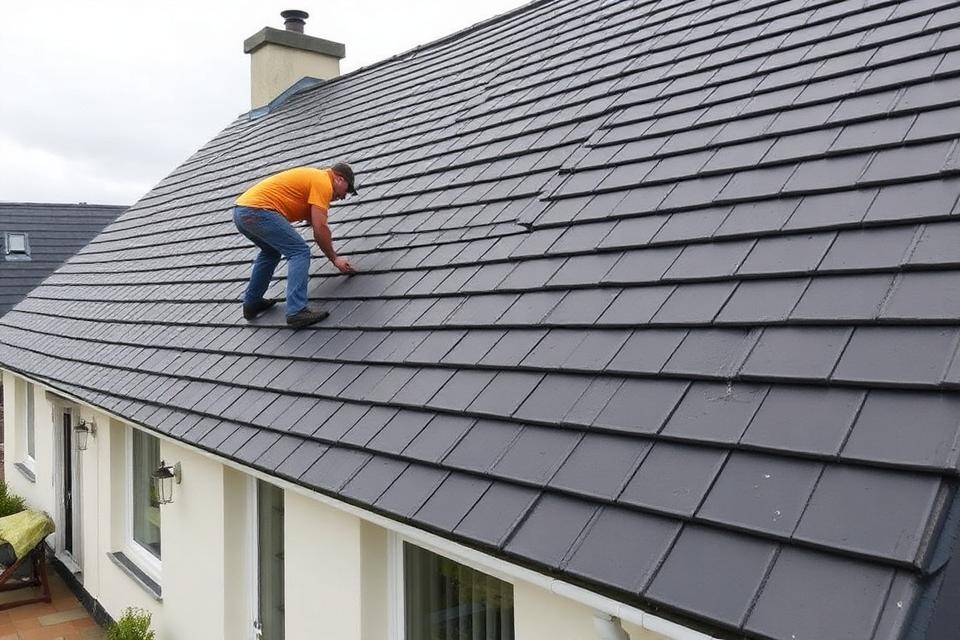
Why chimneys leak
Start with the flashing. A chimney comes up through the slates, and the joint between brick and roof is sealed with lead: soakers under the slates on the sides, an apron at the front, a back gutter behind, and cover flashings chased into the mortar joints over all of it. On Dublin's older houses that lead has been up there a long time. It cracks along the folds, the mortar it was chased into falls out, and the cover flashing drops away from the brick and lets water run straight down behind it. On some houses the back gutter was never leaded properly at all, only cemented, and cement over a chimney cracks the first winter.
Then the stack. Rain soaks into brickwork that has lost its pointing, and in a frost that water freezes and pushes the face off the brick. The flaunching, the mortar cap that holds the pots, cracks and lets water into the top of the stack. A missing or broken pot lets rain straight down the flue into a fireplace that has been blocked up for twenty years, and that turns up as a damp patch on the chimney breast wall in a bedroom.
Unused chimneys are the worst for it. With no fire below, the flue stays cold and damp, the brick never dries out, and the whole stack slowly weathers from the top down.
Chimney repairs we carry out
Each one quoted from photographs taken at the stack, not from the ground.
- Lead flashing renewed: apron, soakers, step flashings and back gutter, in Code 4 or Code 5 milled lead, chased into raked joints and pointed
- Stack repointed in a mortar matched to the brick, with the old joints raked out first
- Flaunching removed and recast where it has cracked
- Pots refixed, replaced or removed and the flue capped where the chimney is no longer used
- Cowls, bird guards and rain caps fitted to open flues
- Spalled and frost-damaged bricks cut out and replaced
- Top courses taken down and rebuilt where the stack is loose
- Slates and tiles around the stack refixed after the lead is in
Getting up to a chimney safely
A chimney on a bungalow or at the eaves of a two-storey house can sometimes be reached from a roof ladder. Most Dublin stacks are on the ridge of a two-storey house and need a scaffold, either a tower against the gable or a proper chimney scaffold over the ridge, and that is in the quote so you know what is arriving and for how long. Nobody stands on a wet ridge to point a chimney.
The scaffold also means the job is done properly: joints raked out to depth rather than smeared over, lead dressed and chased in rather than stuck on with sealant, and the roof around the base of the stack checked while we are there.
Repair or take it down
A chimney that is loose at the top, leaning, or losing bricks needs the top courses rebuilt, and that is still a repair. If the stack is no longer used and is in poor condition all the way down, taking it down below the roofline and slating over is sometimes the better answer, and it removes the leak for good. We will tell you which way we would go and quote it, but it is your decision.
Whatever is done at the stack, you get photos from the scaffold before and after, so you can see the lead, the pointing and the flaunching close up without going up yourself.
How it goes
- Ring or send a photo. A photo of the stack from the road and one of the damp patch inside, if there is one, tell us what we are likely dealing with.
- Look and quote. Same-week visit on most calls. We photograph the flashing, the pointing and the flaunching from the ladder or scaffold, and the written quote follows within 48 hours with access included.
- The repair. Flashing and pointing repairs on a scaffold are normally one to two days including the scaffold going up and coming down. A rebuild of the top courses takes longer and the quote says so.
- Photos and sign-off. Close-up photos of the finished lead, pointing and cap from the scaffold, sent the same day.
What we do not do
We repair chimney stacks and the roof around them. We do not line flues, install stoves or sweep chimneys, and we do not build new chimneys. If a stack is dangerous we will say so straight away and make it safe first. Damp inside the house on a chimney breast is usually the stack, but if we find it is not, we will tell you rather than sell you pointing you do not need.
Common questions
How do I know if my chimney is leaking?
The usual sign is a damp patch on the chimney breast wall upstairs, or a stain on the ceiling beside the stack, that gets worse after rain. Sometimes it is a smell of soot in a room with a blocked-up fireplace after heavy rain. A look at the flashing and flaunching from the roof confirms it.
Do you need scaffolding to repair a chimney?
Usually, yes, for anything on the ridge of a two-storey house. A tower or a chimney scaffold is included in the quote. Low stacks on bungalows can sometimes be done from a roof ladder, and we say which on the site visit.
Can you repoint the chimney rather than rebuild it?
If the brick is sound and the stack is not loose, repointing is the right repair. If bricks are spalling and the top courses move by hand, they need to come down and go back up. We photograph it and tell you which.
My chimney is not used. Should I cap it?
Yes, with a cap that keeps rain out but lets the flue breathe. A fully sealed flue sweats and the damp turns up inside. If the stack is also in poor condition, removing it below the roofline and slating over is worth considering, and we can quote both.
Get a free quote
Call 085 781 4603 or request a quote. Free site visit, written quote within 48 hours.