Fencing in Kildare: garden boundaries, paddocks and post-and-rail.
Fencing across County Kildare, from the estates of Naas, Newbridge, Maynooth and Celbridge to the long rural boundaries and paddocks where post-and-rail is what most people put up. The same crew walks the line with you, writes the price down and builds the fence.
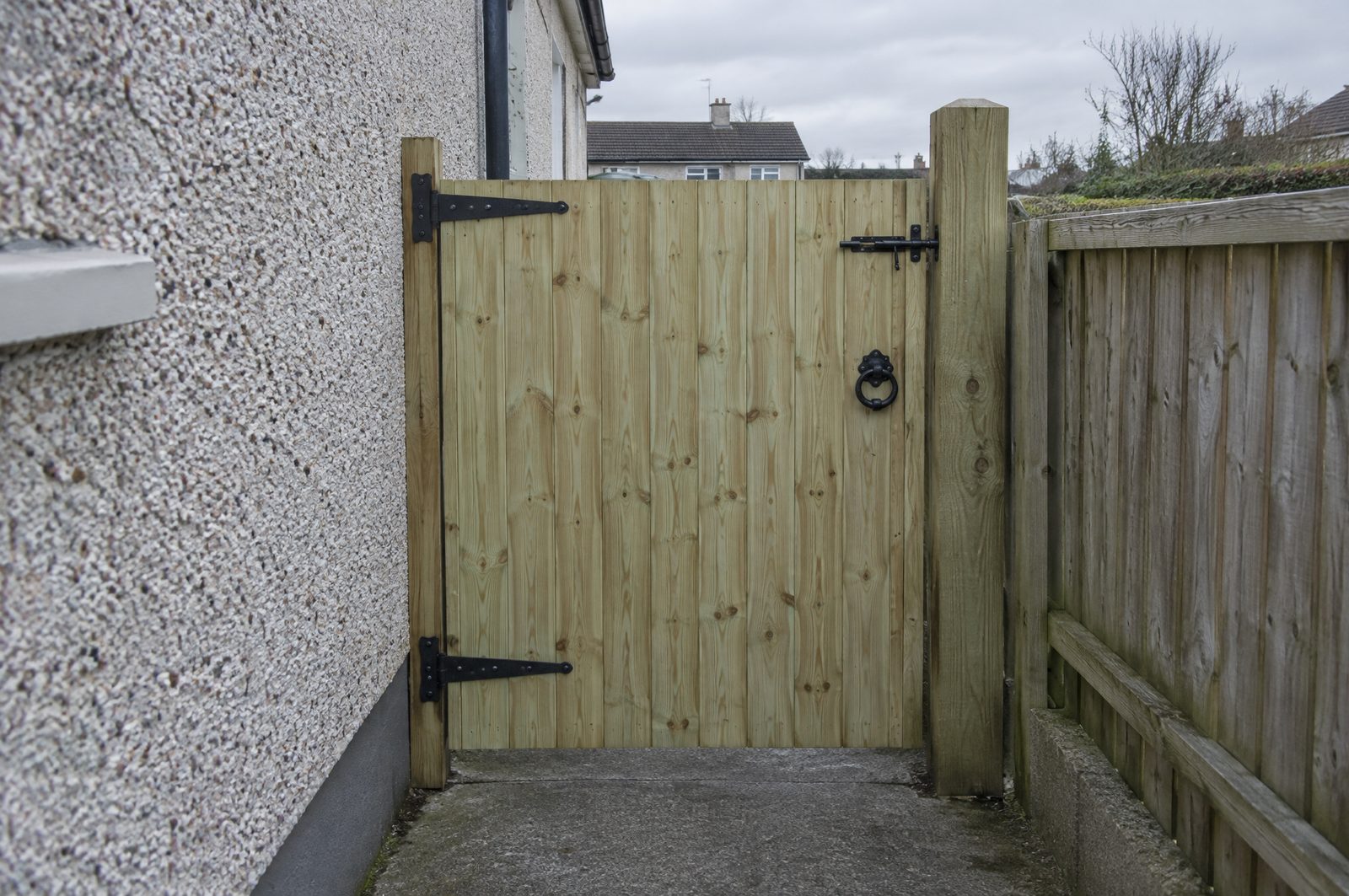
Kildare is flat and open, so a fence here takes wind that has crossed a lot of grass before it reaches the garden.
We build closeboard, panel, picket, composite and post-and-rail fencing in the county, plus gates, with every post set in concrete at least 600mm into the ground.
The look costs nothing, a written quote follows within 48 hours, and the old fence leaves with us when the new one is up.
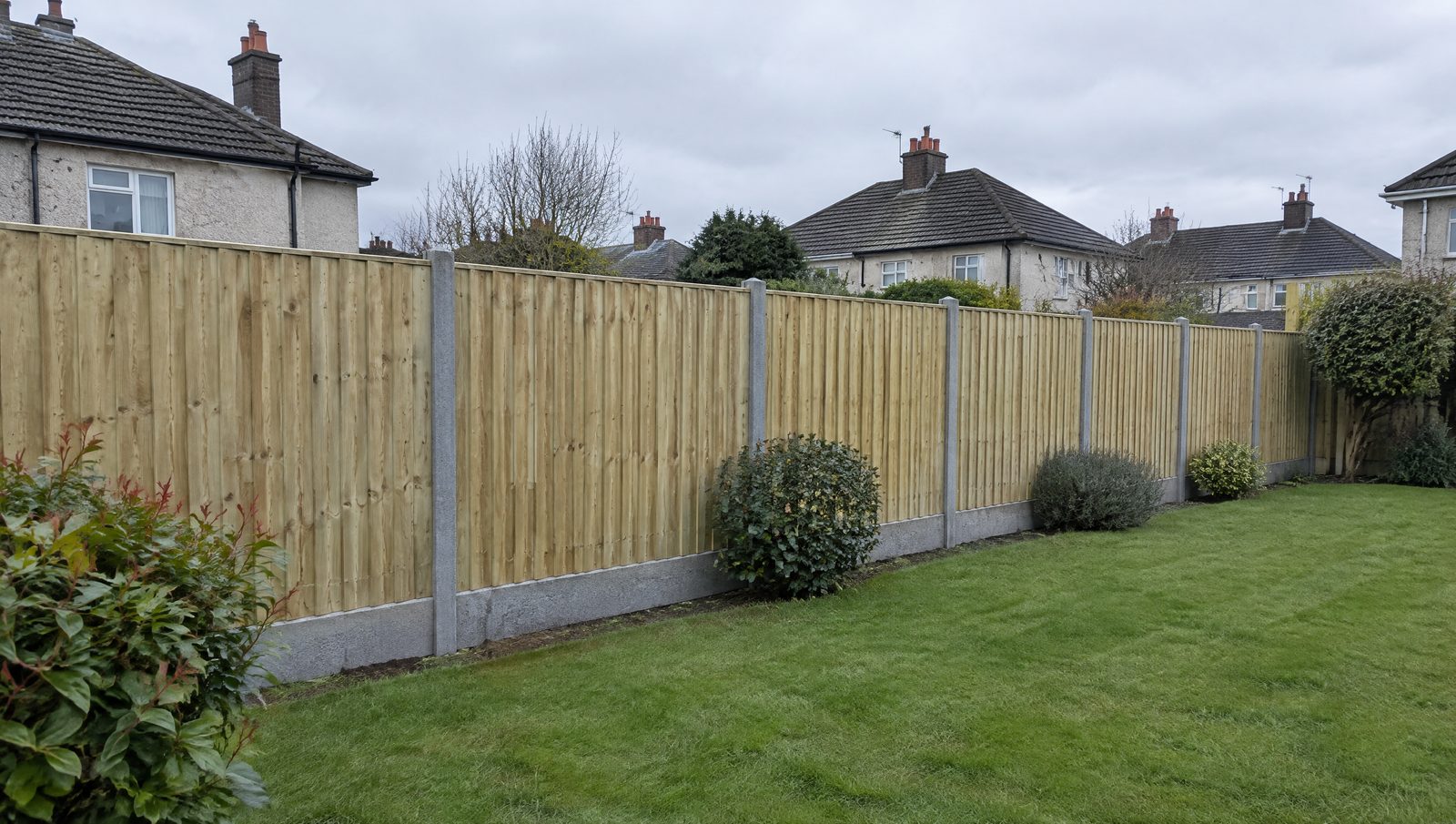
Fencing in Kildare: wind and open ground.
Most of the county is low and level. Around the Curragh there are miles of open grassland with very little in the way of a windbreak, and the farmland out towards Kildare town, Monasterevin and Athy is much the same. A solid panel fence on that kind of site behaves like a sail. When a gale pushes on it, the load goes straight into the posts at ground level, and that is where a weak fence snaps or rocks loose.
Two things help. Closeboard, built board by board on arris rails, is stiffer than a run of panels and has no panel joints for the wind to work at. Concrete posts take more punishment than timber ones on a boundary that faces the weather. On a long exposed run we usually suggest one or both, and we explain the reason on site so you can weigh it against the cost.
The ground also changes across the county. Much of it digs well, but towards the bog in the west it can be soft and peaty, and on new estates the top layer is often made ground left over from the build. Post holes go deeper on soft or made ground than the 600mm minimum, because a post is only as steady as the soil around its concrete.
Estates in the commuter towns.
Naas, Newbridge, Maynooth, Celbridge, Leixlip, Kilcock, Clane and Sallins grew quickly from the nineties onwards, and much of that growth is estates of semis and terraces with rear gardens that back onto each other or onto a green. The fences that went in when those houses were built are now old enough to fail, and they tend to fail the same way: the timber posts rot where they meet the soil, the panels start to lean, and one storm takes a section down.
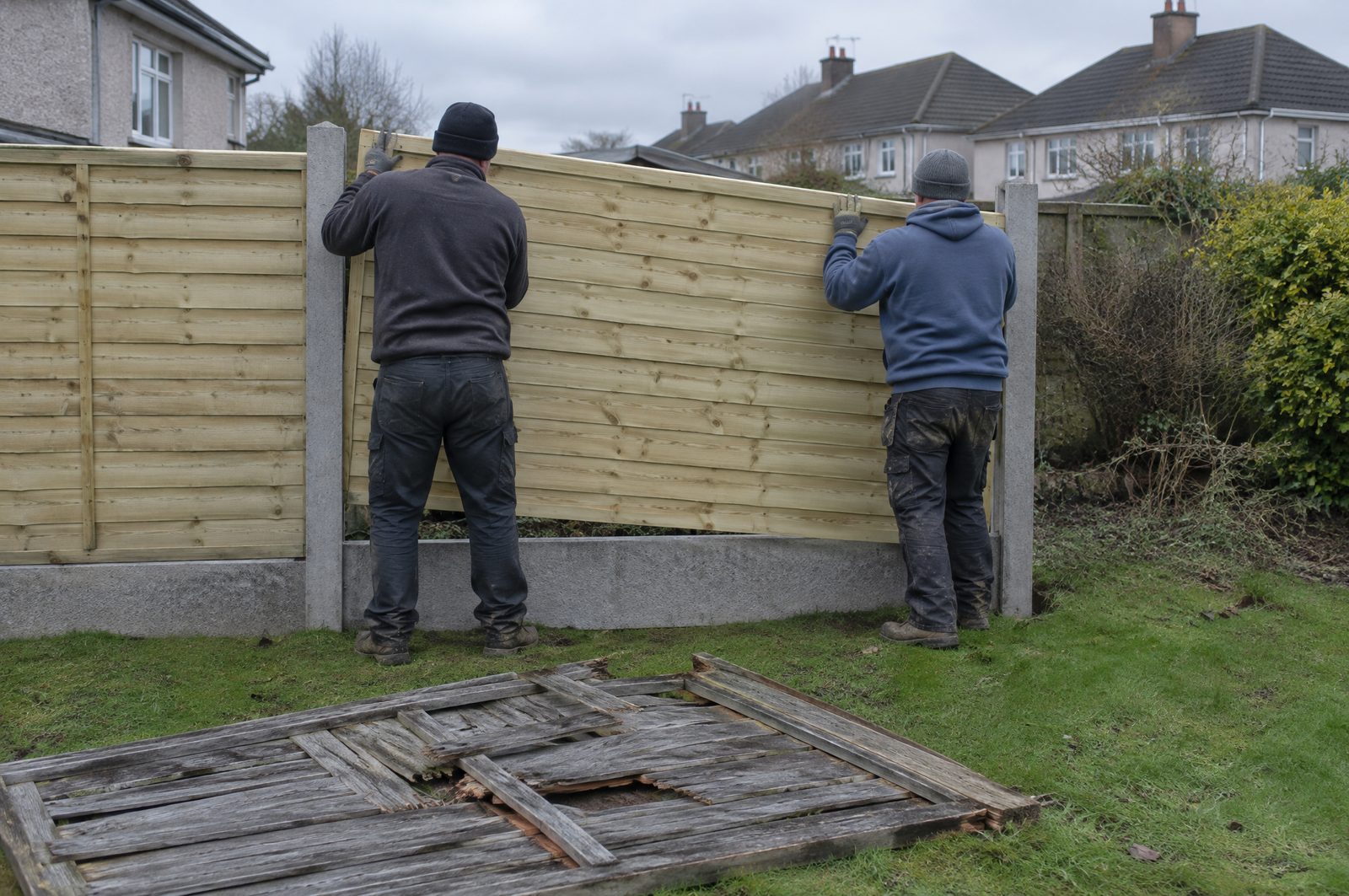
On these jobs we test each existing post by pushing on it before we price anything. Sound posts can keep their place and take new panels, which saves you money. A post that moves comes out with its old concrete, and a new one goes in. Where the run sits on earth or grass, a concrete gravel board goes along the bottom so the new timber stays off the ground.
Post-and-rail, paddocks and rural boundaries.
Kildare is stud and farm country, and outside the towns post-and-rail is the normal fence. It is open, it marks a line without blocking the view, and it suits a field, a paddock or the front of a house set back off a country road. We put up post-and-rail for residential properties with land, alongside the garden fencing closer to the house.
A long rural run is set out with a tape and a string line before any hole is dug, so the line stays straight over a long distance and the posts are evenly spaced. Each post is set in concrete like any other fence we build. Where the run needs a field gate or a pedestrian gate, the gate posts are set heavier than the line posts, because they carry the swinging weight.
- 01Post-and-rail along paddocks, fields and road frontage
- 02Closeboard on exposed garden boundaries, often with concrete posts
- 03Panel fencing between neighbouring gardens on estates
- 04Picket fencing for a low front boundary
- 05Composite fencing where you want no staining or upkeep
- 06Timber, composite and metal gates, single or double
Where we cover in Kildare.
We cover the whole county. On the Dublin side that means Leixlip, Celbridge, Maynooth and Kilcock. In the middle there is Clane, Sallins, Naas and Newbridge, and further out we go to Kildare town, the Curragh, Monasterevin and Athy, plus the countryside between them. If your townland is not on that list, ring and ask. A look at the boundary is free anywhere in Kildare.
Bigger plots usually make access simple, and a van can often get close to the line. On a terrace or a tight estate garden, the panels and posts go in through the side passage or the house, and the old fence comes out by the same route.
From the call to the photos.
The same crew looks at the job, quotes it and does it. You get before and after photos when it is finished.
- First01.
Walk the boundary.
We come out with a tape and a string line, measure the run, push on any posts already there and photograph the line. On a rural boundary we walk the full length.
- Then02.
Price in writing.
Within 48 hours you get a written quote that names the fence style, the height, the post type and whether gravel boards and gates are included.
- Next03.
Old fence out, new fence in.
The old panels, posts and their concrete are taken out. New posts are concreted in, then the boards, panels or rails go up plumb and in line.
- Last04.
Finish and photos.
Cap rails go on where the style has them, timber gets its coat of treatment or stain, any gates are hung, and you receive before and after photos.
Where we draw the line.
We put up fencing and gates on residential boundaries in Kildare, including post-and-rail on land that goes with a house. Large agricultural contracts and stud farm installations on a commercial scale are not what we take on. A fence above two metres on a boundary usually needs planning permission, and we will raise that before quoting. Walls in block or stone count as landscaping work, which we quote separately. If it is unclear where the boundary runs, that has to be settled between you and your neighbour before any post goes in.
Fencing questions.
Anything else, ring 085 781 4603.
What fence stands up best to the wind in Kildare?
On an open, exposed boundary, closeboard on concrete posts is usually the steadiest option. Panels are fine in a sheltered estate garden, but on a site facing open country they catch the wind across the whole face. We look at where the weather comes from on your plot before recommending one.
Do you put up post-and-rail fencing for paddocks?
Yes, for houses with land: paddocks, fields beside the house and road frontage. Each post is set in concrete, and the line is set out with a string line before digging starts, so a long run stays straight.
Can you keep my existing posts and replace the panels?
If the posts are sound, yes. We push on every one before we quote. Any that move or are soft at the ground are replaced, because new panels on a failing post will not last.
Do you cover the whole of County Kildare?
Yes. That includes the towns near Dublin such as Leixlip, Celbridge and Maynooth, the middle of the county around Naas, Newbridge and Clane, and further out to Kildare town, Monasterevin and Athy. The visit to look and measure is free.
My estate fence is the original one. Is it worth repairing?
It depends on the posts. If most of them are still solid, new panels on the old posts are good value. If they rock when you push them, a full new run with fresh posts and gravel boards lasts far longer than patching.
More on fencing.
Or go back to the main fencing page.
Get your job priced properly.
Tell us what needs doing and where. Free site visit, then one written price inside 48 hours, with no pressure to go ahead.