Fencing cost in Ireland: what goes into the price.
Fencing cost in Ireland comes down to a handful of things you can measure or see: how long the run is, how high, which style, what the posts are made of, the ground they go into, how materials get to the line, and whether an old fence has to come out first. This guide goes through each one, so you can compare quotes on what they include and not only on the number at the bottom.
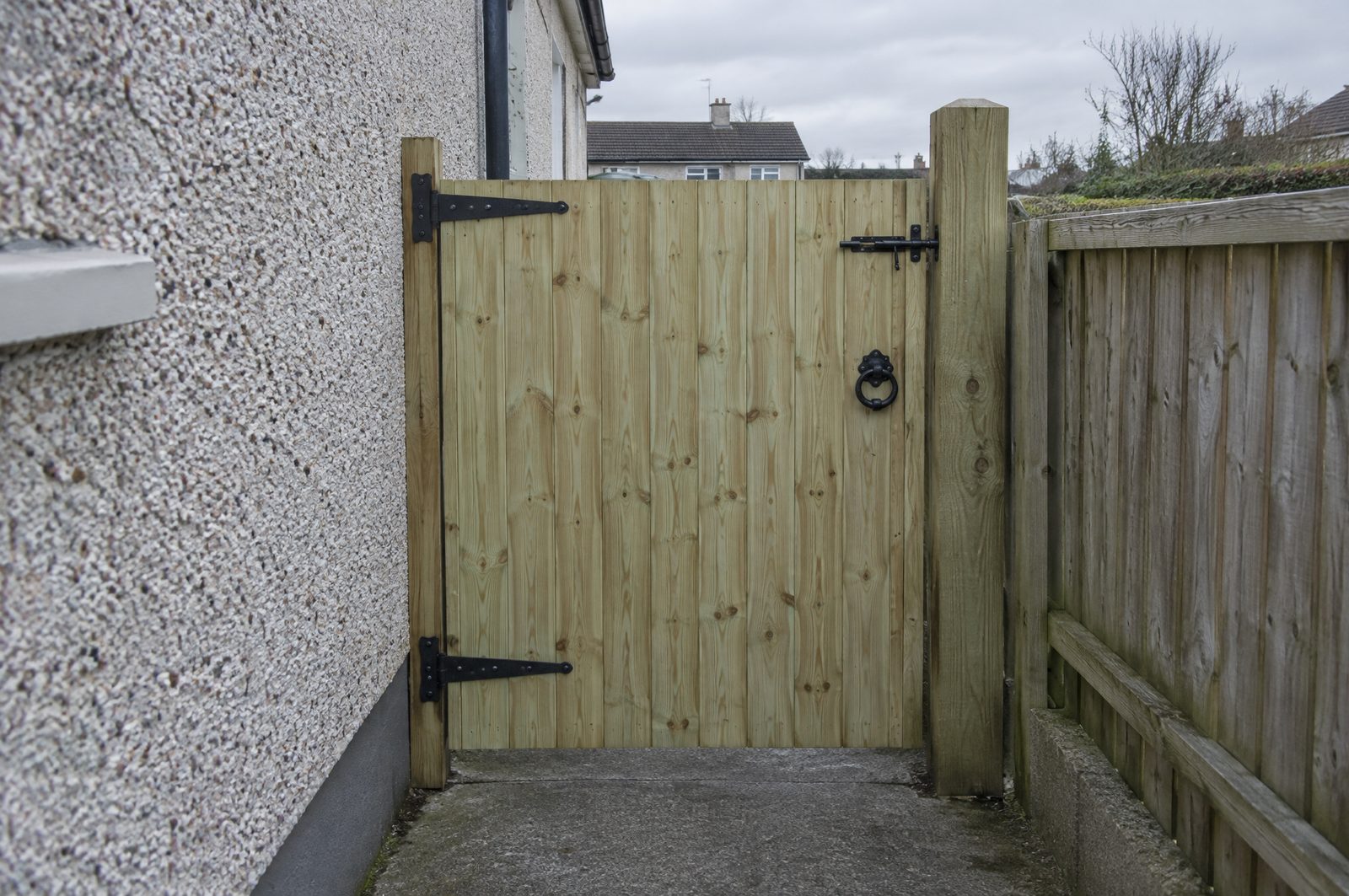
Length and height set the amount of material, and the style sets how much labour goes into each metre.
Posts, gravel boards, the ground, access and taking away the old fence move the price as much as the panels or boards do, and gates are a separate item again.
A fair price comes from someone walking the boundary, so get a written quote that names each of these.
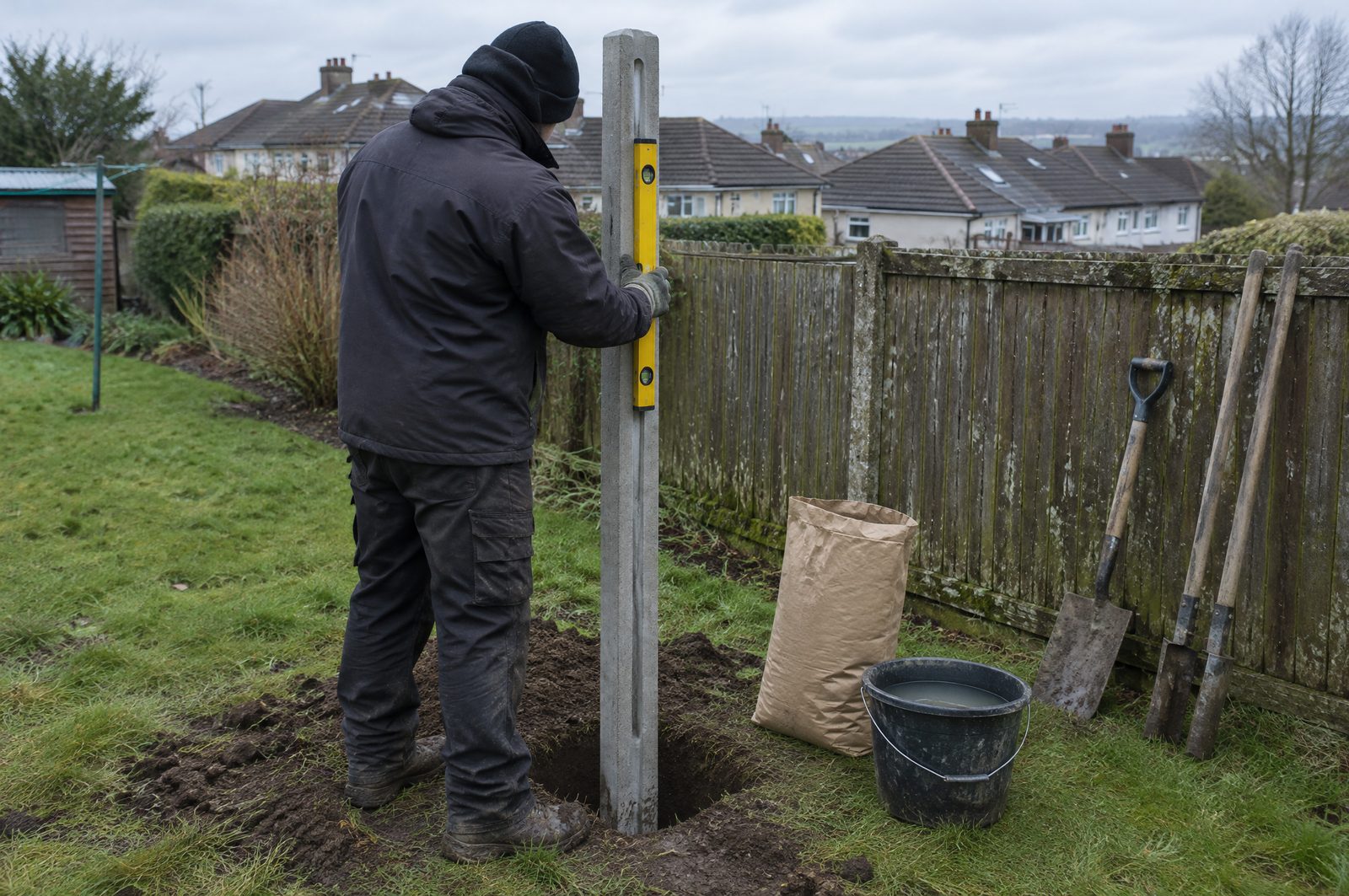
Length, height and style.
The length of the run is the starting point, because it decides how many posts, panels or boards are needed. Height comes next. A taller fence uses more material in every bay, needs longer posts set deeper, and catches more wind, so it is built heavier. Most garden boundaries stay at or under two metres, partly because anything taller usually needs planning permission.
Style changes how much work goes into each metre. Panel fencing is the quickest to put up, since the panels arrive made. Closeboard is built on site, board by board on rails, which takes longer and uses more timber, and in return it is stiffer and follows uneven ground. Picket is low and open, so there is less material. Composite boards cost more to buy than timber, and they save the cost of staining over the years that follow.
Posts: timber or concrete.
Posts carry the whole fence, and they are where a cheap quote often saves money that it should not. Pressure-treated timber posts cost less. Concrete posts cost more and are heavier to handle, but they last longer in wet ground, suit a high or exposed fence, and let a panel be swapped later without disturbing the post.
Depth is part of the post cost too. Every hole should go down 600mm at the very least, and further in soft ground or made ground. Each post is then set in concrete. A quote that does not say how deep the posts go, or what they are set in, leaves out the thing that decides how long the fence stands.
Gravel boards and the bottom of the fence.
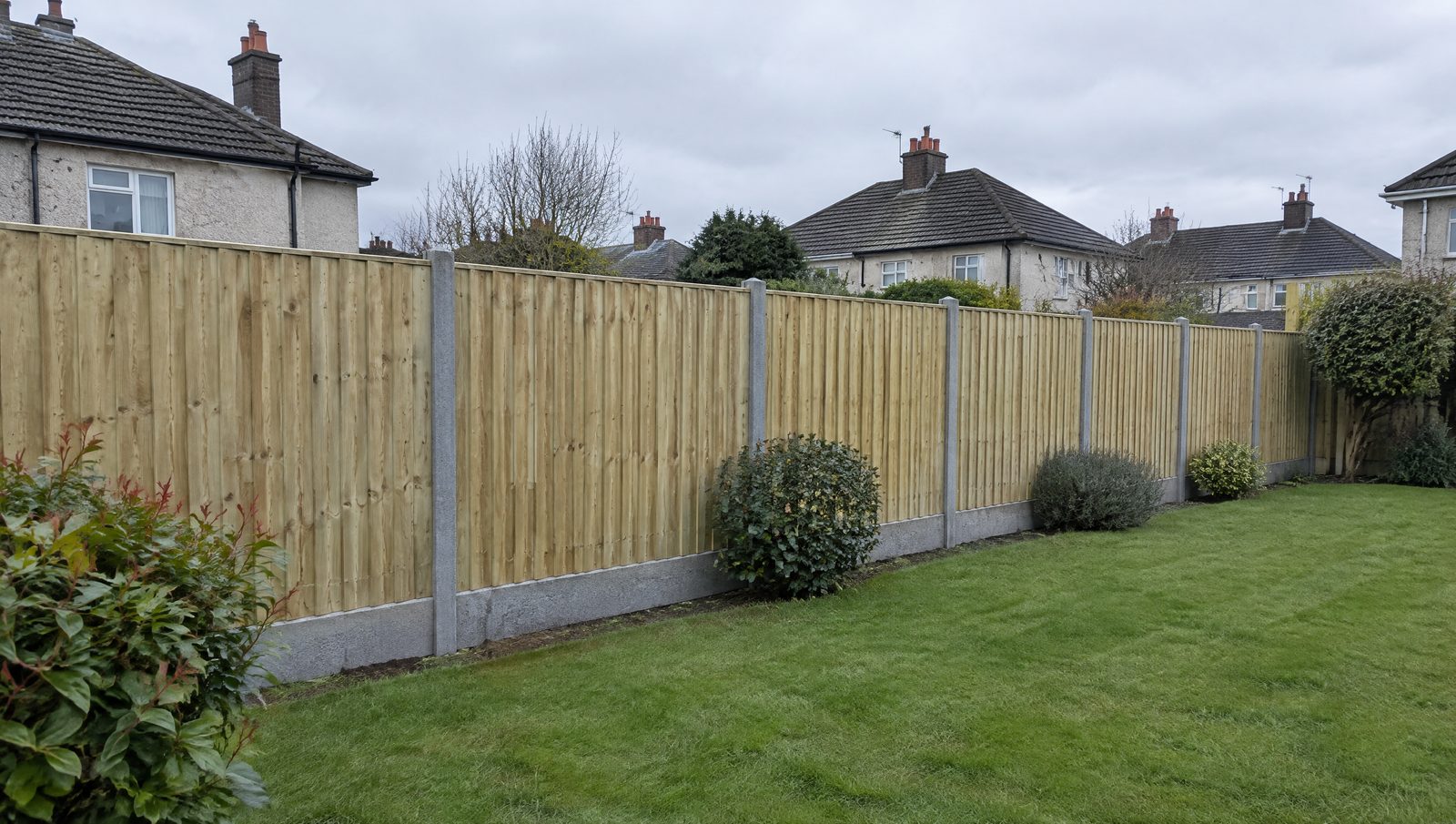
A gravel board is a concrete board along the base of the fence that keeps the timber off the soil. It adds a line to the quote for each bay. Without one, the bottom of a timber fence on grass or earth sits in the damp and rots years before the rest. On a sloping garden, gravel boards also fill the stepped gaps under panels, so the ground has an effect on how many are needed.
Why a fence cost per metre in Ireland is misleading.
People often look for a fence cost per metre, and it is a reasonable question, but a single per-metre figure hides most of what decides the price. Some costs scale with length: posts, panels, boards, concrete. Others are fixed whatever the length, such as setting up, taking out an old fence, making and hanging a gate, and dealing with a difficult corner. Divide a short job by its length and the per-metre cost looks high. A long, open, straight run looks cheap by the same measure.
The ground and access then push a job one way or the other. Stony or rocky ground slows every hole. Soft or made ground means deeper holes and more concrete. A terrace with no side passage means everything comes through the house, and a steep garden means carrying materials uphill. None of that shows up in a per-metre figure, and all of it shows up in the time on site.
The old fence, gates and the finish.
Taking down an old fence is real work. The panels come off easily enough, but the old posts usually come out with a lump of concrete around each one, and stumps sometimes need grinding out of the way. Then it all has to be taken away. A quote should say whether removal is included, because it is easy to leave out and add later.
Gates are priced on their own. A gate needs heavier posts than the fence, set for the weight it hangs, plus hinges, a latch and on a double gate a drop bolt and centre stop. Material and width move the cost. The finish is the last item: a treatment or stain coat on new timber, and cap rails where the style uses them.
- 01Length of the run and number of corners
- 02Height, which also affects planning
- 03Style: panel, closeboard, picket or composite
- 04Timber or concrete posts, and the depth they go to
- 05Gravel boards along the base
- 06Ground conditions and slope
- 07Access to the boundary
- 08Removing and taking away the old fence
- 09Any gates, single or double
Getting a written quote.
The quickest way to a real figure is a visit. We walk the boundary with a tape and a string line, push on any existing posts, look at the ground and the route in, and agree the style and height with you. The look is free. The written quote follows within 48 hours, with each of the items above set out, so you can see what you are paying for.
From the call to the photos.
The same crew looks at the job, quotes it and does it. You get before and after photos when it is finished.
- First01.
Know what you want.
Rough length, the height you have in mind, and whether you want privacy or a lower, open look. Photos of the boundary help.
- Then02.
Get the boundary walked.
A free visit with a tape and a string line, pushing on any posts already there, so the price reflects your ground and access.
- Next03.
Read the written quote.
Within 48 hours. Check it names the style, height, post type and depth, gravel boards, gates and removal of the old fence.
- Last04.
Compare like with like.
Put quotes side by side item by item. A lower total that leaves out removal or uses shallower posts is not the same job.
Where we draw the line.
This guide covers fencing and gates on house boundaries in Dublin, Wicklow and Kildare. It does not give prices, because the same length of fence can be a very different job on two plots. It does not cover walls in block or stone, which are priced as landscaping work, or gate automation, which a specialist fits. For your boundary, the answer is a written quote after someone has walked it.
Questions people ask.
Anything else, ring 085 781 4603.
How much does a new fence cost in Ireland?
It depends on the length, height, style, posts, ground, access, whether an old fence is coming out and whether there are gates. We do not publish prices because two fences of the same length can be very different jobs. The look is free and the written quote follows within 48 hours.
What is the fence cost per metre in Ireland?
There is no honest single figure. Posts and panels scale with length, but removal of the old fence, gates, setting up and awkward access do not. Ask for a full written quote for your run and divide it yourself if you want a per-metre comparison.
Is closeboard more expensive than panel fencing?
Usually, because it is built on site board by board and uses more timber. It is stiffer, stands up to wind better and follows uneven ground, which is why it is often worth it on an exposed boundary.
Can I save money by keeping my old posts?
Yes, if they are sound. Every existing post should be pushed on before a quote. Firm ones can take new panels; ones that move need replacing, or the new fence will fail with them.
Does removing the old fence cost extra?
It is work, so it is part of the price, and it should be listed on the quote. Ours includes taking the old fence, posts and concrete away.
More on fencing.
Or go back to the main fencing page.
Want us to take a look?
Tell us what needs doing and where. Free site visit, then one written price inside 48 hours, with no pressure to go ahead.