Fence height and planning permission in Ireland.
Fence height and planning permission in Ireland are linked by a simple rule of thumb: a fence or wall around a house is generally exempt from planning up to 2 metres high, and up to 1.2 metres in front of the house. Above those heights you normally need permission. This guide explains where those numbers come from, where they apply, and what to check with your local council before a fence goes up.
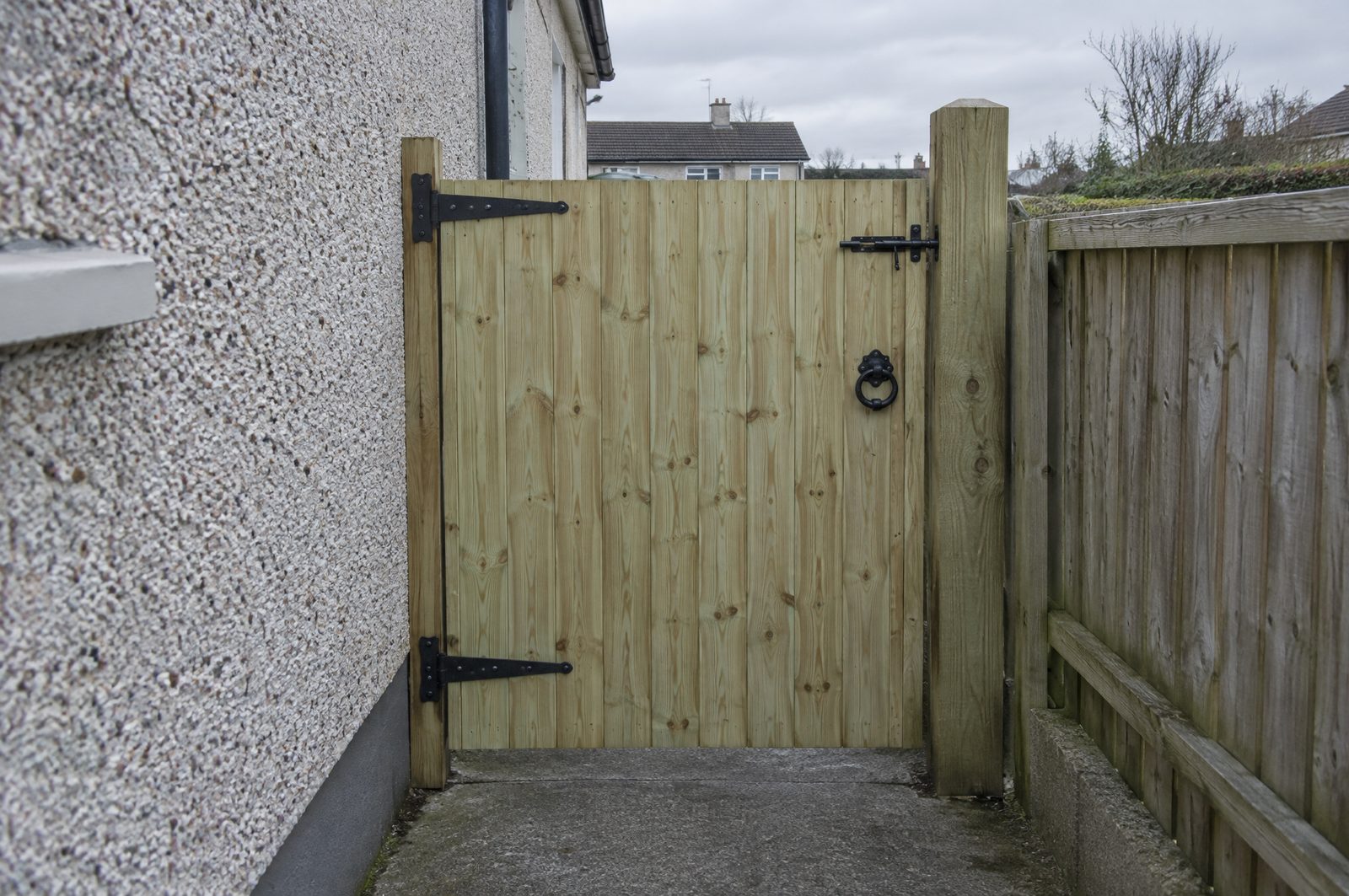
Under the exempted development rules, a fence around a house is generally allowed without planning permission up to 2 metres high.
In front of the house, in the front garden, the limit is generally 1.2 metres.
A taller fence usually needs planning permission, and because exemptions can be removed in some cases, check with your local council before you build.
Where the 2 metre rule comes from.
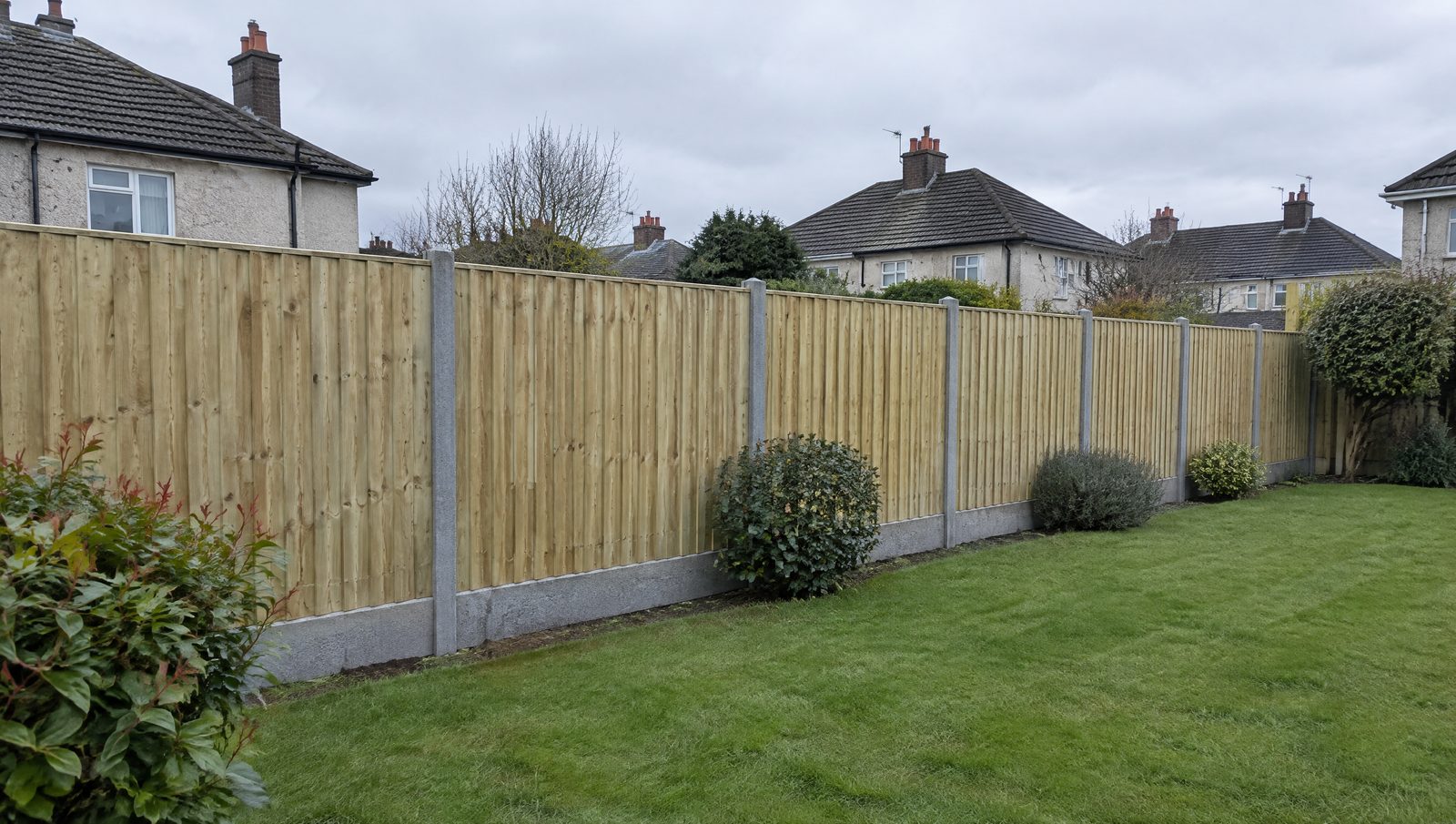
The rules are in the Planning and Development Regulations 2001. Schedule 2 lists types of work that count as exempted development, meaning they do not need planning permission as long as they meet the conditions set out. Class 5 covers boundary walls, fences and railings around a house. In general terms, a fence or wall there is exempt up to 2 metres in height, or 1.2 metres where it is in front of the house.
This is general guidance, not legal advice. The wording of the regulations, and how a council reads it for a particular site, is what counts. If you are unsure about your own boundary, the planning department of your local council is the place to ask, and they can tell you whether the exemption applies before you spend anything.
Back and side gardens.
For most houses, the rear boundary and the side boundaries behind the front of the house are where the 2 metre figure applies. That is enough for privacy in most gardens, which is why 1.8 metre panels and closeboard built to about 2 metres are common in Irish back gardens.
Our own line on this is plain: anything over two metres on a boundary usually needs planning permission, and we will say so before quoting. If you want more screening than a 2 metre fence gives, planting inside the boundary is a way to get height without putting up a taller structure, and it is worth asking the council how they treat trellis or screening fixed on top of a fence. It is safest to count anything fixed to the fence as part of its height.
Front gardens and the 1.2 metre limit.
In front of the house the limit is generally lower, at 1.2 metres. This is the boundary that faces the road, and the lower limit is why front gardens in Irish estates tend to have low walls, railings or picket fencing, not tall solid fences.
Corner houses and houses with a side garden facing a road are where people most often get caught out, because it is not always obvious which part counts as the front. Ask the council how they would treat your site before a taller fence goes up along a boundary that faces a road.
When the exemption may not apply.
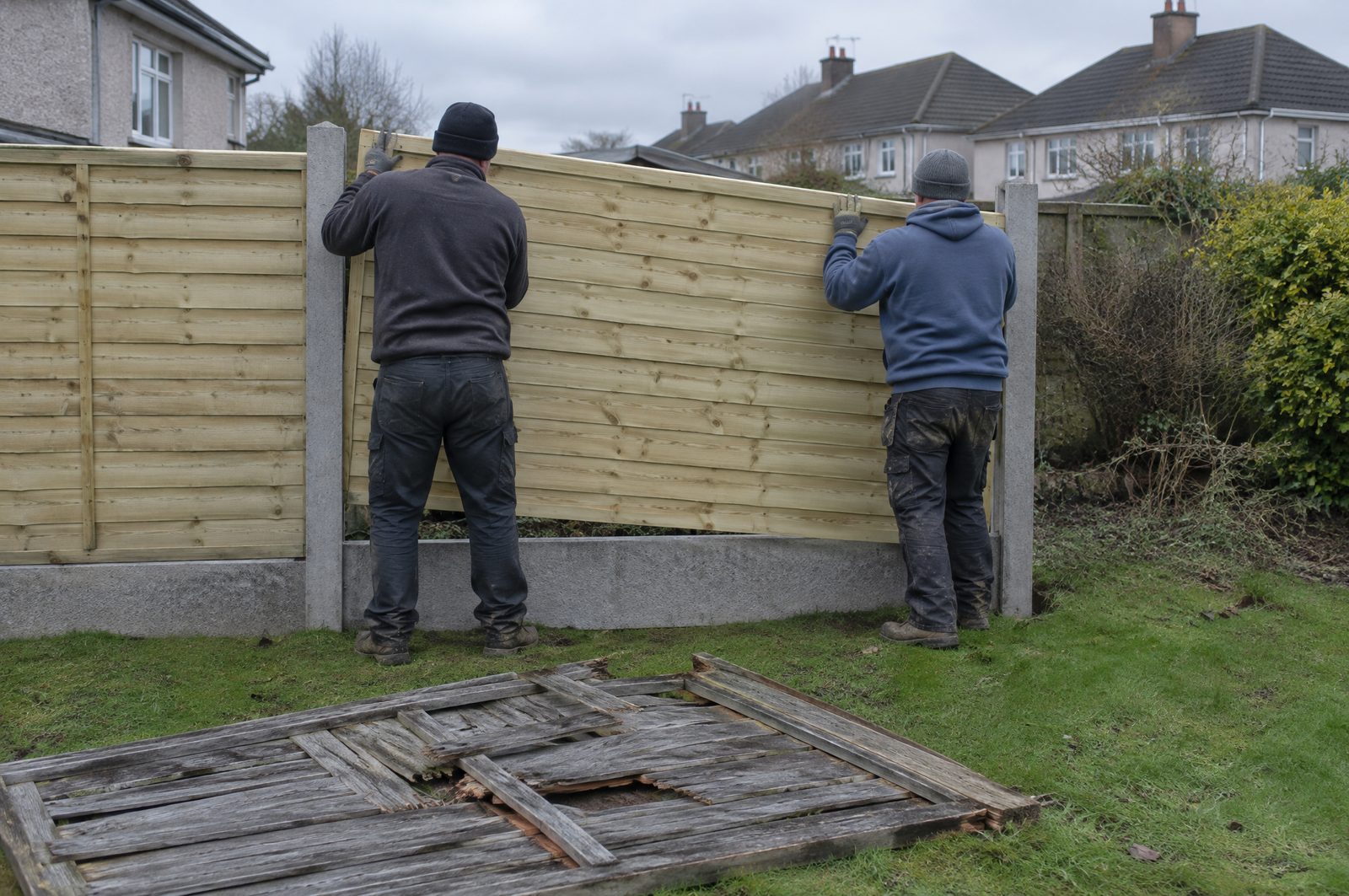
Exempted development rules do not cover every house in every situation. The planning permission for a housing estate can include conditions about boundaries, and those conditions can limit what is exempt. Protected structures, and houses in an area with special planning controls, can also be treated differently. None of this is unusual, but it is not something we can confirm from outside. Your council can.
Where the ground is higher on one side of the fence than the other, ask how the height is measured. A fence that is 2 metres on your side may be taller from the neighbour's garden on a sloping site.
Height, neighbours and the boundary line.
Planning rules decide how high a fence can be. They do not decide whose fence it is or where it goes. Your deeds or the site map normally show the boundary, and it is worth checking them and talking to your neighbour before work starts. A new fence needs access from both sides to be set properly, and boundary disputes are for neighbours to settle. If the line is not clear, we will say so before a post goes in.
From the call to the photos.
The same crew looks at the job, quotes it and does it. You get before and after photos when it is finished.
- First01.
Decide the height you want.
Think about privacy, wind and light. A taller fence also needs stronger, deeper posts, and that changes the price.
- Then02.
Check front or rear.
Work out whether the boundary is in front of the house, behind it or beside a road. That decides which general limit applies.
- Next03.
Ask the council if unsure.
If the house is on a corner, is a protected structure, or the estate has boundary conditions, contact your local council before going ahead.
- Last04.
Get it walked and quoted.
We measure the boundary for free, agree the height with you, raise planning if it applies, and send a written quote within 48 hours.
Where we draw the line.
We build fencing and gates on residential boundaries. We do not apply for planning permission, give legal advice or settle boundary disputes. This guide gives general information about the exempted development rules for fences around houses; your local council has the final say on whether a fence at your property needs permission. Walls in block or stone fall under landscaping work and are quoted separately.
Questions people ask.
Anything else, ring 085 781 4603.
How high can a garden fence be in Ireland without planning permission?
Generally up to 2 metres for a fence around a house, under the exempted development rules. In front of the house the general limit is 1.2 metres. Check with your local council if you are not sure your site is covered.
Do I need planning permission for a 6 foot fence?
Six feet is about 1.83 metres, which is under the general 2 metre limit for back and side gardens, so it is generally exempt there. In front of the house it would be over the general 1.2 metre limit.
Can I put a taller fence up if my neighbour agrees?
Your neighbour agreeing does not change the planning rules. A fence over the exempt height generally needs planning permission whether the neighbour is happy or not.
Does trellis on top of a fence count towards the height?
It is safest to treat it as part of the fence and include it in the height. If you are planning to go close to the limit, ask your local council how they would measure it.
Will you tell me if my fence needs planning permission?
We will tell you if what you are asking for is over two metres on a boundary, because that usually needs permission. For anything unusual about your site, the council is the right place to confirm it.
More on fencing.
Or go back to the main fencing page.
Want us to take a look?
Tell us what needs doing and where. Free site visit, then one written price inside 48 hours, with no pressure to go ahead.