Composite fencing in Dublin.
Composite fencing for Dublin houses: boards made from recycled plastic and wood fibre, slotted between posts to form a solid boundary that needs no staining. We supply and fit composite fence panels on rear and side boundaries, take away the old fence, and give you a written price before anything is ordered.
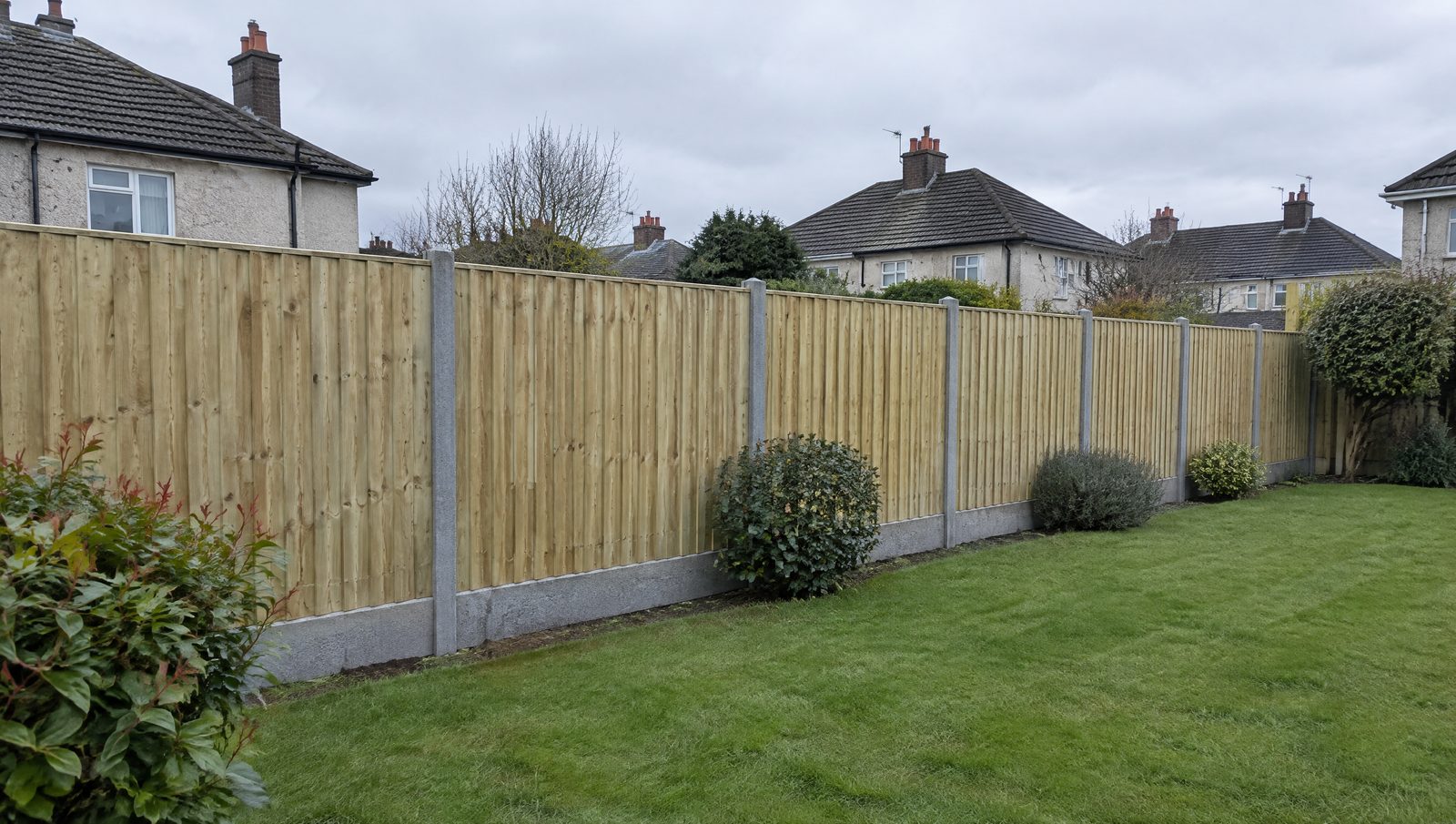
Composite fencing costs more than timber to put up, but it does not rot, warp or need a coat of stain every few years.
We fit composite boards between posts set in concrete, at least 600mm deep, with the run lined up straight and level.
The visit to measure is free, and a written quote for your boundary arrives within 48 hours.
What composite fencing is.
A composite fence board is a mix of recycled plastic and wood fibre, shaped into a long plank. The boards stack on top of each other and slot into channels between the posts, so a full height of boards forms one solid infill. There are no nails in the face and no gaps between overlapping slats. The colour is part of the board when it is made, which is why it does not need staining.
Because there is no bare timber in the face, the usual timber problems do not apply. Rain and damp do not rot it, and it does not twist or cup as it dries out in summer. It still needs posts that are set properly, because a composite fence is heavier and stiffer than a light overlap panel, and if the posts are weak the whole line will lean.
Composite fence panels against timber.
The honest comparison is about years, not the day it goes up. A timber fence is cheaper to buy and fit. It also needs treatment or stain every few years to keep the weather off it, and sooner or later boards split and posts go soft at the ground. Composite costs more to install and then asks for very little. Over the life of the fence the difference narrows, and on some boundaries it disappears.
Composite earns its keep most on a fence you cannot easily reach. The back of a boundary that faces a lane, a fence behind a shed, or one along a garden crowded with planting are all awkward to stain. Composite saves you from having to get at them. On an open boundary that is easy to reach, a well built timber fence remains a sensible choice, and we will say so if that is what fits.
Composite fencing in Dublin gardens.
Most Dublin jobs are the rear or side boundary of a semi or a terrace, often shared with a neighbour. In a terrace with no side passage, the boards, posts and concrete come through the house and the old fence leaves the same way, so we plan that route on the visit. Composite boards are long, and a tight hall with a turn in it is worth measuring before the order goes in.
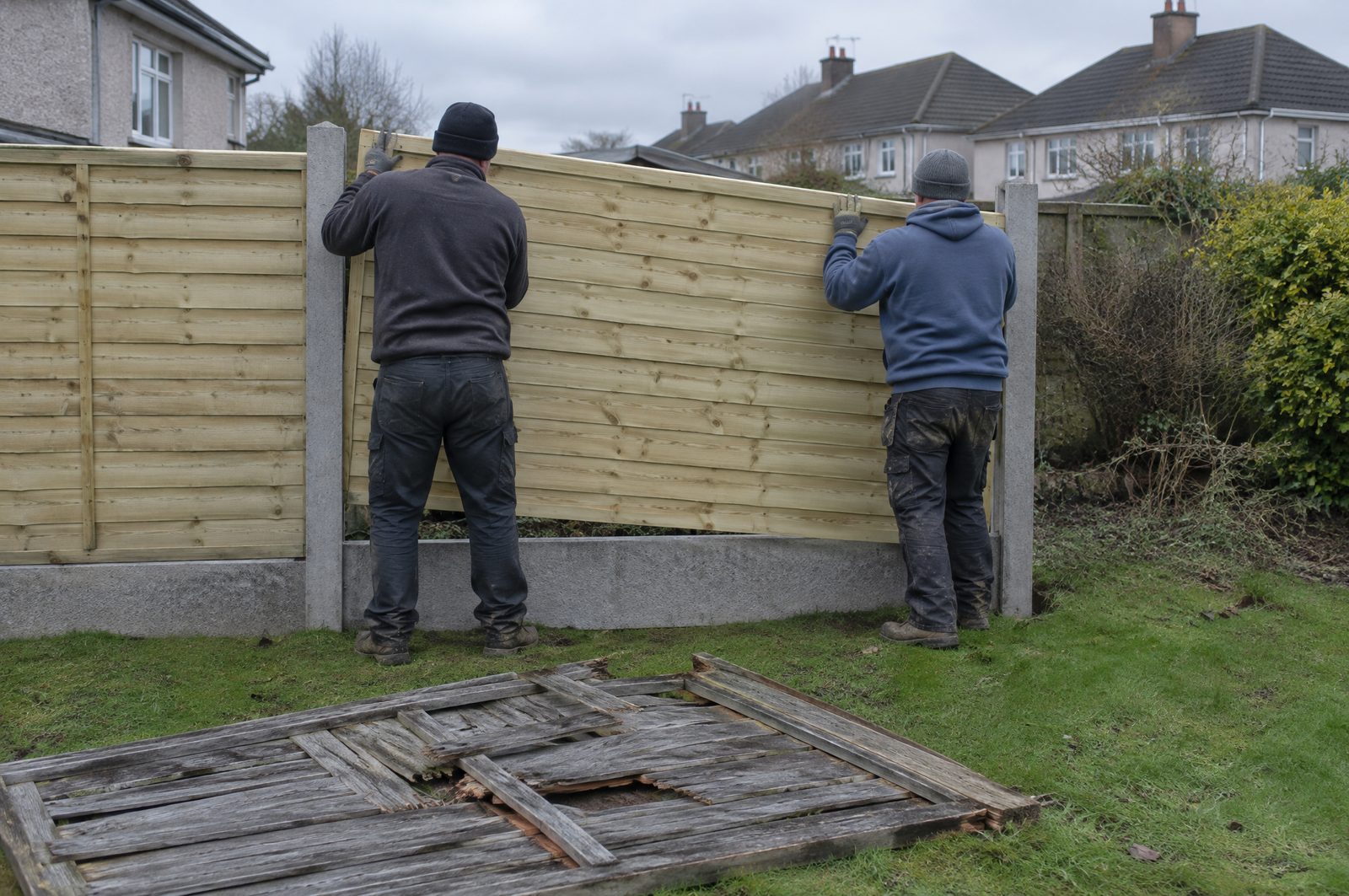
Dublin gardens also tend to have the new fence going in against an old one, a hedge or a neighbour's shed. Where the old fence is ours to take down, it comes out completely: panels, posts and the lumps of concrete around them. Where it belongs next door, the line has to be agreed with your neighbour first, and we will need access to both sides to set the posts properly.
Posts, gravel boards and the base of the fence.
Every post hole goes to 600mm at least, and deeper where the ground is soft or is fill from when the house was built. The post is set in concrete with the top of the concrete sloped so water runs away. The bottom of the fence must stay off wet ground, so where the line runs over soil or grass, the run starts on a gravel board. That keeps the boards clear of the damp and of the strimmer.
- 01Old fence, posts and concrete taken out and taken away
- 02New posts concreted to depth and set plumb on a string line
- 03Gravel boards where the fence meets earth or grass
- 04Composite boards slotted in, capped and checked for level
- 05Matching composite gate if the boundary needs one
Gates to match.
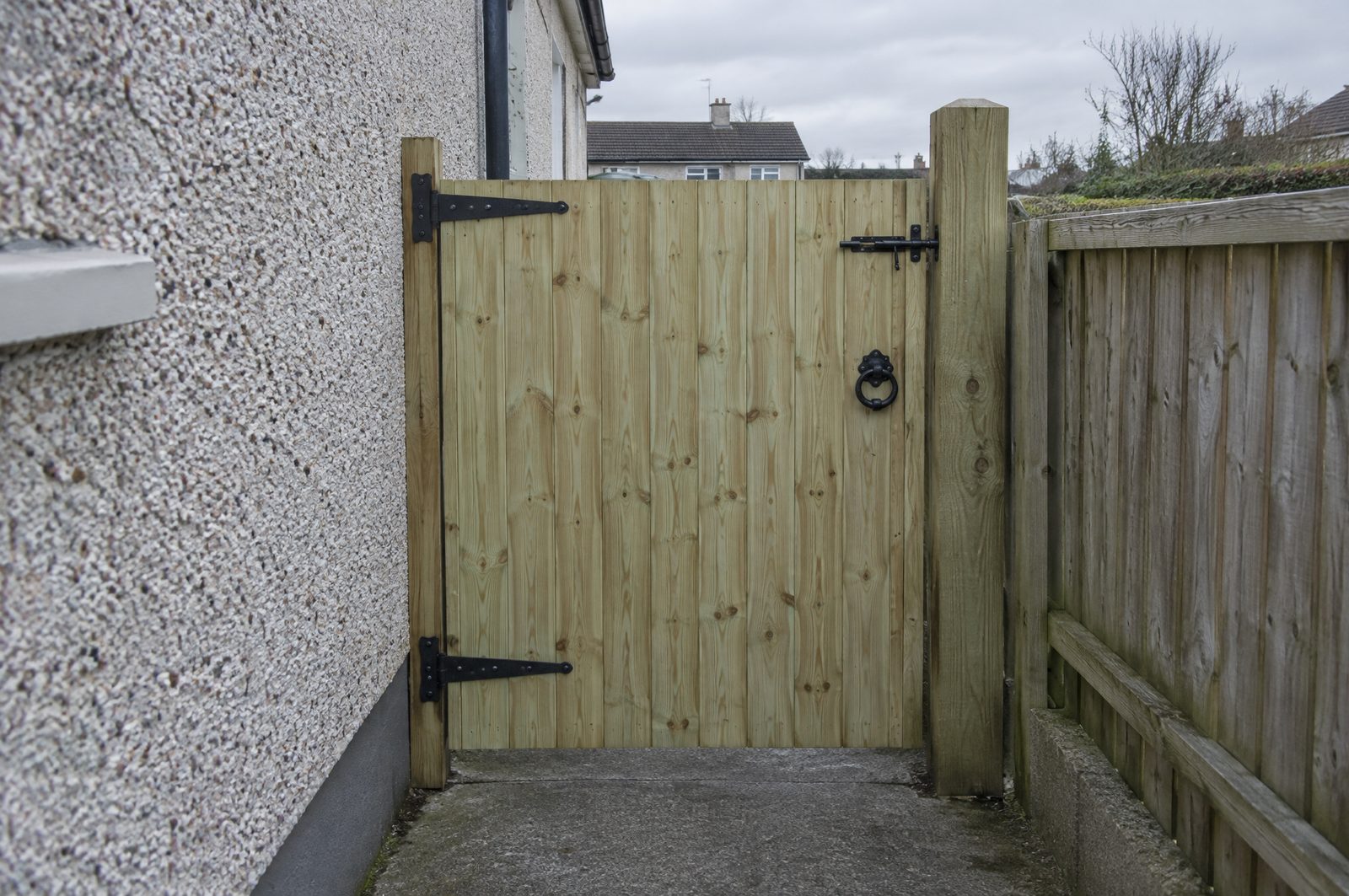
A composite boundary often needs a gate in it, usually at the side of the house or into a back lane. We can hang a composite gate made to the opening so it sits in line with the rest of the run, on posts set for the extra weight and with galvanised hinges and latch.
From the call to the photos.
The same crew looks at the job, quotes it and does it. You get before and after photos when it is finished.
- First01.
Measure and talk it through.
We measure the boundary, look at the posts and the ground, check how materials will get in, and go through colours and heights with you.
- Then02.
A written quote.
Within 48 hours. It lists the length, height, post type, gravel boards, gate if needed, and the removal of the old fence.
- Next03.
Fitting day.
Out comes the old fence, the posts are concreted in on a string line, and the composite boards are slotted in and capped.
- Last04.
Check and photos.
We check the line and level from both ends, sweep the site, and send you photos from before and after.
Where we draw the line.
We install composite fencing and gates on house boundaries in Dublin, Wicklow and Kildare. We do not build walls in block or stone; that is landscaping work, which we can price separately. A fence over two metres on a boundary usually needs planning permission, and we will tell you before quoting. Where there is a dispute about where the boundary runs, it has to be settled between neighbours before work starts.
Fencing questions.
Anything else, ring 085 781 4603.
Is composite fencing worth the extra money?
On a boundary that is hard to reach or that you do not want to stain every few years, usually yes. On an open, easy fence where you do not mind the upkeep, timber is still good value. We will tell you which way we would go on your boundary.
Does composite fencing need any maintenance?
No staining or treating. A wash down now and then keeps it clean. The posts are what holds it up, which is why we set them in concrete at least 600mm down.
Can composite fence panels go on my existing posts?
It depends on the posts and how the boards fix to them. We push on every existing post before we quote. If they are sound and suit the boards, it may be possible; if not, they come out and new ones go in.
Can you fit composite fencing through a terrace house?
Yes. Boards, posts and concrete are carried through, and the old fence goes out the same way. We measure the route on the visit so we know the long boards will fit through.
How long does it take to put up?
A standard rear or side boundary on a Dublin semi is usually a day or two, including taking the old fence out. Your quote gives the number of days for your job.
More on fencing.
Or go back to the main fencing page.
Get your job priced properly.
Tell us what needs doing and where. Free site visit, then one written price inside 48 hours, with no pressure to go ahead.