Turf laying and new lawns in Dublin.
Turf laying in Dublin, and new lawns from seed, for back and front gardens where the old grass has given up or the ground has never grown a decent lawn. The topsoil is prepared, levelled and firmed before anything goes on it, because that is what decides how the lawn looks in a year's time.
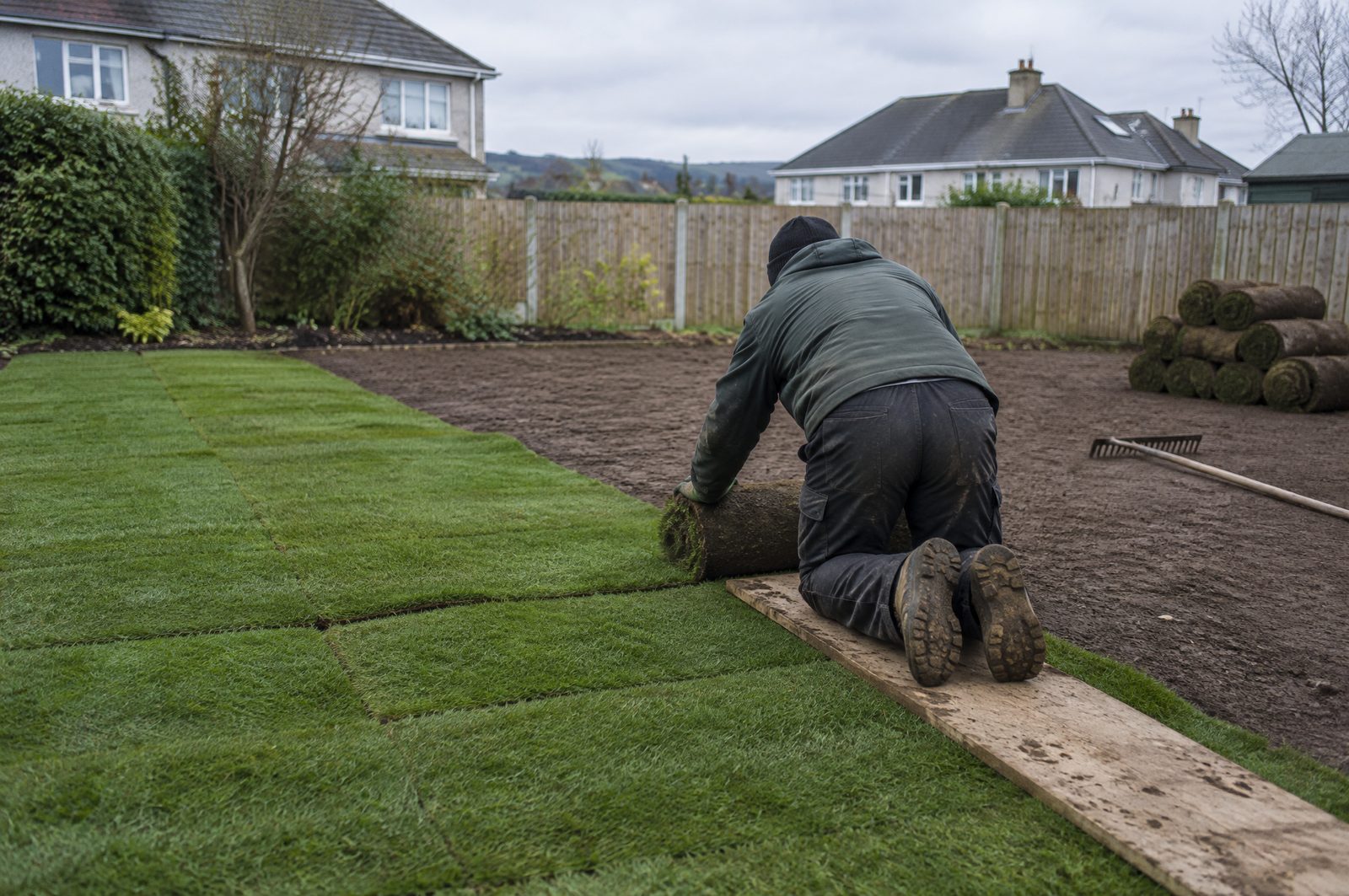
A new lawn in Dublin lasts when the ground under it is right: old turf and weeds stripped, compaction broken up, topsoil added where it is thin, then levelled and firmed.
Turf gives you a finished lawn on the day it is laid. Seed takes longer but grows a stronger lawn a season later, and we say which suits your garden and the time of year.
Spring and autumn suit both. You get care notes for the first year at handover, and a written quote within 48 hours of the free site visit.
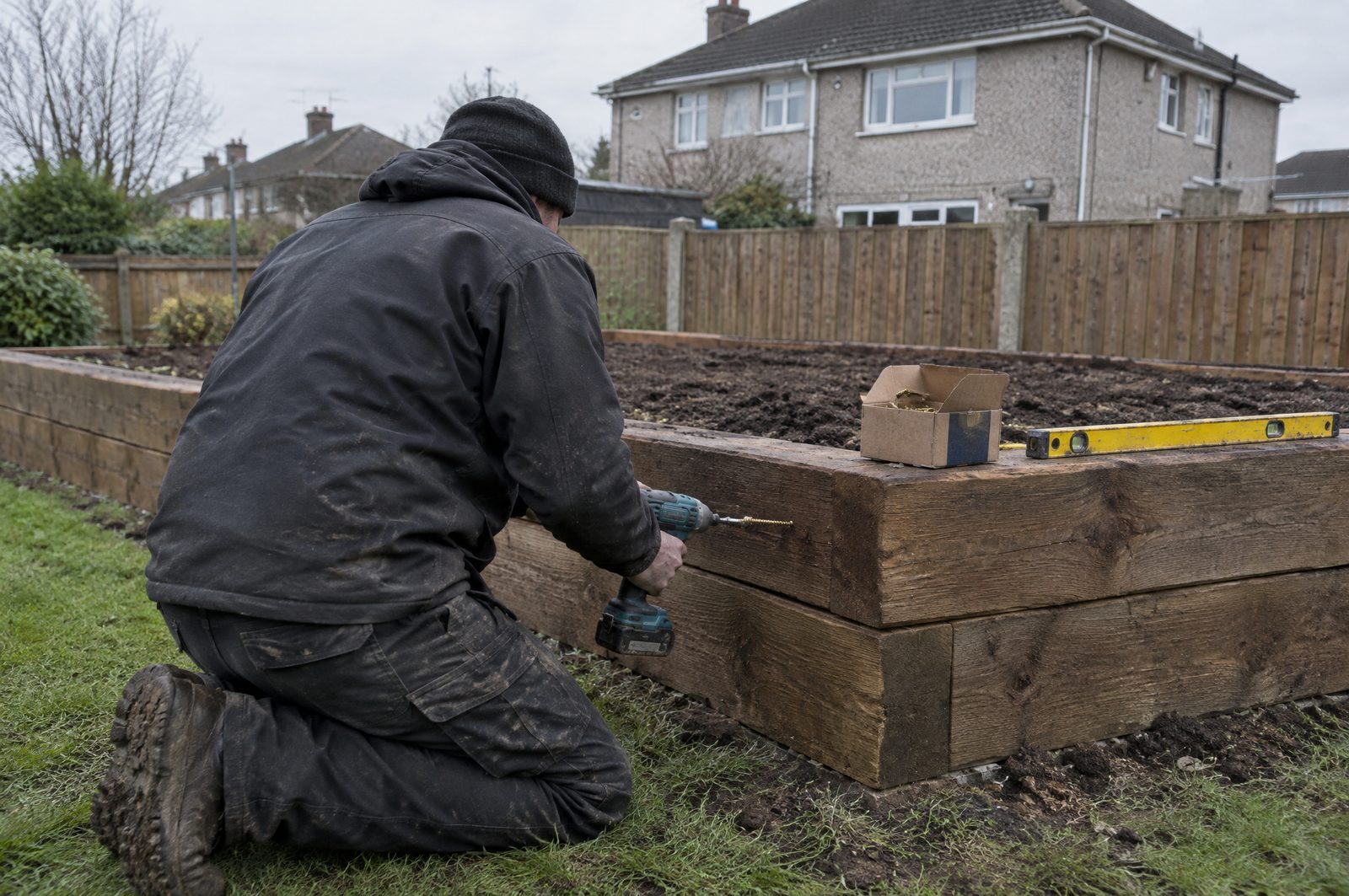
Turf laying in Dublin starts with the ground.
Most failed lawns fail from underneath. New turf laid over a tired lawn, a bumpy surface or compacted clay looks fine for a few weeks, then the roots hit the hard layer, the hollows hold water and the bumps scalp every time the mower goes over them. A lot of Dublin gardens have clay subsoil and some have builder's rubble a short way down, so the preparation is where the time goes.
We strip the old turf and weeds, break up the ground underneath, and pick out stones, roots and rubble. Where the topsoil is thin or poor, more is brought in and spread. Then the whole area is raked level, firmed by treading or rolling, raked again and checked for low spots. The surface should be firm enough to walk on without leaving deep footprints and fine enough on top for roots to take.
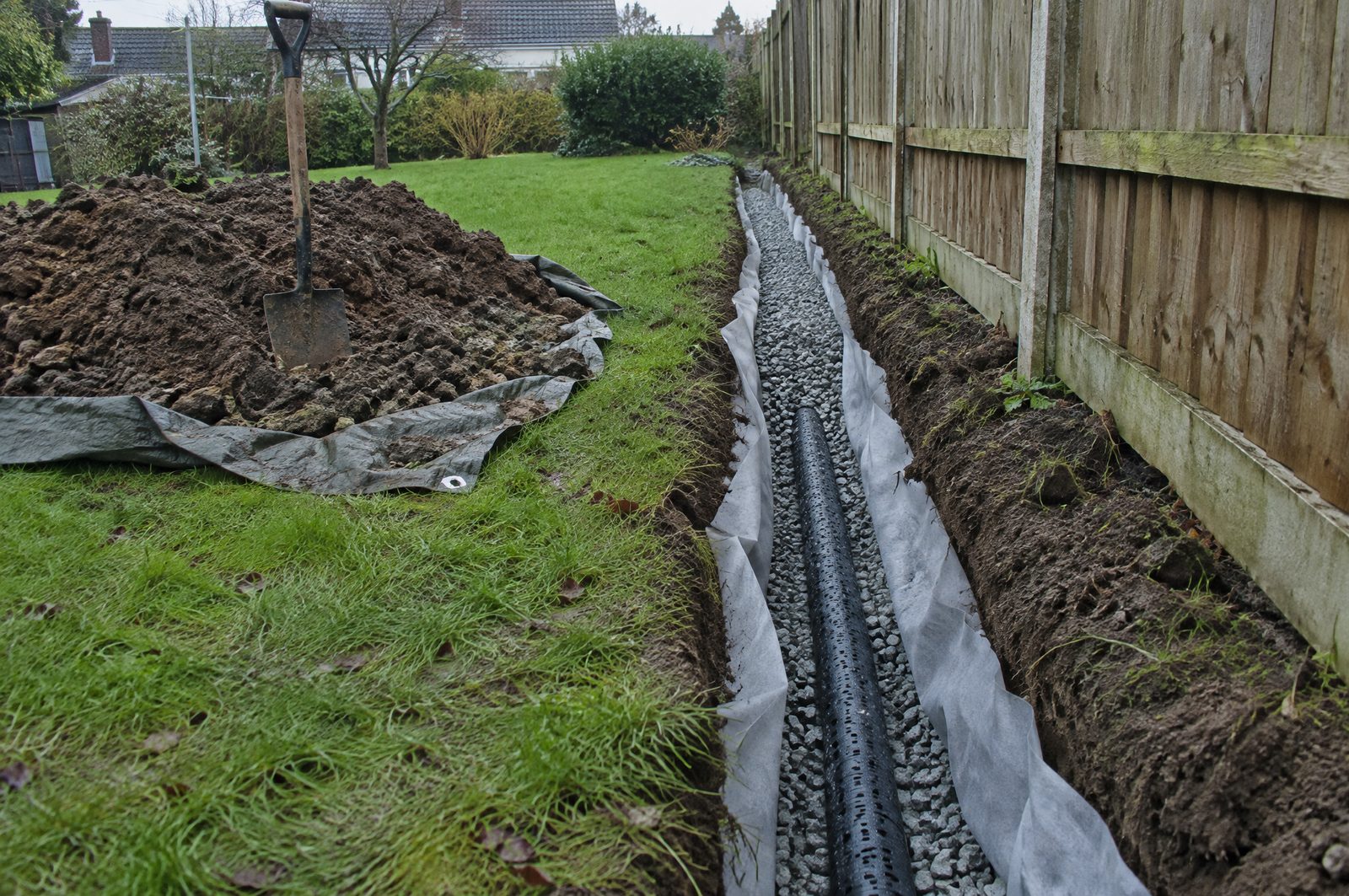
If water lies on the lawn after rain, that gets dealt with at this stage. A new lawn on ground that does not drain will go the same way as the old one.
Turf or seed for a new lawn.
Turf is the quick route. It is cut and delivered in rolls, laid in staggered rows with the joints butted tight, and firmed down. On the day it goes down the garden looks finished, and after a few weeks of rooting it can take normal use. It costs more than seed and it has to be laid within a day or so of delivery.
Seed takes patience. It is sown onto the prepared surface, raked in lightly and kept moist while it germinates. The first growth is thin, and it takes most of a season before the lawn is thick and hard-wearing. In return, the grass roots grow down into your own soil from the start, and you can pick a seed mix for shade, heavy wear or a fine finish. We will say which makes more sense for your garden and the season you want it done in.
The right time of year.
Spring and autumn are when a new lawn establishes most easily in Ireland. The soil is warm enough for roots to grow, rain does much of the watering, and the sun is not strong enough to dry out new turf in an afternoon. Early autumn is particularly good for seed, because the ground still holds the summer's warmth.
Turf can be laid in summer, but it needs watering every day in a dry spell and it can shrink at the joints if it dries out. Winter is the poor season: frozen or waterlogged ground cannot be prepared properly and nothing roots. If a lawn is part of a bigger garden build, the hard landscaping goes in first and the lawn is timed for the right season.
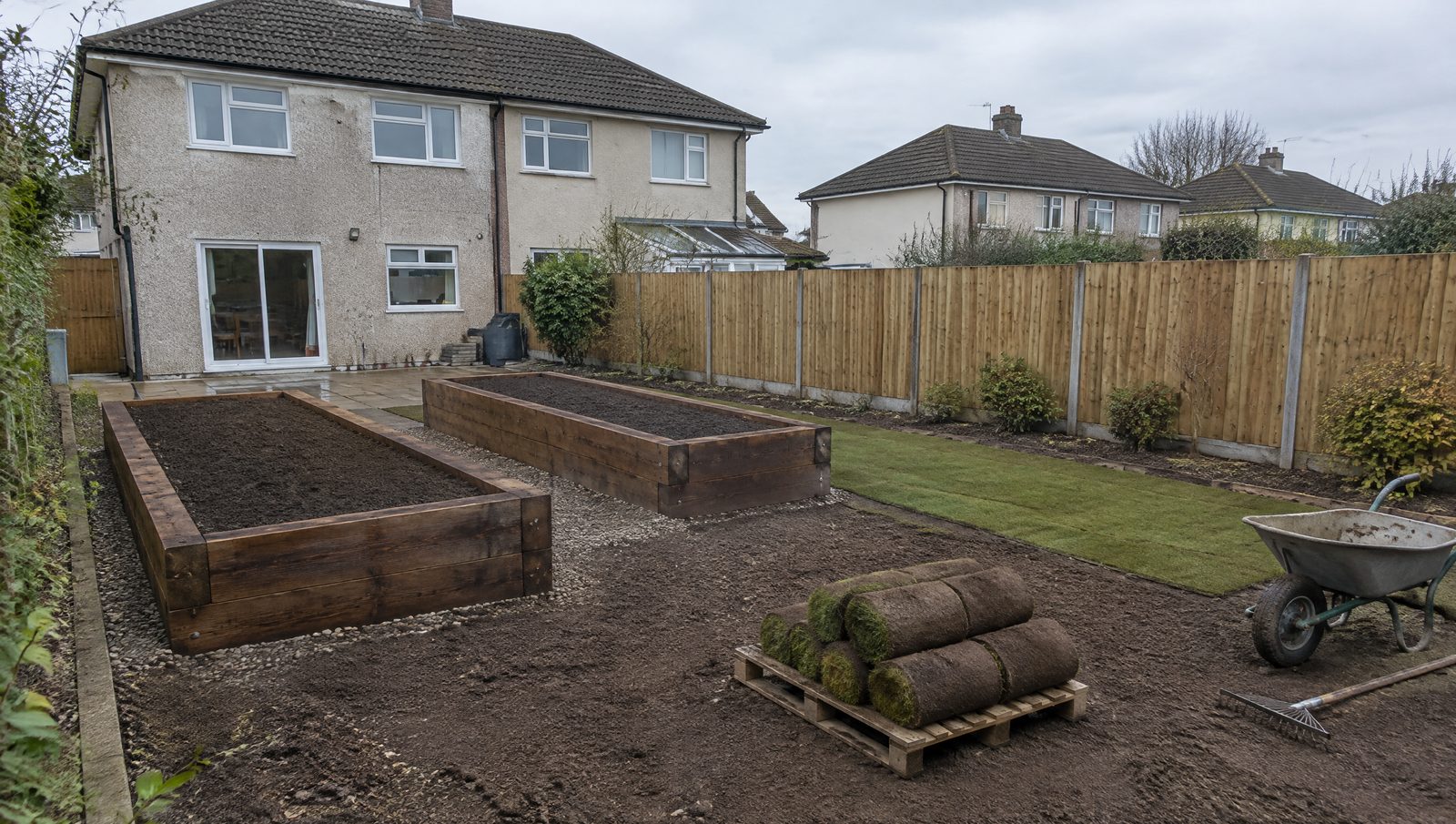
Shade, wear and small gardens.
In a typical Dublin back garden the fences, the house and the neighbours' trees put part of the lawn in shade for much of the day. Grass struggles in deep shade. A shade-tolerant seed mix helps, and sometimes the honest answer is to make the shaded strip a bed or a gravel area and keep the lawn where the light is.
Children, dogs and the route to the shed or the back gate all wear lines into grass. If a path is needed, it is better built in from the start than left to form in the lawn. Edging between the lawn and the beds keeps the shape clean and stops grass creeping into the borders.
Care for a new lawn in the first year.
The first weeks matter most. New turf should be watered thoroughly unless it is raining, until it has rooted into the soil underneath; lift a corner and if it resists, it is taking. Keep off it as much as you can for the first few weeks. Seed needs the surface kept moist until the grass is up, and very light use until it thickens.
The first cut comes when the grass is growing and the roots have taken, with the mower set high and only the top taken off. Lower the cut gradually over the following weeks. Feed it in spring and autumn of the first year, pull or spot-treat weeds rather than using a strong weedkiller on young grass, and keep leaves off it in autumn. All of this is in the care notes left with you at handover.
From the call to the photos.
The same crew looks at the job, quotes it and does it. You get before and after photos when it is finished.
- First01.
Site visit.
We look at the existing lawn, the soil, the drainage, the light and the access, and talk through turf or seed.
- Then02.
Written quote.
Within 48 hours, covering preparation, any topsoil, the turf or seed, and taking away the old turf and waste.
- Next03.
Ground preparation and laying.
Old lawn stripped, ground broken up and cleared, topsoil levelled and firmed, then turf laid or seed sown.
- Last04.
Handover with care notes.
Before and after photos when the lawn is finished, and written care notes covering watering, the first cut and the first year.
Where we draw the line.
We lay new lawns from turf or seed on residential gardens, with the ground preparation and drainage that goes with them. We do not install artificial grass, sports pitches or irrigation systems, and we do not offer an ongoing lawn treatment programme. Regular mowing and garden maintenance after a new lawn is a separate service we can quote.
Landscaping questions.
Anything else, ring 085 781 4603.
Can you lay new turf over my old lawn?
We do not. Turf laid over an old lawn sits on the old grass and the uneven surface, roots poorly and shows every bump. The old turf comes off and the ground is prepared first.
Is turf or seed better for a new lawn?
Turf if you want the garden usable quickly. Seed if you can wait a season and want a lawn rooted deep in your own soil, or need a mix for shade. We will recommend one for your garden.
How soon can I walk on new turf?
Keep off it as much as you can for the first few weeks while it roots. Once a corner resists when you try to lift it, light use is fine.
Can turf be laid in winter in Dublin?
Not well. Frozen or waterlogged ground cannot be prepared properly and the turf will not root until it warms up. Spring or autumn gives a much better result.
Do you take the old grass and soil away?
Yes. The old turf, stones, rubble and waste go in the skip, and the skip is in the quote.
More on landscaping.
Or go back to the main landscaping page.
Get your job priced properly.
Tell us what needs doing and where. Free site visit, then one written price inside 48 hours, with no pressure to go ahead.