Garden drainage in Dublin for a waterlogged garden.
Garden drainage in Dublin for lawns that turn to mud every winter, corners where water stands for days and paths that send rain towards the back door. We find out where the water is coming from and why it is staying, then fix the cause with a French drain, a soakaway, a better top layer on the clay or the right falls on the hard surfaces.
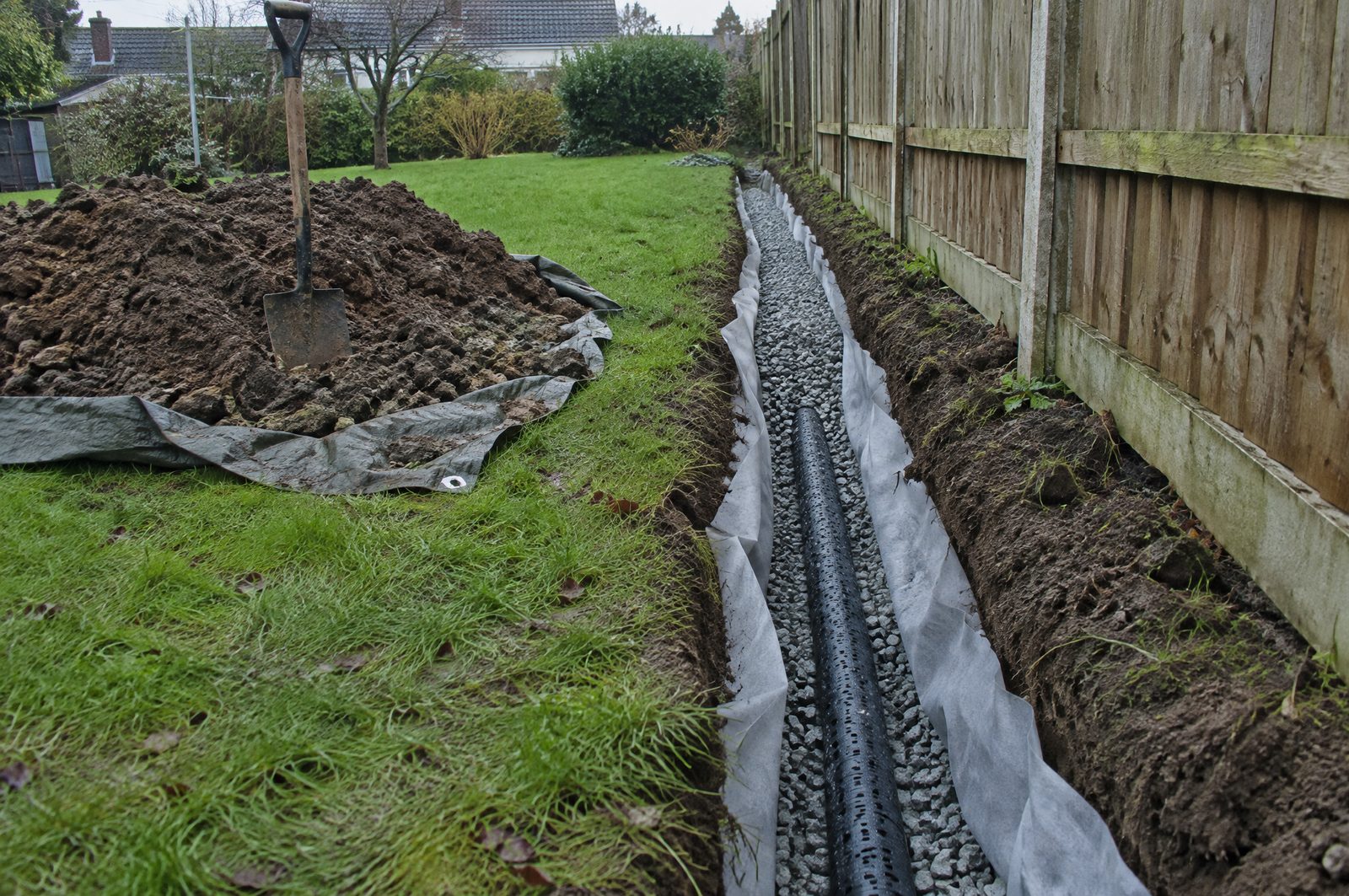
A waterlogged garden in Dublin is nearly always clay soil that has been compacted, water arriving from somewhere it should not, or both.
The fix depends on which: a lawn that is wet all over usually needs its top layer improved, while water collecting in one place usually needs a French drain to carry it away to a soakaway or another outlet.
We look at the garden for free, dig a test hole, and send a written quote within 48 hours that says what the drainage is and where the water will go.
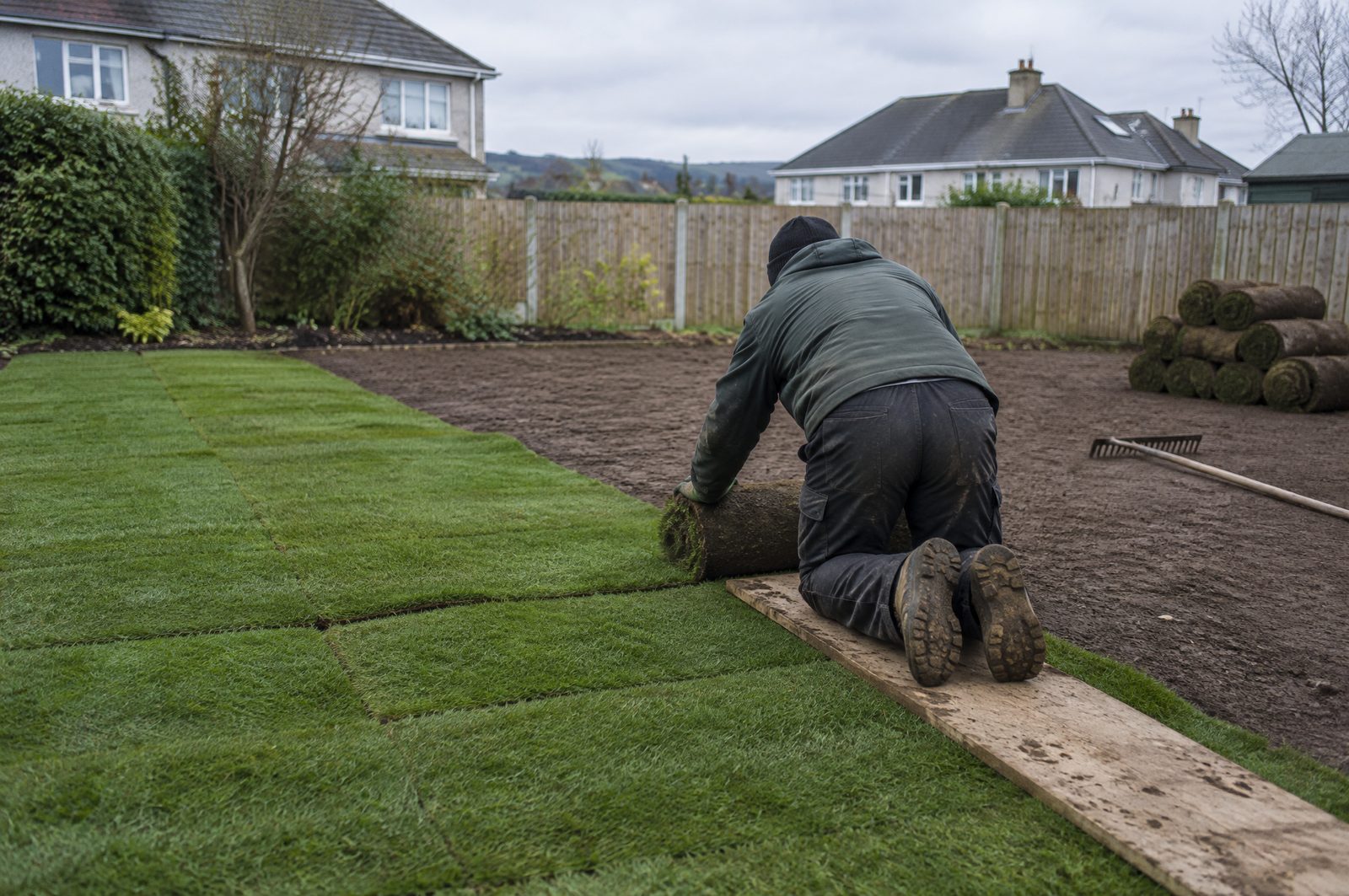
Why a Dublin garden ends up waterlogged.
Much of Dublin sits on boulder clay, a dense, stony clay left behind by the ice. It holds water well, which is good for plants in a dry spell and bad for a lawn in a wet winter. Once clay is compacted it gets worse. Building work, years of foot traffic, a car parked on the grass or heavy machinery when an estate was built can all press the top layer into something close to a seal.
Water also arrives from places you might not expect. A downpipe that empties onto the lawn, a neighbour's garden that sits higher than yours, a solid surface by the house with its fall set the wrong way, or a slope that collects run-off from the whole row of gardens above it. A garden with average soil can still be waterlogged if it is the low point that everything drains into.
Finding the cause first.
Drainage that treats the wrong problem does not work, so we start by looking. After rain, where does the water sit, and for how long? Is it the whole lawn, or one corner, or a strip along a fence or wall? Moss, rushes and bare patches show where the ground is wet even in a dry week.
Then a test hole. We dig down through the topsoil into what is underneath, fill it with water and watch how fast it drains. If it empties steadily, the subsoil can take water and the problem is near the surface. If it sits full, the clay below is tight and the water needs to be led away rather than soaked in. That one hole decides most of the design.
Improving the top layer on clay.
When a lawn is wet across the whole garden but there is no obvious flow of water into it, the problem is usually the top few inches. We break up the compacted layer, work in grit and organic matter so the clay opens up, and bring in topsoil where the existing layer is thin or full of rubble. The ground is levelled and firmed and the lawn goes back on top, either as turf or as seed.
This is less dramatic than a drain and it is often the right answer. Grass roots go deeper in an open soil, and a deeper-rooted lawn copes with wet and dry spells far better than one sitting on a hard pan.
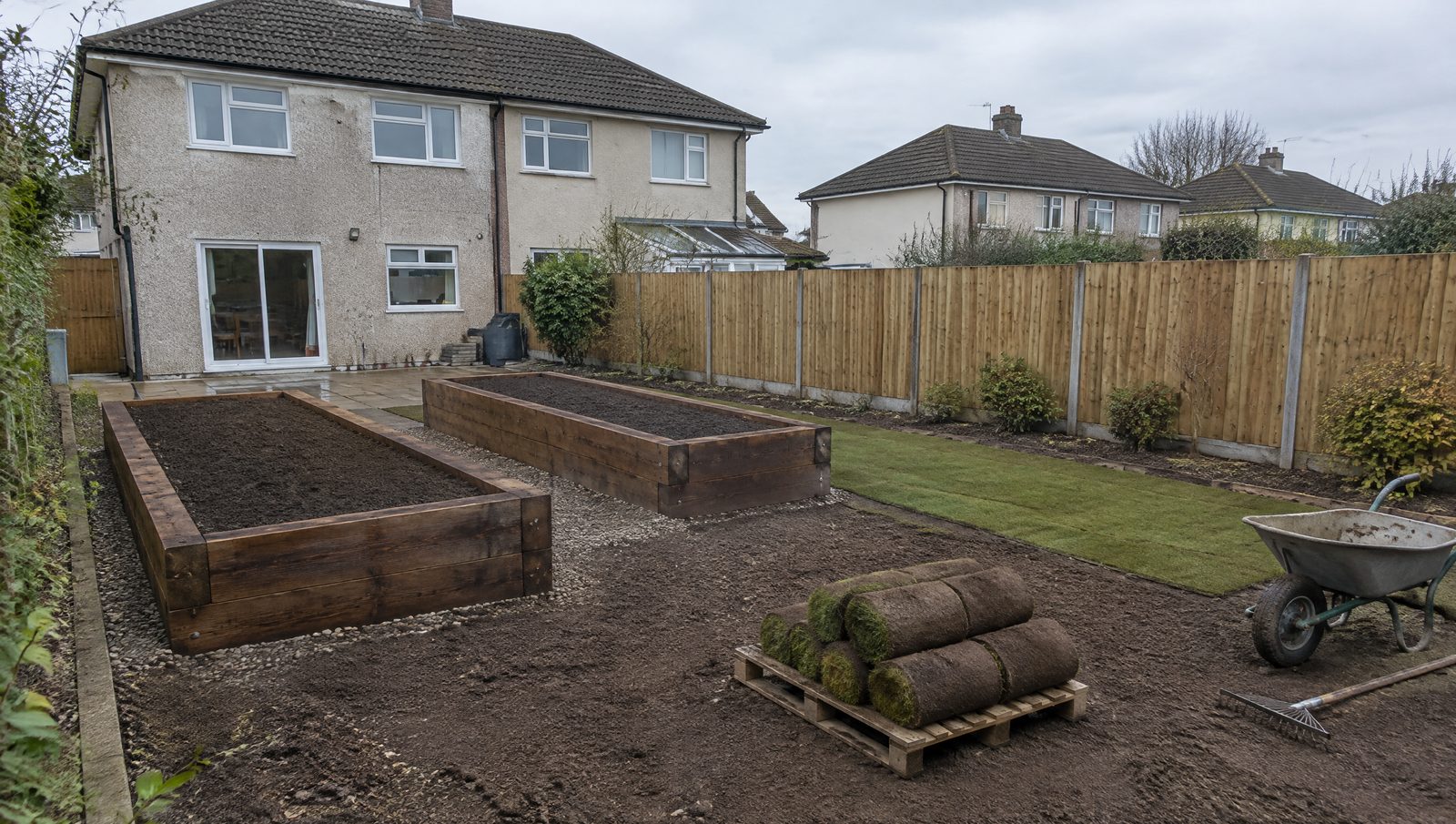
French drains for water that collects.
Where water gathers in one area, a French drain gives it a path out. It is a trench dug to a fall, lined, with a perforated pipe laid in clean stone and covered back over with stone, soil or turf. Water finds its way into the stone, enters the pipe and runs downhill to where it can be released.
A French drain can run along the bottom of a slope, across the low end of a lawn, along the foot of a retaining wall or around a bed that floods. It needs a fall all the way, and it needs somewhere to end. Working out that end point is the main part of the design.
Soakaways and where the water goes.
A soakaway is a pit filled with stone or a purpose-made crate, where collected water is held until it soaks into the ground around it. It works when the ground at that depth can absorb water, which is why the test hole matters. On tight clay a soakaway can fill and stay full, and then it is only a hole holding water.
A soakaway goes well away from the house and from any neighbour's foundations. Garden drainage should generally not be connected to the foul sewer, and any connection to a surface water drain needs checking with your council first. Where no outlet works, the design reduces the water arriving and improves the ground so it copes with what stays.
Falls on paths and hard surfaces.
Every hard surface in a garden sends water somewhere. A path or a set of steps against the house should fall away from it, and the water should run into a bed, a gravel strip or a drain rather than onto the lawn. We set the falls at the base, before the surface goes down, so they cannot be lost later. Gravel and planted areas let rain through where solid surfaces would shed it, and swapping one for the other in the right place can take a lot of pressure off a wet lawn.
From the call to the photos.
The same crew looks at the job, quotes it and does it. You get before and after photos when it is finished.
- First01.
A look after rain.
If you can, send a photo of the garden after a heavy shower. We visit, see where the water sits and dig a test hole.
- Then02.
A written quote.
Within 48 hours, saying what the drainage is, where the water goes and what happens to the lawn and beds afterwards.
- Next03.
Drainage work.
Trenches, pipe and stone, or the top layer broken up and improved. Spoil and waste are taken away, with the skip in the price.
- Last04.
Reinstated and checked.
Lawn and beds put back, and before and after photos sent when the job is finished. The first heavy rain is the real test.
Where we draw the line.
We handle surface and garden drainage on residential properties: waterlogged lawns, wet corners, run-off from paths and slopes, and the drains and soakaways that deal with them. We do not repair house drains, foul sewers or blocked waste pipes, and we do not do drainage for basements or subsidence; that needs a drainage engineer or a drainage contractor with a camera survey.
Landscaping questions.
Anything else, ring 085 781 4603.
Why is my garden always waterlogged?
Usually it is compacted clay soil, water arriving from a downpipe, a path or higher ground, or both. A look after rain and a test hole will show which, and the fix follows from that.
Will a French drain fix a waterlogged lawn?
It will if the water is collecting in one area and the drain has somewhere to take it. If the whole lawn is wet because the soil is compacted, improving the top layer usually does more than a drain.
Can I connect garden drainage to the main sewer?
Generally no, not to the foul sewer. Any connection to a surface water drain needs approval, so check with your council before anything is connected.
What time of year should garden drainage be done?
The work can be done most of the year, but late spring to early autumn is easiest, when the ground is drier to work and the lawn can be reinstated straight away. Seeing the garden in winter helps with the diagnosis.
More on landscaping.
Or go back to the main landscaping page.
Get your job priced properly.
Tell us what needs doing and where. Free site visit, then one written price inside 48 hours, with no pressure to go ahead.