Landscaping in Kildare.
Landscaping across County Kildare, for gardens on heavy clay, on the peaty ground near the Bog of Allen and on the bigger plots behind the newer estates in the commuter towns. We work out the levels and the drainage first, then build the paths, walls, beds and lawn on top, with the same crew from the site visit to the handover.
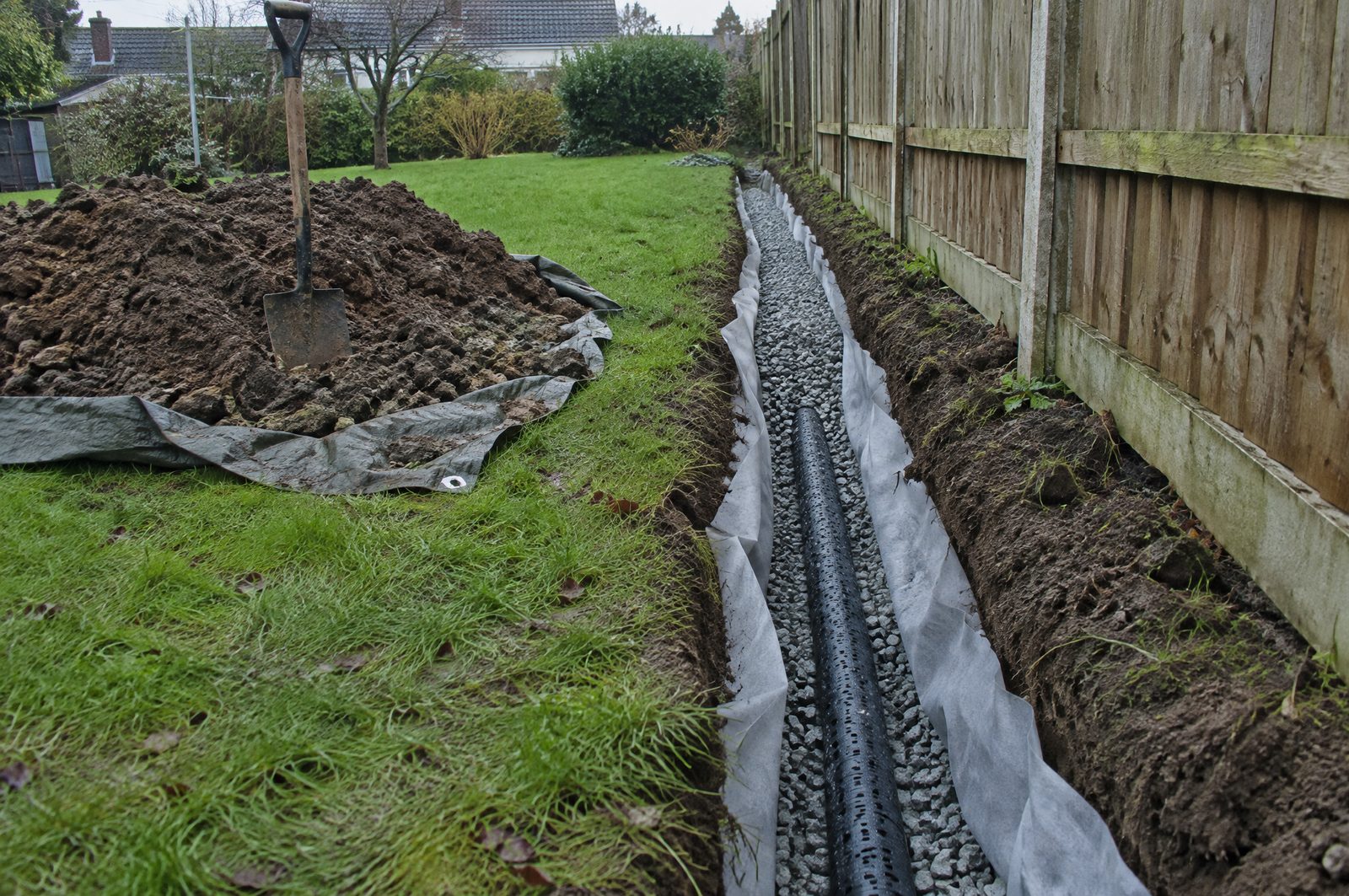
Most Kildare gardens have the same two problems underneath: clay that holds water and ground that is flat without being level.
We are landscapers covering the whole county, and a Kildare garden build with us starts with drainage and levels, then moves on to paths, steps, raised beds, retaining walls, edging, a new lawn and planting that suits limestone soil.
The site visit and the look are free, and the written quote follows within 48 hours, with the skip and the waste removal already in it.
Landscaping on Kildare ground.
Kildare is mostly flat to gently rolling country, and a lot of it sits on heavy clay laid down over limestone. That clay is fertile and it holds nutrients well, but it also holds water. Rain that would soak away in a sandy garden lies on the surface for days, the lawn goes soft and then compacts, and anything built on poor foundations moves as the clay swells in a wet winter and shrinks in a dry summer.
West of the county the ground changes again. Towards the Bog of Allen there are gardens on peat or on peaty soil over clay, which is soft, acid and wet, and settles under any weight you put on it. Around the Curragh the ground is lighter and drains faster.
Gardens behind the newer estates.
A lot of the work in Kildare is the back garden of a house on one of the estates built from the nineties on in Naas, Newbridge, Maynooth, Celbridge, Leixlip, Kildare town, Athy, Clane, Sallins or Kilcock. These gardens are bigger than most in suburban Dublin, but they were often finished in a hurry when the houses were sold. The usual story is a thin layer of topsoil spread over compacted subsoil, with builder's rubble, bits of block and plastic buried a spade's depth down, and a lawn seeded on top.
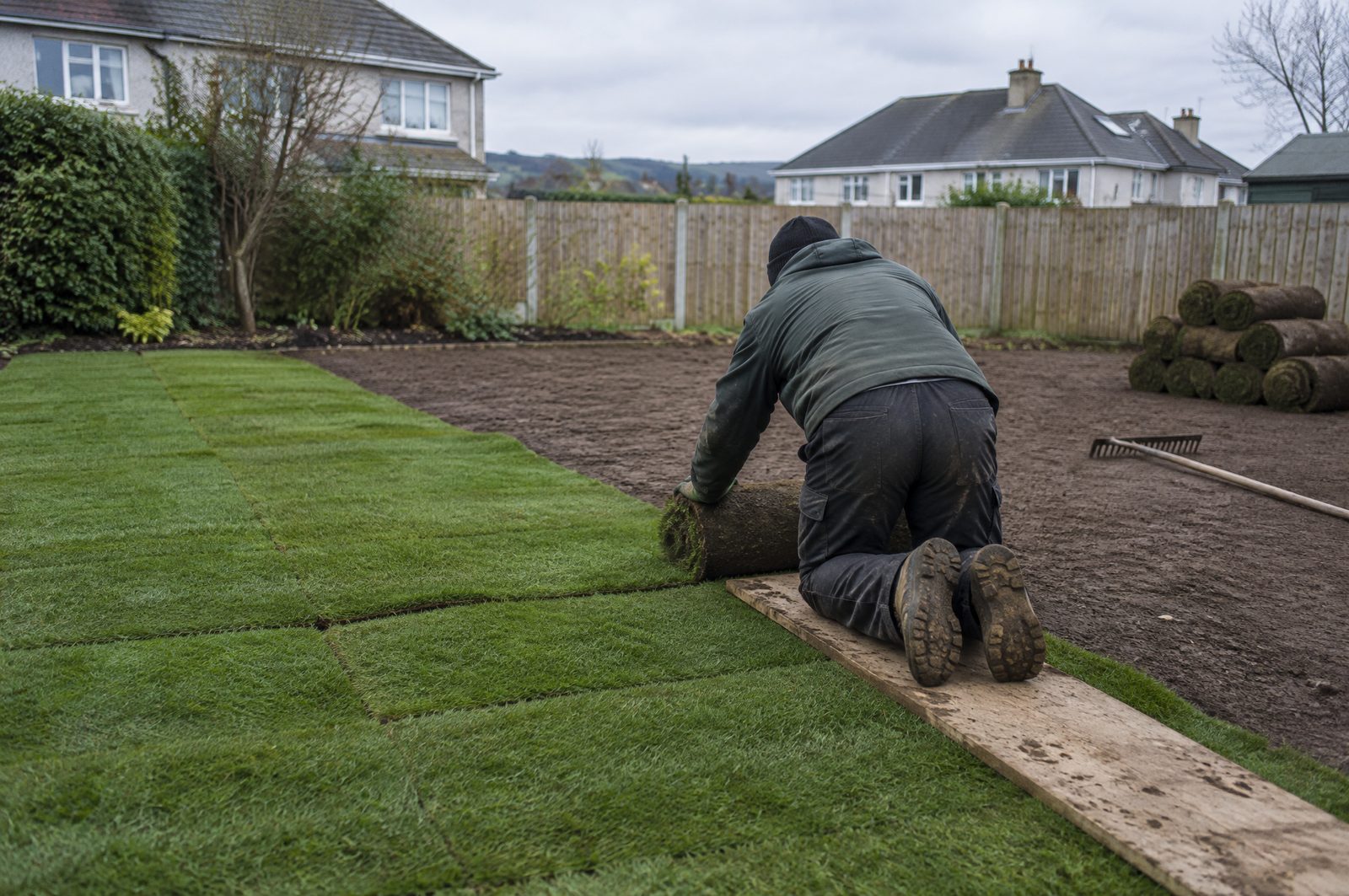
Laying new turf over the same ground gives you the same lawn again within a couple of years. The fix is to break up the compacted layer, take out the rubble, bring in topsoil where it is short and set the levels so water has somewhere to go.
Drainage on Kildare clay.
Where water sits across the whole lawn, the answer is usually to improve the top layer: loosen the compacted ground, work in grit and organic matter, and lay the new topsoil on top so the roots have a layer that drains. Where water collects in one low corner or along a fence line, a French drain takes it away: a trench with a perforated pipe in clean stone, running to a point where it can go.
That point is the hard part on clay. A soakaway only works if the ground below can take the water, and heavy Kildare clay often cannot, so we dig a test hole and fill it before we promise one. Hard surfaces get their falls set at the base so paths and steps shed water away from the house and into a bed or a drain rather than onto the lawn.
Levels on a flat site.
Flat ground is rarely level ground. On a big Kildare plot a fall that you cannot see with the eye can still send every shower towards the back door, or leave a hollow in the middle of the lawn that never dries. We take levels across the garden on the site visit and mark them on the sketch, so the design shows where soil is cut, where it is filled and which way the water runs.
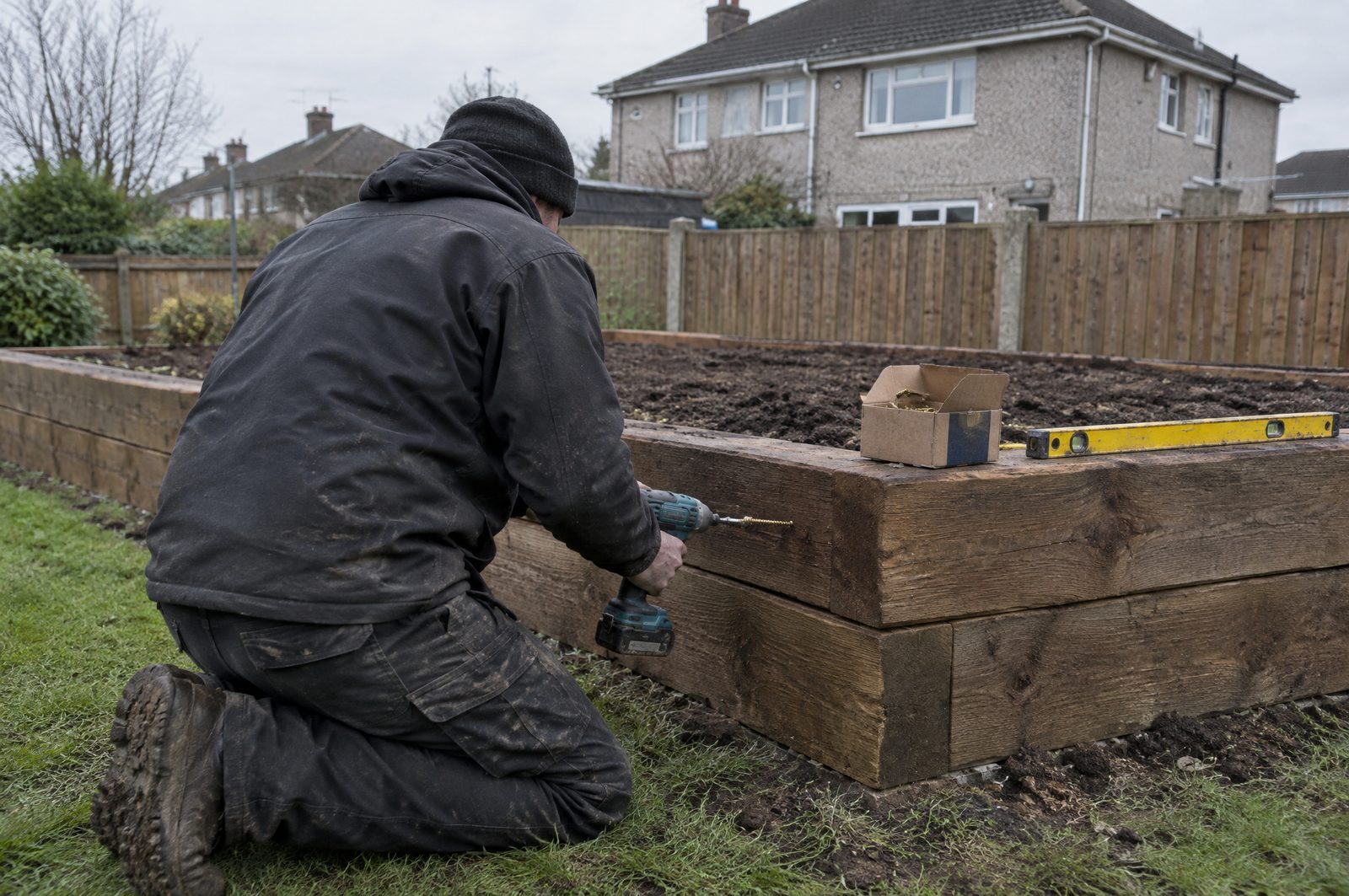
Where there is a real change in height, a low retaining wall or a set of steps turns one awkward slope into two usable levels. Raised beds in sleeper, block or stone lift the planting above the wet clay and give a firm edge to mow against. Edging between the lawn, the beds and any gravel keeps each where it belongs.
Wind, shelter and planting in Kildare.
Open ground and few mature trees on the newer estates mean wind crosses the gardens with little to slow it. A shelter hedge on the exposed side, planted at the right spacing and set for the size it will reach, does more for the rest of the garden than any amount of tender planting.
Limestone clay is on the alkaline side, so plants that want acid soil, such as rhododendron, azalea and camellia, tend to struggle unless they are in a raised bed or a pot with the right compost. The planting plan sticks to shrubs, perennials and hedging that are happy on Kildare clay. On peaty ground in the west the list changes, and the plan says so.
Landscapers covering all of Kildare.
We cover the north of the county around Maynooth, Leixlip, Celbridge and Kilcock, the middle around Naas, Sallins, Clane, Newbridge and Kildare town, and the south down to Athy, along with the villages and rural houses between them. Topsoil, turf, plants and stone are supplied and delivered, and the skip and licensed waste removal are part of the price you see.
From the call to the photos.
The same crew looks at the job, quotes it and does it. You get before and after photos when it is finished.
- First01.
A walk round the garden.
We look at where water lies, which side the wind comes from, what is worth keeping and how materials will get in. A spade goes in the ground to see what the soil is.
- Then02.
Levels, sketch and written quote.
Levels are taken and marked on a sketch with the surfaces, beds and planting. The written quote follows within 48 hours and the design fee comes off it if you build with us.
- Next03.
Ground first, then the build.
Clearance, dig-out and drainage come first, then the bases, walls, steps, paths and edging. Topsoil goes down last, levelled and firmed for the lawn and beds.
- Last04.
Lawn, planting and handover.
Turf or seed, then the planting. You get before and after photos when the job is finished, and care notes for the first year.
Where we draw the line.
We design and build residential gardens in Kildare. We do not take on tree surgery beyond small trees and hedges, large earthworks, or retaining walls tall enough to need a structural engineer; if a wall on your site needs one, we will tell you before we quote. Regular maintenance after the build is a separate service.
Landscaping questions.
Anything else, ring 085 781 4603.
Our lawn in Kildare is always waterlogged. Will new turf fix it?
Not on its own. New turf on the same compacted clay will be wet again within a season or two. The ground under it needs breaking up and improving, and if water collects in one spot, a French drain to take it away.
Can you put a soakaway in a clay garden?
Sometimes. We dig a test hole and fill it with water first. If the clay will not take it, a soakaway will fill and stay full, and we look at another route for the water instead.
Do you work in rural Kildare as well as the towns?
Yes. We cover the whole county, from the estates in Maynooth and Naas to houses in the countryside near Athy or out towards the Bog of Allen. The site visit is free wherever you are in Kildare.
Our house is on peaty ground. Does that change the build?
Yes. Peat is soft and settles, so paths, steps and walls need a deeper dig-out and a firmer base, and the planting plan uses plants that like acid, damp soil. We check the depth of the peat on the site visit.
More on landscaping.
Or go back to the main landscaping page.
Get your job priced properly.
Tell us what needs doing and where. Free site visit, then one written price inside 48 hours, with no pressure to go ahead.