Landscaping cost in Ireland: what decides the price.
Landscaping cost in Ireland comes down to a handful of things that change from one garden to the next: how big it is, how materials get in, how much ground has to move, what it is built from and what is hidden under the lawn. This guide goes through each of them, so you can read a landscaping quote with some confidence and see where the money is going before you commit to anything.
There is no fair price per square metre for a garden, because two gardens the same size can be very different jobs.
Access, levels and dig-out, waste, the choice of materials, walls and steps, drainage and planting are what move the price, and the design fee comes off the build if the same people build it.
The way to know the real cost of your garden is a site visit and a written quote that lists each part separately.
Size, and the mix of work in it.
A bigger garden costs more to landscape, but size is a weaker guide than most people expect. A large lawn reseeded on good ground can cost less than a small garden with a retaining wall, steps and a new drain. What matters is the mix: how much of the area is hard landscaping, how much is lawn, how much is planting, and how much of the existing garden has to come out before anything goes in.
That is why a quote worth having is broken into parts. If the sketch shows the paths, the walls, the beds, the lawn and the drainage as separate lines, you can see which part drives the total and decide what to change.
Access and garden landscaping cost in Dublin.
Access affects garden landscaping cost in Dublin more than almost anything else. On a house with a wide side passage or a back gate onto a lane, a small machine can get in, materials can be dropped close to where they are needed and spoil can go straight out. On a terrace with no side access, every bag of stone and every barrow of soil goes through the house, with floors and doorways protected, and the same work takes longer.
Long or narrow side passages, steps between the road and the garden, and a skip that cannot sit on the drive all add labour. A good quote says how materials get in and how waste gets out, so the method is agreed before the price is.
Levels, dig-out and waste.
Ground that has to move is a large part of most landscaping jobs. A sloping garden turned into level areas means cutting soil from one place and filling or retaining it in another. Paths, steps and walls need a dig-out for their base, and the depth of that dig-out depends on the ground: firmer on good clay, deeper on soft or peaty soil.
Everything dug out has to go somewhere. Old slabs, broken concrete, rubble found under a lawn, roots and surplus soil all fill skips, and licensed waste removal is a real cost. Builder's rubble buried in a newer estate garden is one of the commonest surprises, and a careful contractor digs a test hole before pricing so it is less of one.
Materials, walls and steps.
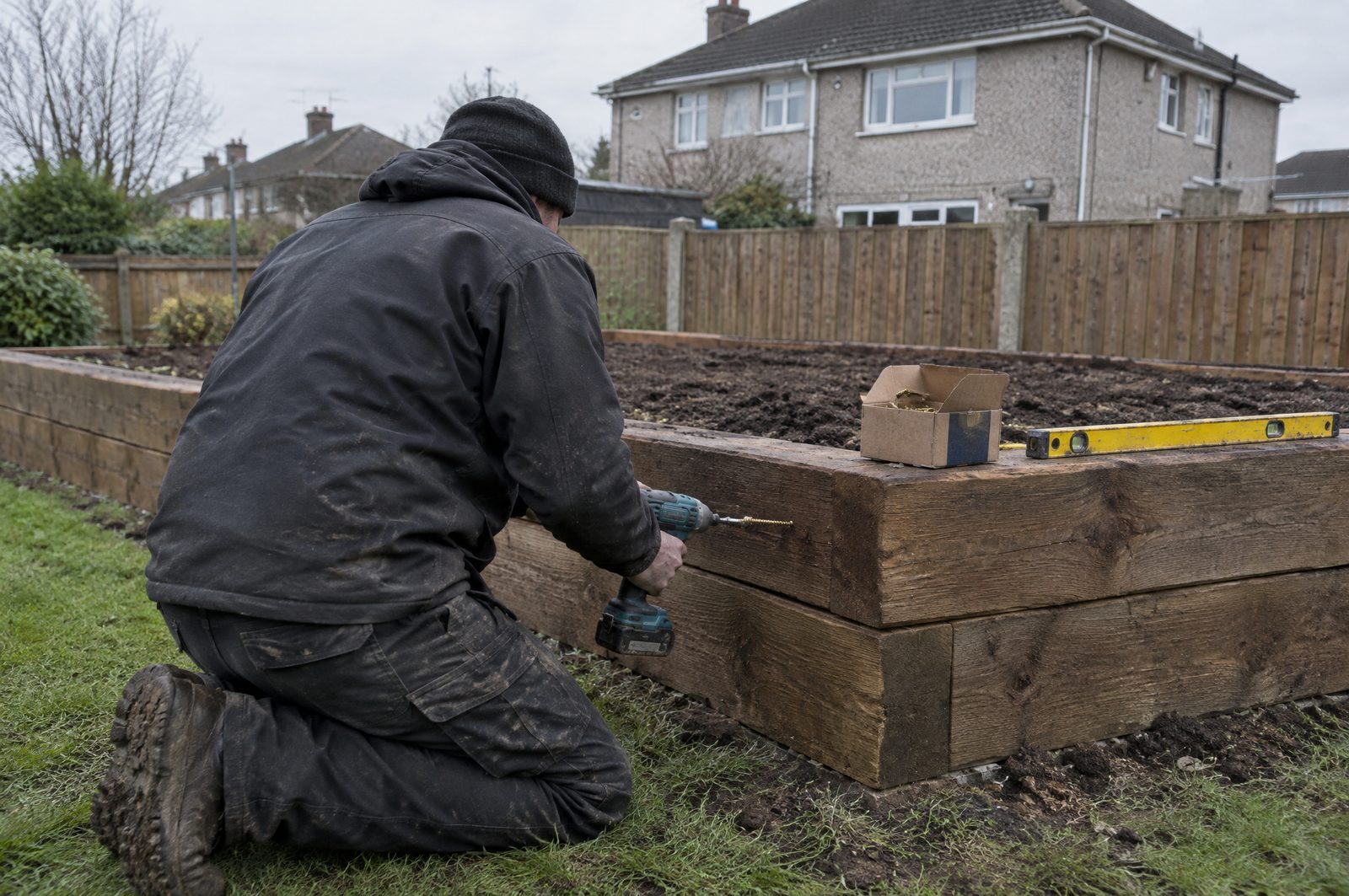
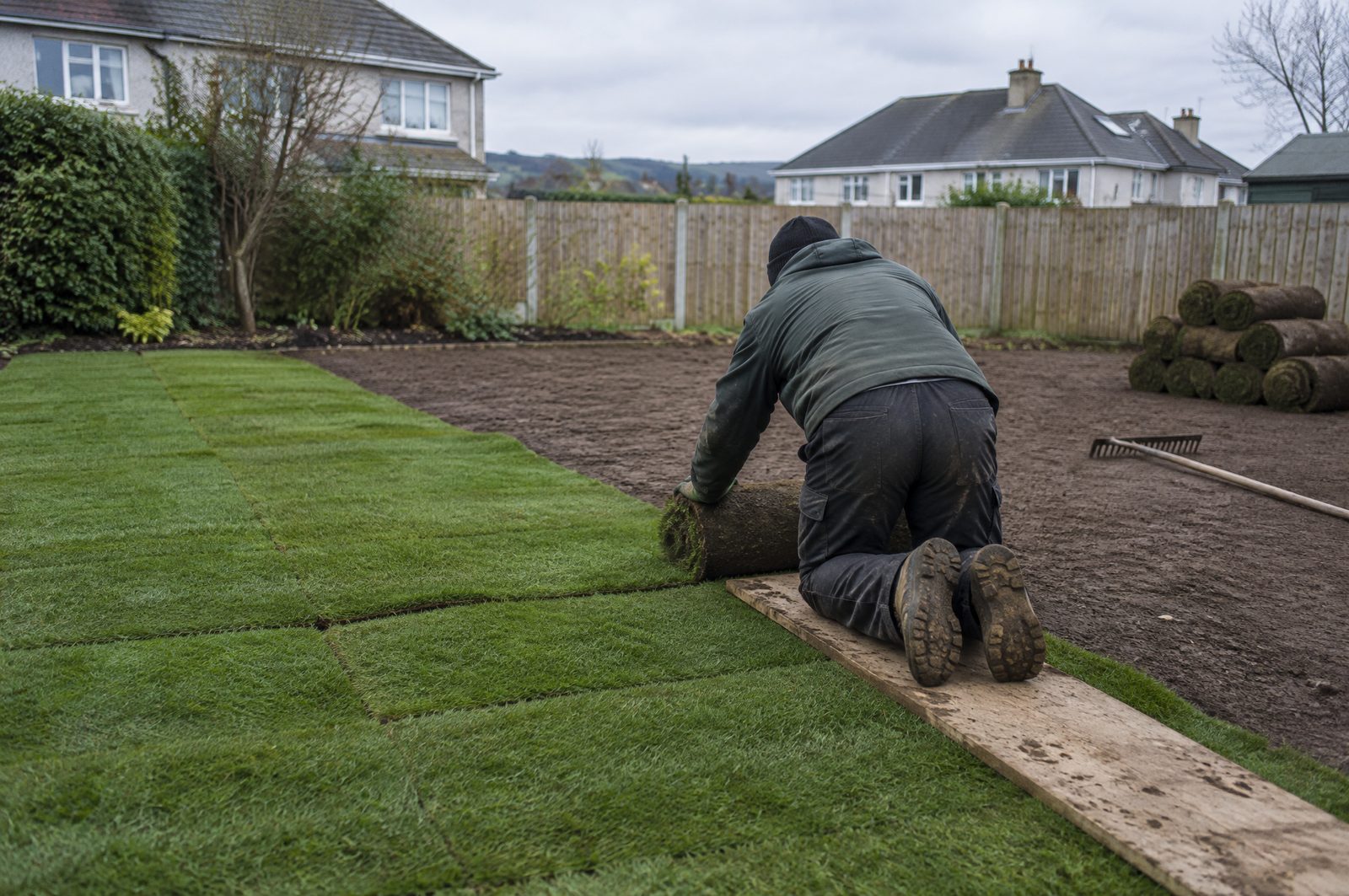
Materials vary a lot. Gravel is cheaper to supply and lay than stone, timber sleepers sit between the two for raised beds and edging, and natural stone for a wall or steps costs more to buy and takes longer to build. Topsoil, turf, plants and aggregates all have to be supplied and delivered, and on a big lawn the topsoil alone is a noticeable line.
Walls and steps carry more labour than their size suggests. A retaining wall needs a proper foundation, drainage behind it and careful building to stay put, and every step in a flight has to be set to the same rise. A garden with two levels and steps between them will cost more than a flat one of the same size, because that structure takes the most time to build.
Drainage, planting and the design fee.
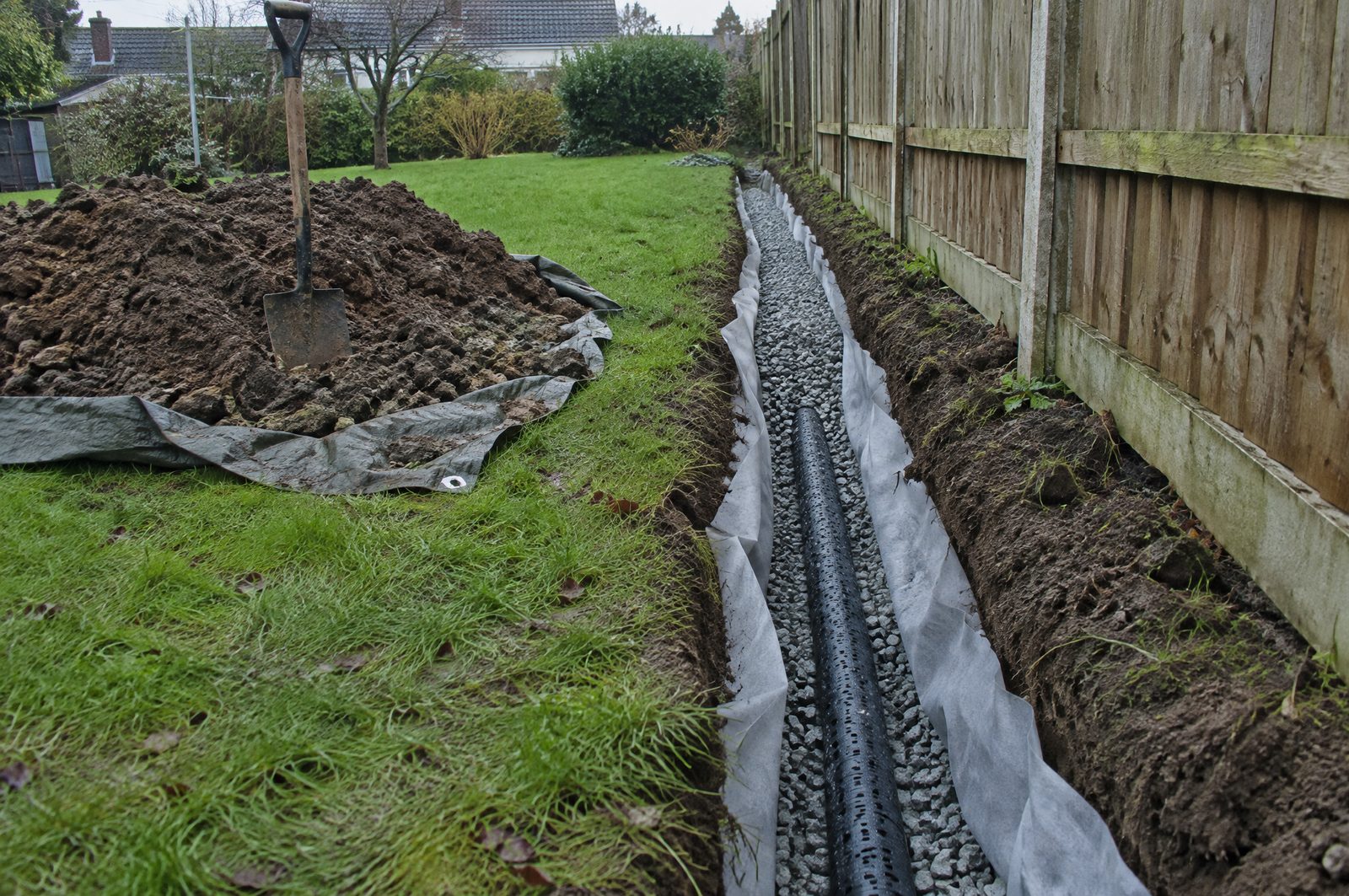
Drainage is the part people least expect to pay for, because it ends up buried. A French drain, a soakaway or an improved top layer on clay can be a substantial part of a quote, and it is the part that decides whether the lawn and beds still look right after the first winter. Leaving it out to save money is usually a false saving.
Planting cost depends on how many plants and what size. Young plants are cheaper and often establish better than large ones; mature specimens give an instant effect at a higher price. The design fee covers the site visit work and the sketch, and with us it comes off the build invoice if you go ahead.
Keeping the cost down honestly.
There are fair ways to bring a landscaping quote down, and they are mostly about doing less rather than doing it cheaper. Cutting corners on the base under a path or the drainage under a lawn saves money once and costs it again later.
- 01Keep what works: a healthy hedge, a mature tree or a sound wall left in place saves its cost and the waste of removing it
- 02Build in phases: the levels, walls and drainage first, the planting or a second area the following season
- 03Pick simpler materials for large areas, and save the expensive ones for where you see them most
- 04Use young plants rather than mature ones, and let the planting fill in over a couple of years
- 05Plan the garden around the access you have, rather than paying for a difficult route
- 06Ask for a written quote with each part priced separately, so you can drop or delay one without starting again
From the call to the photos.
The same crew looks at the job, quotes it and does it. You get before and after photos when it is finished.
- First01.
Send photos and rough sizes.
A few photos of the garden, a rough idea of its size and a note of the access give a sense of the job before anyone visits.
- Then02.
Site visit and test hole.
Free. We take levels, check the soil and drainage, and look at how materials will get in and waste will get out.
- Next03.
Sketch and written quote.
The sketch shows each part of the garden, and the written quote follows within 48 hours with each part priced separately.
- Last04.
Build, now or in phases.
Build the whole garden or the first phase, with the skip and waste removal included. Before and after photos when it is finished.
Where we draw the line.
We design and build residential gardens across Dublin, Wicklow and Kildare. We do not publish prices, because the same design costs very different amounts on different sites. We do not take on large earthworks, retaining walls that need a structural engineer, or tree surgery beyond small trees and hedges, and we will say so on the site visit if your garden needs any of those.
Questions people ask.
Anything else, ring 085 781 4603.
How much does landscaping cost in Ireland?
It depends on the size of the garden, the access, how much ground has to move, the materials, any walls, steps and drainage, and the planting. We do not publish prices because two similar gardens can be very different jobs. A site visit is free and the written quote follows within 48 hours.
Why does side access make such a difference?
Because every material coming in and every bit of waste going out has to travel that route. A wide passage takes a barrow or a small machine; a terrace with no side access means carrying everything through the house, which takes longer.
Is the garden design fee extra?
There is a design fee, and it comes off the build invoice if you go ahead with us. If you take the design to another contractor, you keep it.
Can a garden be landscaped in stages to spread the cost?
Yes. The usual order is levels, walls and drainage first, then lawn and planting later. Doing it that way round means nothing finished gets dug up again.
Can I save money by clearing the garden myself?
Sometimes, if it is overgrowth and you can dispose of it. Old slabs, concrete and soil are heavier and need licensed disposal, so ask for the clearance priced separately and decide from there.
More on landscaping.
Or go back to the main landscaping page.
Want us to take a look?
Tell us what needs doing and where. Free site visit, then one written price inside 48 hours, with no pressure to go ahead.