Landscaping in Wicklow.
Landscaping across County Wicklow, for hillside gardens in Bray and Greystones, stony plots up around Blessington and Roundwood, and gardens on the coast that take the salt wind off the sea. Slopes are terraced with walls and steps, the soil is worked for what wants to grow in it, and one crew builds the garden from the first sketch to the care notes.
A Wicklow garden is usually sloping, often stony, and on the coast it is exposed to wind and salt.
As landscapers covering the county, we turn slopes into level ground with retaining walls and steps, deal with thin stony soil inland, plant for shelter on the coast and pick plants that like the acid ground.
The look costs nothing, and a written quote with levels, materials and waste removal follows within 48 hours.
Landscaping in the Garden of Ireland.
Wicklow has been called the Garden of Ireland for a long time, and the name comes from the same things that make an ordinary back garden there a particular job. The mountains at the centre of the county are granite, the soils that come off them are acid and often thin, the land falls steeply in most directions, and the coast takes the weather straight off the Irish Sea.
None of that is bad news for a garden. Acid soil grows plants that will not thrive in Kildare or much of Dublin, and a slope gives views and a layout with more interest than a flat rectangle. It does mean the levels, the walls and the choice of plants matter more here than in most places, and a design copied from a flat suburban garden will not sit right.
Terracing a sloping site.
Plenty of houses in Wicklow sit on a hill: the estates climbing behind Bray and Greystones, the houses on the slopes around Enniskerry and Kilmacanogue, one-off houses on a hillside further south. The back garden falls away from the house, or rises up behind it, and the result is a lawn too steep to mow comfortably and nowhere flat to put a table.
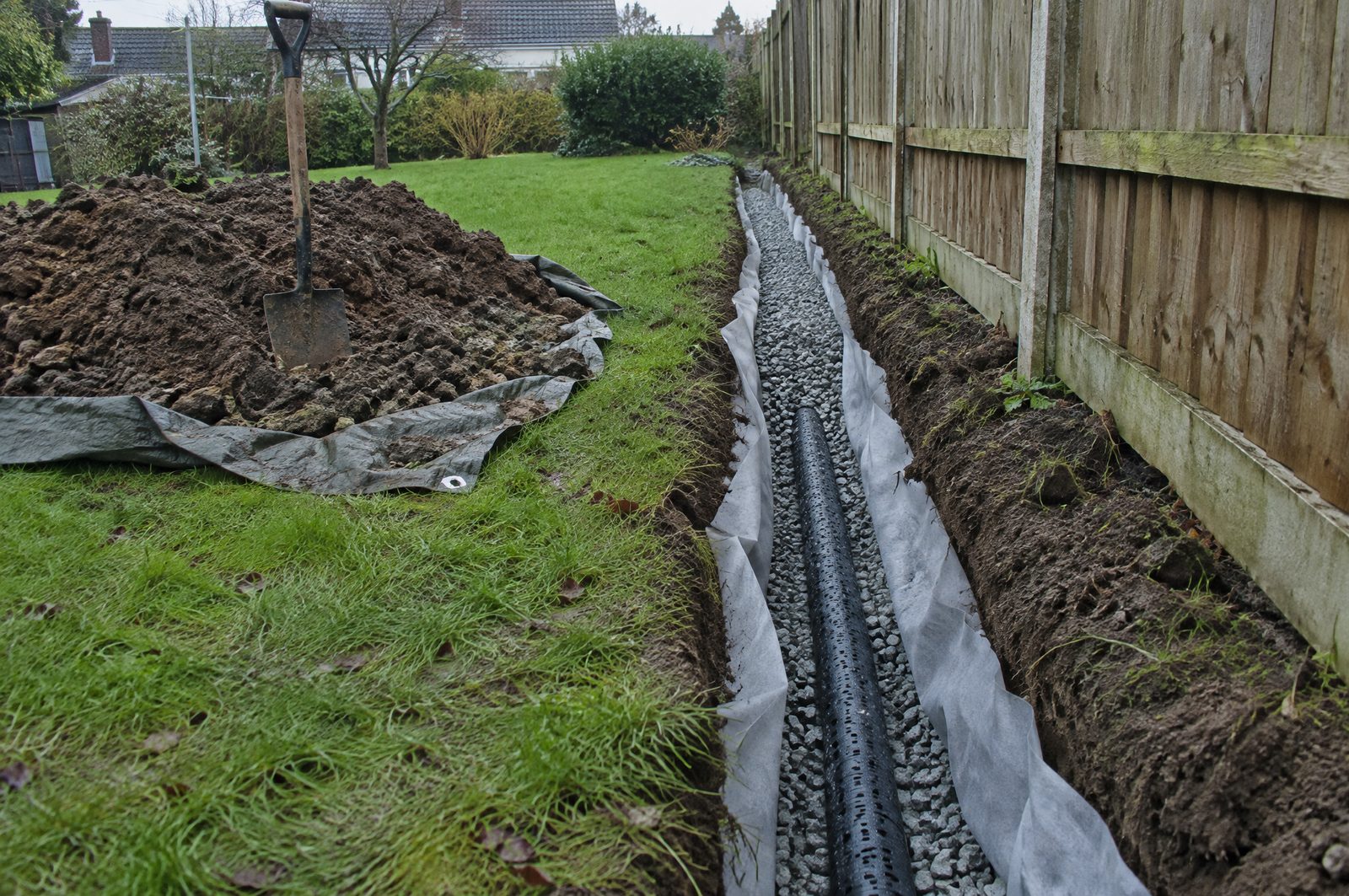
Terracing fixes that. We take levels on the site visit, then cut into the slope and build retaining walls to hold each level, with steps between them. The walls can be block, stone or sleeper, depending on the height and the look. Each level gets its own fall so rain runs off across it rather than pooling against the wall, and a wall holding back wet soil is built with somewhere for the water behind it to go.
Two or three shallow terraces are usually easier to live with than one tall wall. Where a slope is steep enough that a wall would need a structural engineer, we say so at the start rather than in the middle of the build.
Stony ground inland.
Up in the hills around Blessington, Roundwood, Rathdrum and the villages in between, the soil is often a thin acid layer over stone and rock. Digging is slow, a spade hits stone every few inches, and anything planted without proper preparation sits in a shallow pocket that dries out in summer and stays wet in winter.
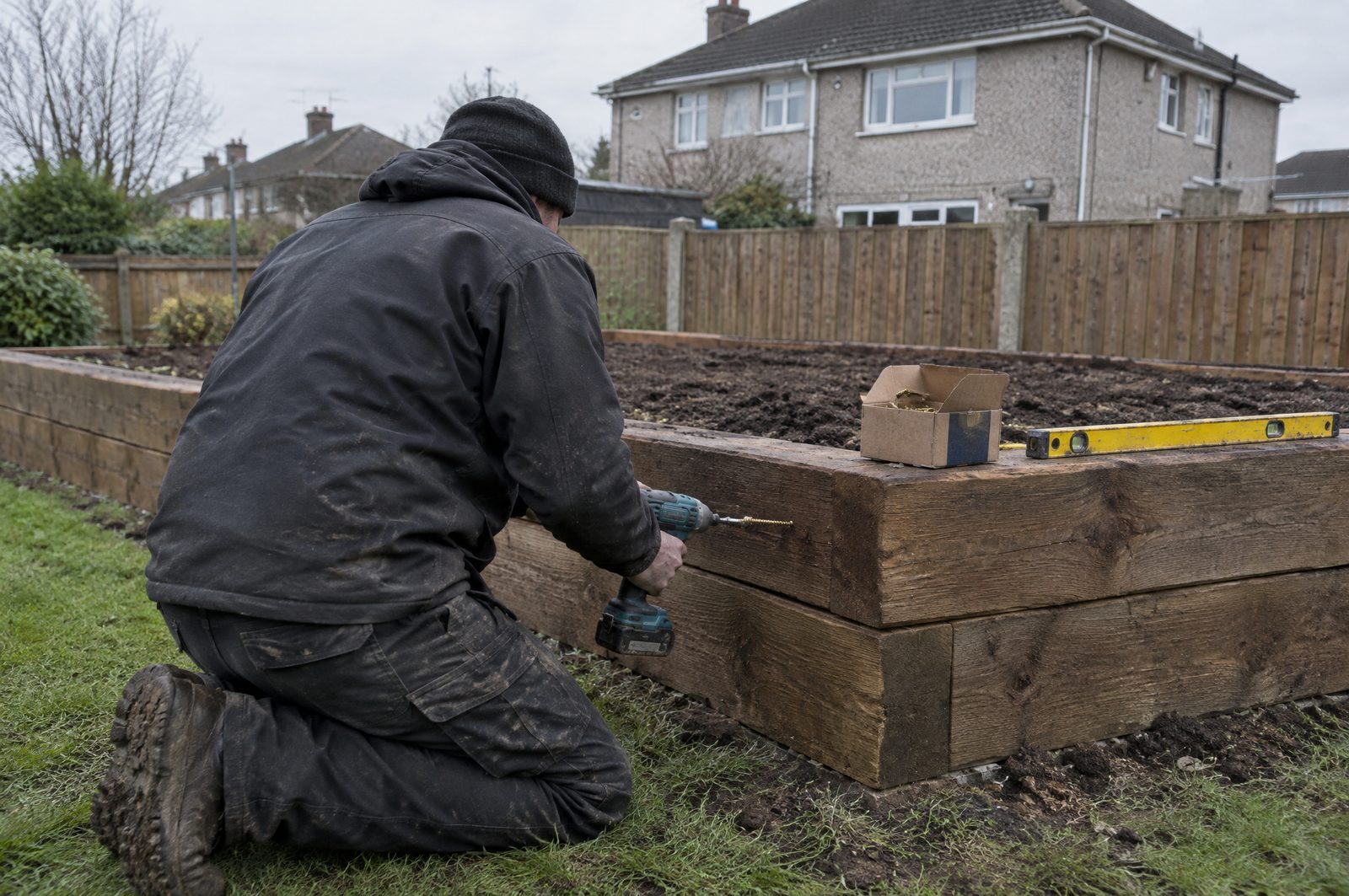
Preparing that ground means clearing the worst of the stone from the top layer, bringing in topsoil where there is not enough, and building raised beds where depth matters more than effort. The stone that comes out can often go back into the garden as edging, a low wall or the base of a path. Where rock is close to the surface, the design works with it: a level drops by a step rather than a deep cut.
Coastal gardens and salt wind.
On the coast, from Bray and Greystones down through Wicklow town to Arklow, the wind off the sea carries salt. It scorches the leaves of plants that cannot take it, strips young hedges on the exposed side, and on a hillside house facing east there is often nothing between the garden and the water.
Shelter comes first. A hedge of salt-tolerant plants such as escallonia or griselinia, planted along the exposed edge and given time to fill out, protects everything behind it. Fencing alone tends to make the wind tumble over the top. Once the shelter is in, the beds behind it can hold a wider range of plants, and the more tender ones go in the corners the wind reaches least.
Planting for acid soil.
Acid soil is the reason Wicklow grows rhododendrons, azaleas, camellias, pieris, heathers and blueberries so easily, and a planting plan here can lean into that. We test the ground on the site visit, because it varies: a garden near the coast on lighter soil may be closer to neutral than one in the hills.
The plan matches each bed to the soil, the slope and which way it faces. A dry south-facing bank gets plants that like sharp drainage. A damp hollow at the bottom of a terrace gets moisture lovers. We would rather plant a smaller range that suits the ground than a long list that struggles.
Landscapers covering Wicklow.
We cover the county from the Dublin border south: Bray, Enniskerry, Greystones, Delgany, Kilcoole and Newtownmountkennedy; Wicklow town, Rathnew, Ashford and Rathdrum; Arklow, Aughrim and Avoca; and Blessington and Roundwood inland. Materials on a sloping or narrow site are planned for at the quote stage, so getting stone and soil up or down a hill is in the price.
From the call to the photos.
The same crew looks at the job, quotes it and does it. You get before and after photos when it is finished.
- First01.
Walk the slope with us.
We look at the fall, the exposure, the soil and the access, and talk about how you want to use each part of the garden.
- Then02.
Levels marked on a sketch.
Terraces, walls, steps, beds and planting are drawn with the levels. The written quote follows within 48 hours, and if you build with us the design fee is taken off.
- Next03.
Walls and levels before planting.
The slope is cut and the retaining walls, steps and paths go in first, with drainage behind and across each level. Topsoil goes on last.
- Last04.
Shelter, planting and handover.
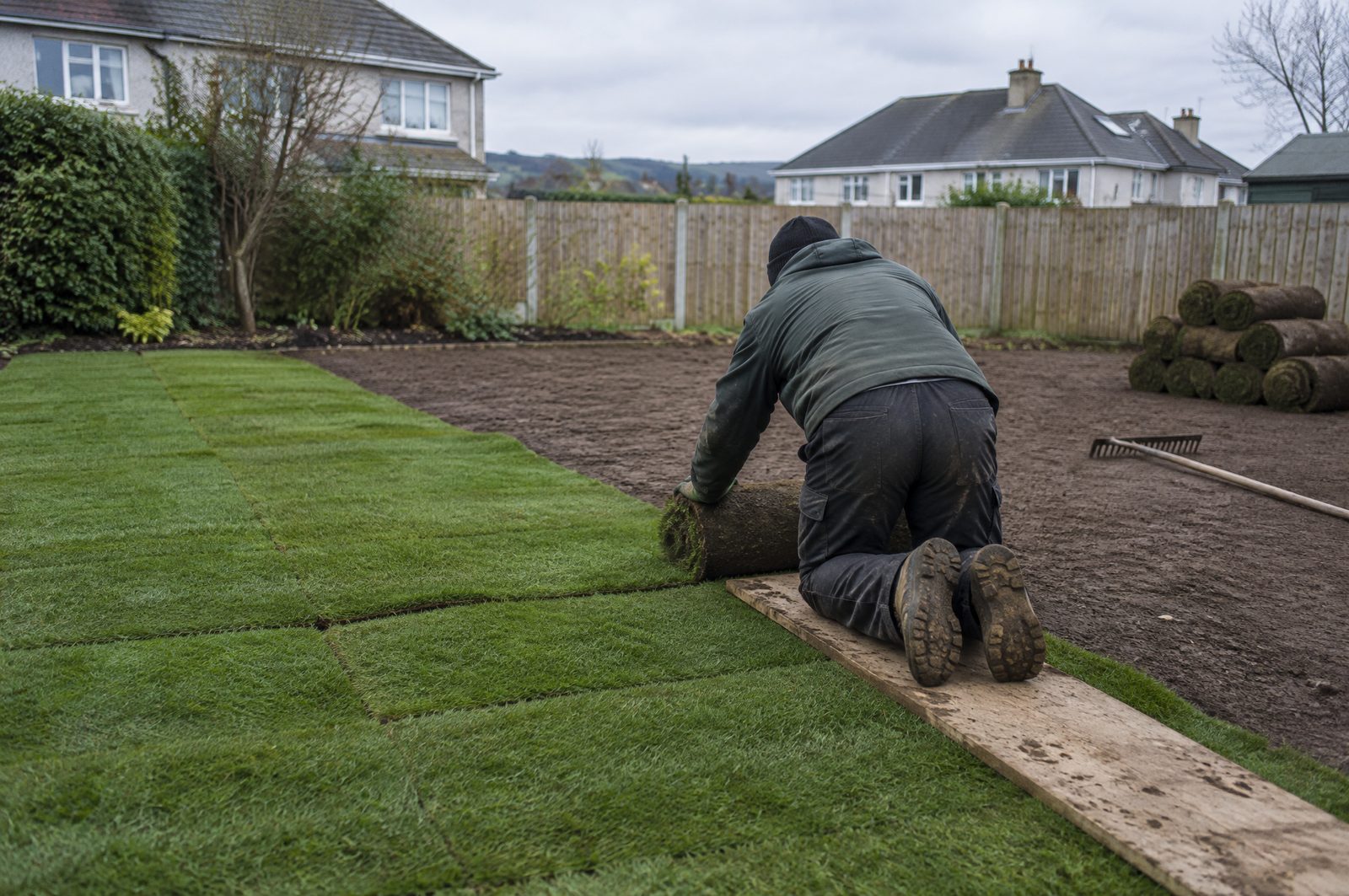
Shelter hedging, beds and lawn are planted for the season. You get before and after photos at the finish and care notes for the year ahead.
Where we draw the line.
We design and build residential gardens in Wicklow. We do not take on retaining walls high enough to need a structural engineer, large earthworks, rock blasting or tree surgery beyond small trees and hedges. If your slope needs an engineer's input, we will tell you before quoting. Ongoing maintenance after the build is quoted separately.
Landscaping questions.
Anything else, ring 085 781 4603.
Our garden in Wicklow is a steep slope. Can it be made usable?
Usually, yes. A slope is cut into two or three shallower levels held by retaining walls, with steps between them. Very steep or very high slopes can need an engineer, and we will tell you on the site visit if yours does.
What hedge copes with sea wind on the Wicklow coast?
Salt-tolerant hedging such as escallonia or griselinia stands up to sea wind well. Plant it on the exposed side first and the rest of the garden benefits as it fills in.
The ground is full of stones. Do we have to replace all the soil?
Rarely. We clear the worst of the stone from the top layer, add topsoil where it is thin and use raised beds where you need depth. The stone can often be reused in the garden.
Do you cover inland Wicklow as well as the coast?
Yes. Blessington, Roundwood, Rathdrum, Aughrim and the villages in the hills are covered as well as the coastal towns, and the site visit is free anywhere in the county.
More on landscaping.
Or go back to the main landscaping page.
Get your job priced properly.
Tell us what needs doing and where. Free site visit, then one written price inside 48 hours, with no pressure to go ahead.