Shed base in Kildare: concrete bases for sheds and garden buildings.
We pour the shed base and concrete base for garden buildings across County Kildare, in Naas, Newbridge, Maynooth, Celbridge, Leixlip, Kildare town, Athy, Clane, Sallins and Kilcock. Kildare ground can be heavy clay or soft filled ground on a newer estate, so every base starts with digging down to something firm.
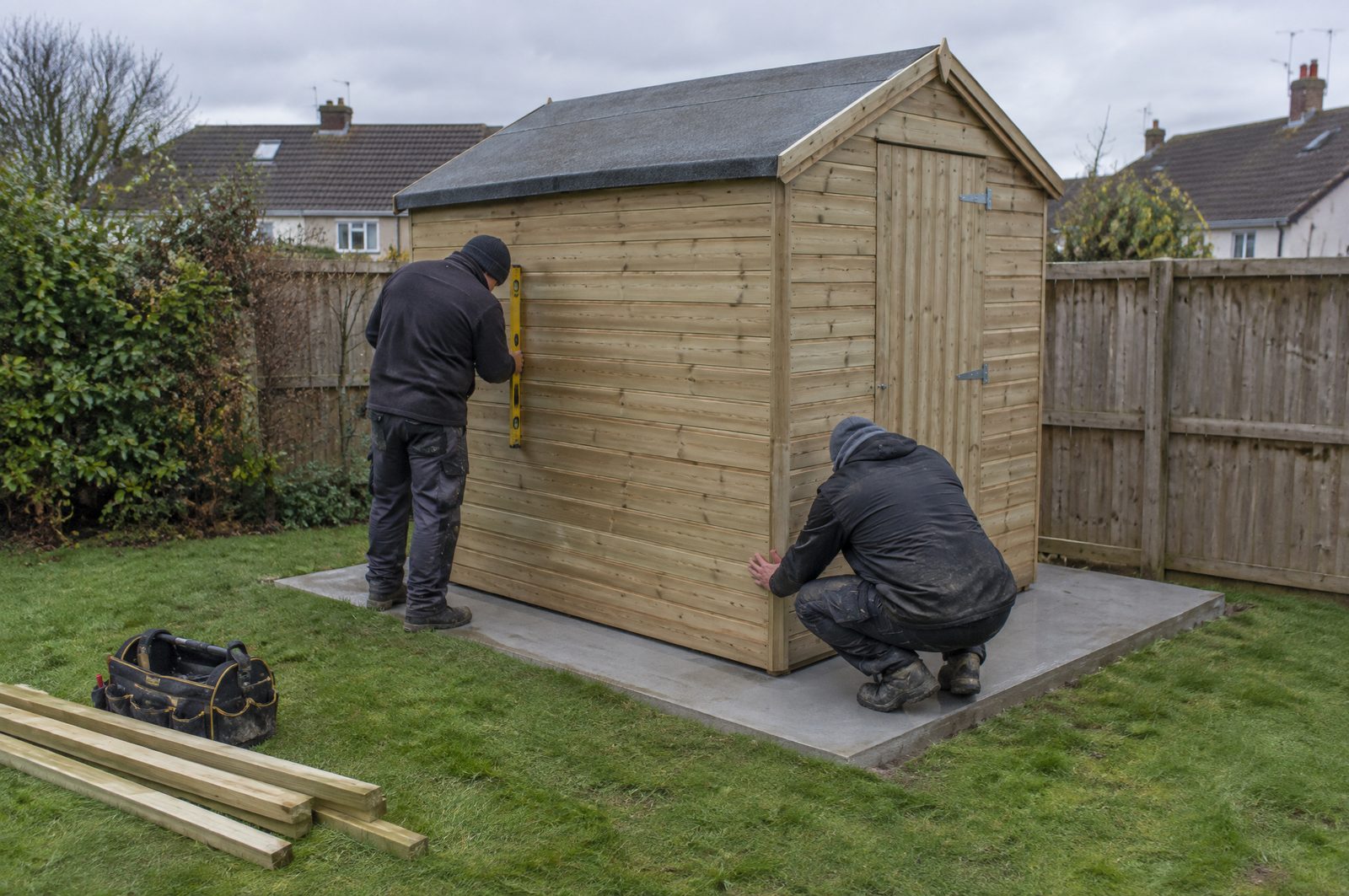
A shed base in Kildare is mostly about the ground under it: clay that holds water, or made ground on an estate where the builder spread topsoil over rubble.
We dig out what is soft, compact a hardcore layer, and pour a slab sized to the building, 100mm on 100mm of hardcore for a shed and thicker with mesh for a garden room or gym.
Kildare gardens often have room for the truck to get closer, which makes the pour quicker. The site visit is free and the quote is in writing within 48 hours.
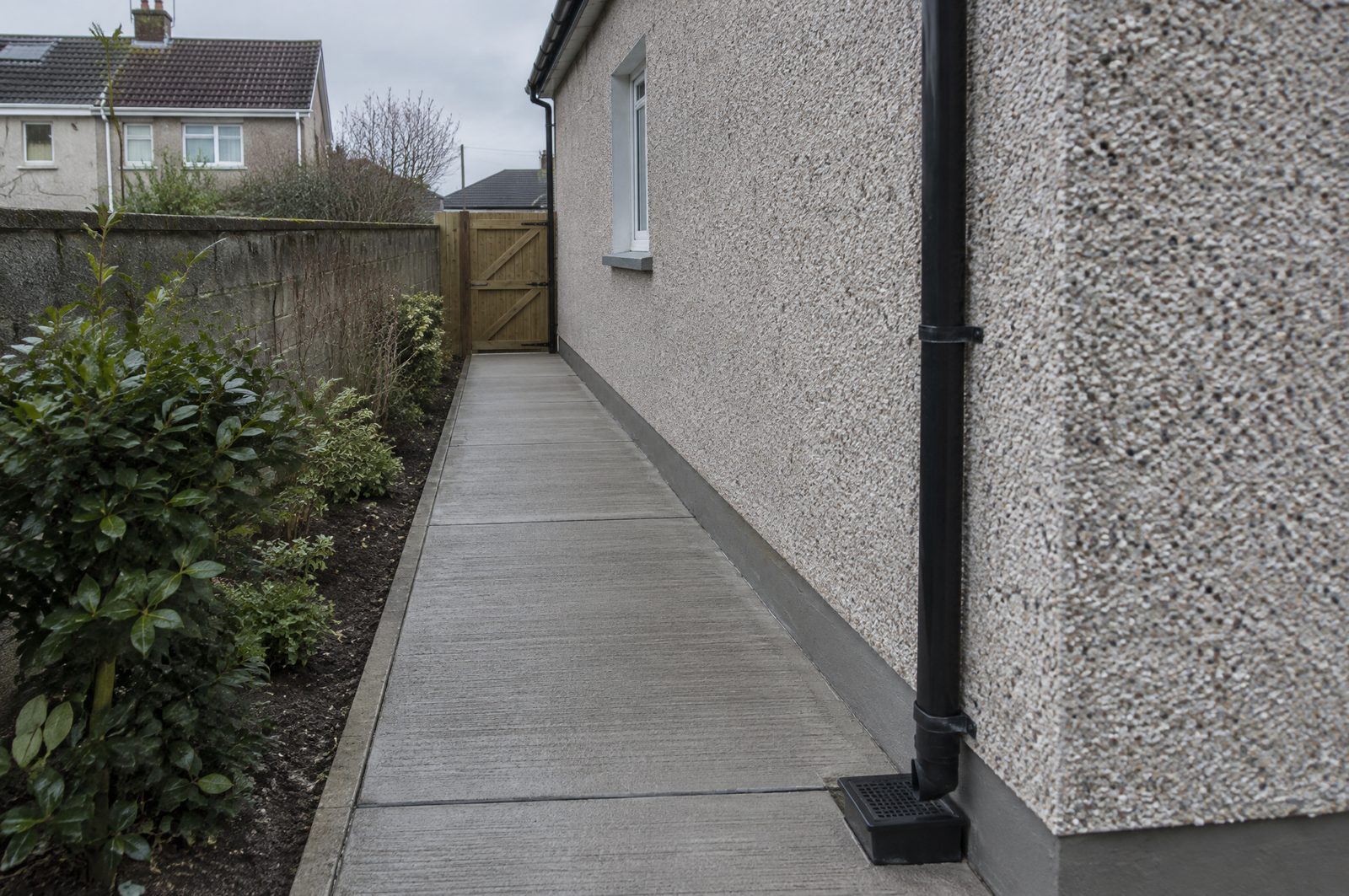
Clay and soft ground in Kildare.
Much of Kildare sits on heavy, sticky ground that drains slowly. In winter it holds water close to the surface, and in a dry summer it shrinks and opens in cracks. A slab laid straight onto it, or onto a thin skim of gravel, moves with it, and a shed on a moving base racks out of square until the door will not close. The answer is depth: dig down through the topsoil and the softest of the clay, compact the formation, and put in enough compacted Type 1 hardcore that the concrete is bearing on stone rather than mud.
Newer estates bring a different problem. Back gardens on a recent build are often made ground, where site rubble, subsoil and leftover material were spread and levelled, with a layer of topsoil and turf rolled over the top. It can look like a perfect lawn and be soft a spade's depth down. Where we suspect it, we check on the site visit. Soft pockets are dug out and replaced with compacted hardcore. If the ground is too soft to carry a slab without a deeper fix, we tell you that before any concrete is ordered.
Concrete base sizes for a Kildare shed or garden room.
A timber or metal shed gets a 100mm slab on 100mm of compacted hardcore, a little bigger than the shed so the walls sit on concrete and not on the edge of the lawn. A summerhouse is usually the same. A garden room, office or home gym gets a thicker slab with A142 or A193 mesh, and a damp-proof membrane under it where the building will have a finished floor.
Where the supplier has sent a base drawing, we work to it. Where they have not, the quote says what size and depth we are pouring and why. The slab finishes slightly above the surrounding ground so rain runs off it, and its edges are formed straight against timber.
More room for the truck.
Gardens in the Kildare towns are often bigger than the city gardens closer in, and many houses have a wide side entrance or a gate onto a lane. That usually means the concrete truck can get much nearer the base, so the pour is quicker and less is carried by hand. On a one-off house in the country it can sometimes pour straight into the formwork.
Distance cuts both ways. A large garden tempts people to put the shed at the far end, and a long run from the gate to the base adds barrow work on the day. If you are weighing up two spots, ask about the access to each on the site visit. It is also worth thinking now about where power or water would run if you want them later, because a duct is easy to lay before the pour and awkward after.
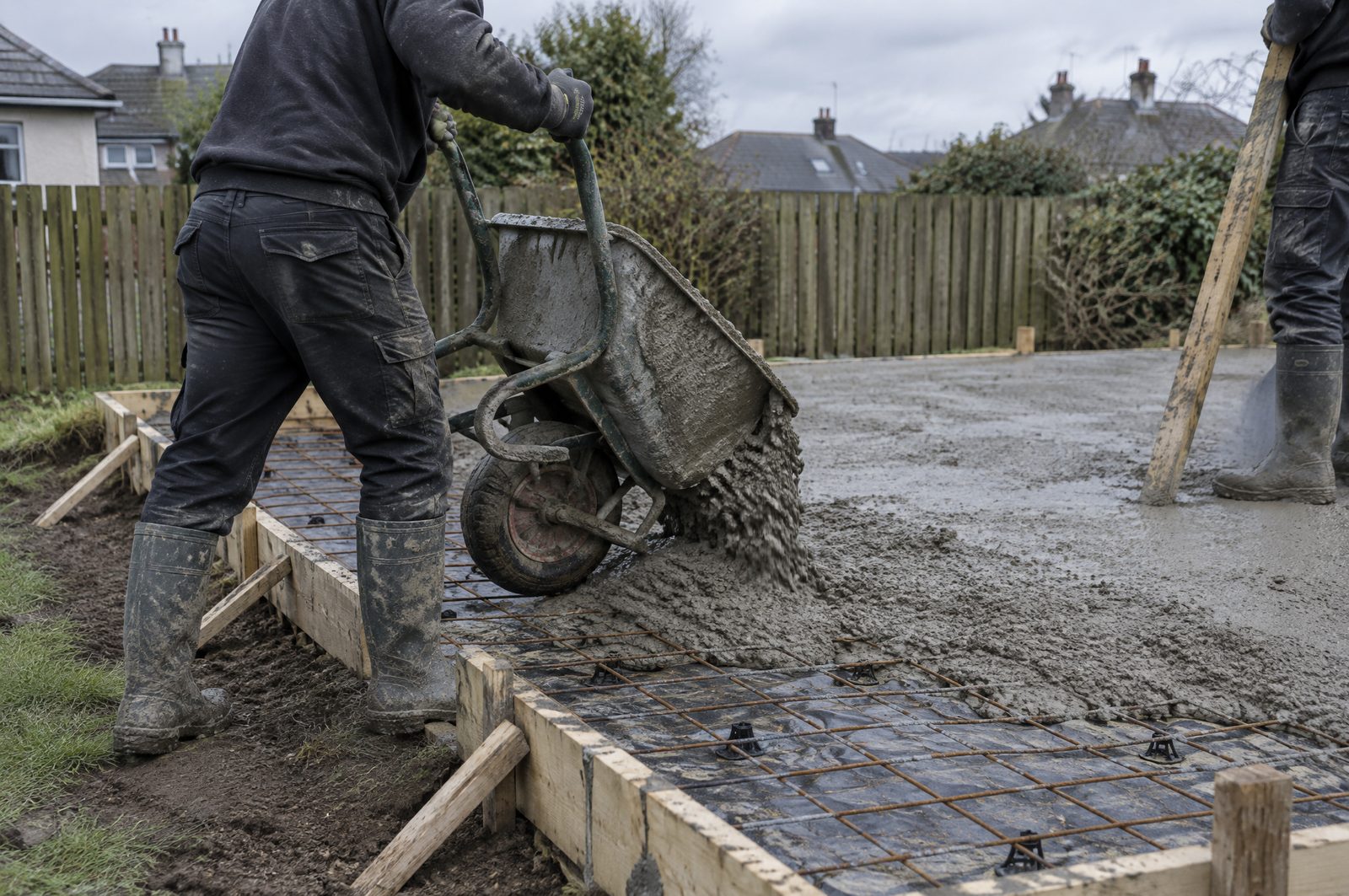
Open sites and exposure.
Kildare is flat and open, and plenty of gardens on the edge of a town look straight across fields with nothing to break the wind. A shed on an exposed site needs to be fixed down to its base, and the supplier will say how. The slab is sized so those fixings land far enough in from the edge to hold without breaking it out.
On an open site the base also catches more rain and more sun. Curing is managed for both: the cover goes on straight after finishing and stays on for the first 48 hours, which slows the drying in a warm spell and keeps a shower off the fresh surface.
Towns we cover in Kildare.
We cover the whole county, including the commuter towns of north and central Kildare: Naas, Sallins, Clane, Newbridge, Kildare town, Maynooth, Kilcock, Celbridge and Leixlip, and south to Athy. If your town is not listed, ask; the site visit costs nothing anywhere in Kildare.
Most pours are scheduled within a week or two of the quote being accepted, and we can line the date up with your shed or garden room delivery so the slab is ready when it arrives.
From the call to the photos.
The same crew looks at the job, quotes it and does it. You get before and after photos when it is finished.
- First01.
Send the size and a photo.
The shed's footprint, or the supplier's base drawing, and a photo of the spot with the route in from the gate.
- Then02.
Site visit, ground check and quote.
We look at the access, check the ground and the slope, and the written quote follows within 48 hours.
- Next03.
Dig, compact, form and pour.
Soft ground out, Type 1 hardcore in and compacted, formwork set square and level, mesh where the building needs it, then the pour.
- Last04.
Cover, clear and photos.
Curing cover on, spoil and waste taken away, and before and after photos once the work is done.
Where we draw the line.
We pour bases for sheds, summerhouses and garden buildings, along with paths and small slabs. We do not pour foundations for house extensions or large commercial slabs. Where a Kildare site turns out to be too soft or too deeply filled for a slab on hardcore, we say so before pouring rather than put concrete on ground that will not hold it.
Concrete questions.
Anything else, ring 085 781 4603.
How thick should a shed base be in Kildare?
For a standard garden shed, 100mm of concrete on 100mm of compacted hardcore. On clay or soft ground we dig deeper and put in more hardcore first; the concrete stays the same and the quote shows the depth of the dig.
My estate is new and the garden is soft in places. Can a base still go in?
Usually, yes. We dig out the soft pockets and replace them with compacted hardcore. If the made ground goes too deep for that, we will tell you before any concrete is ordered.
Do you need to come out, or can you price from photos?
For a standard shed on level ground, the size and a couple of photos can be enough. For a garden room, a slope, or ground you are unsure of, we come out and look first. Either way there is no charge.
Do you cover rural Kildare as well as the towns?
Yes. Country sites often have the best access of all, and the truck can sometimes pour straight into the formwork.
More on concrete.
Or go back to the main concrete page.
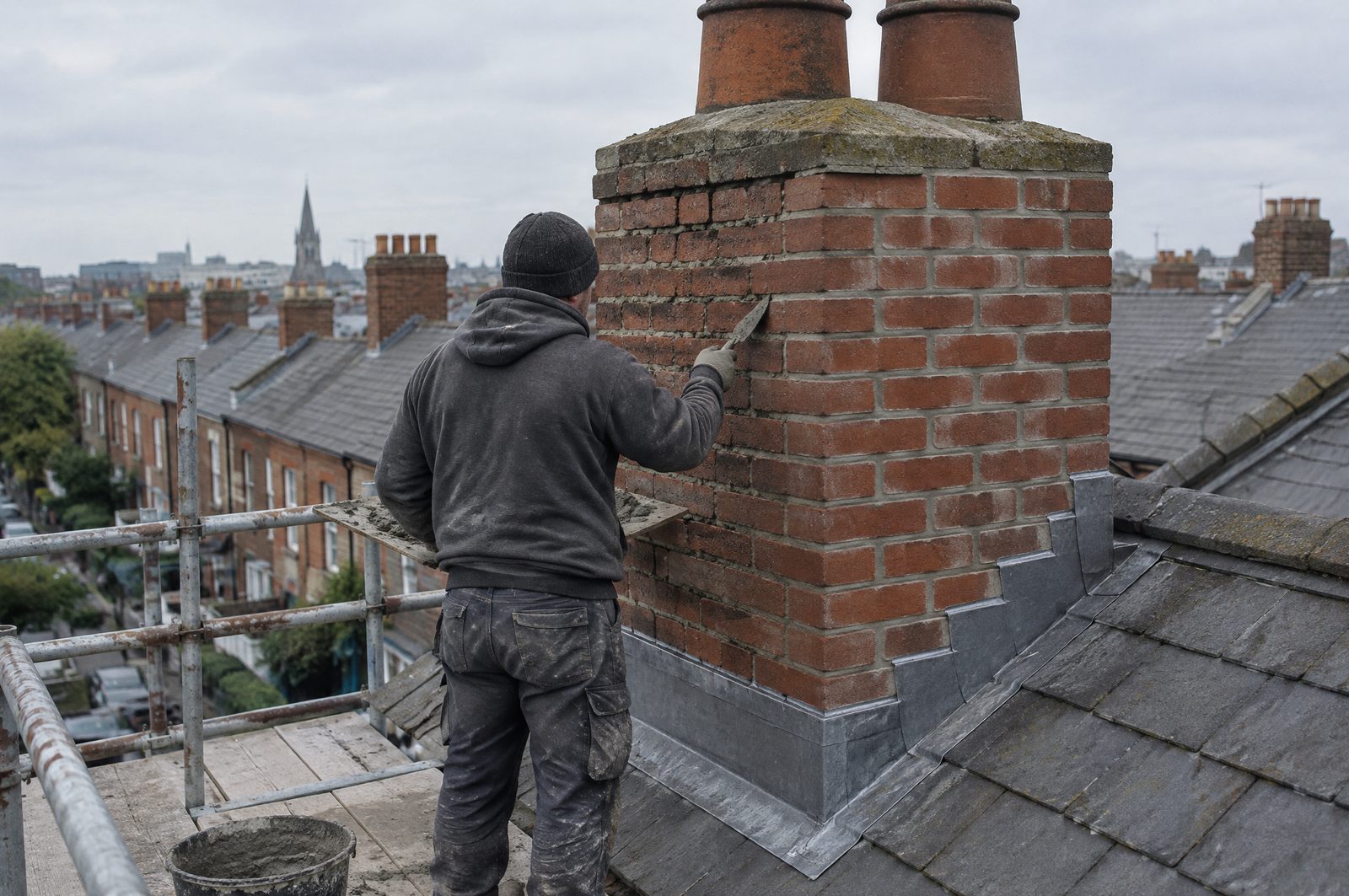
Get your job priced properly.
Tell us what needs doing and where. Free site visit, then one written price inside 48 hours, with no pressure to go ahead.