Concrete paths in Dublin, side passages and small slabs.
We lay concrete paths in Dublin gardens: the side passage beside the house, the path from the back door to the shed, the strip where the bins live, and the small slabs and steps around them. Each one is set to fall away from the walls, jointed so it can move without cracking, and given a brushed surface you can walk on in the rain.
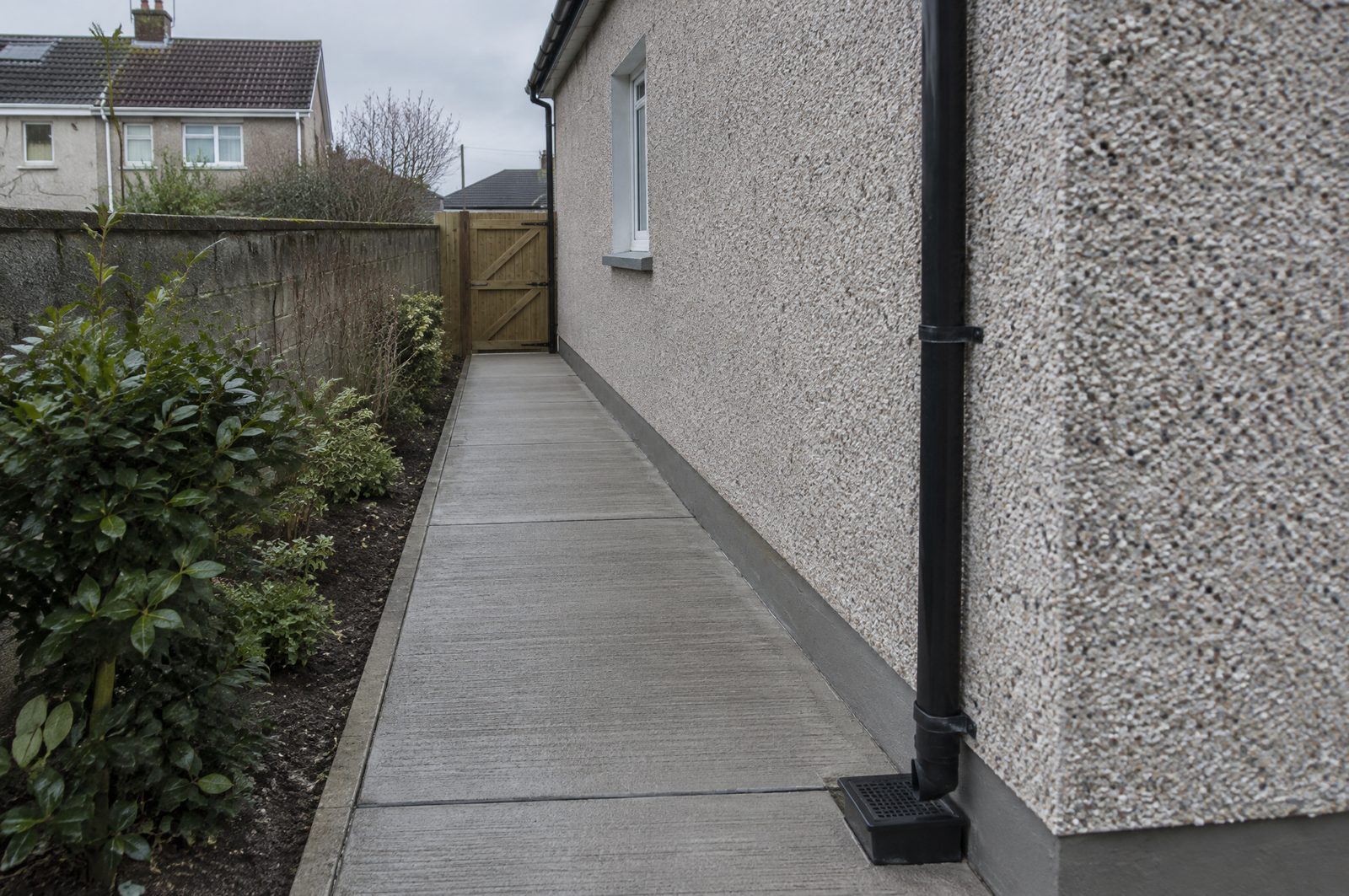
A concrete path lasts when three details are right: it falls away from the house, it has joints that let it move, and its surface sits below the damp course.
We break out the old path or gravel, put down compacted hardcore, set the formwork to the falls and pour, with a brush finish for grip.
The look is free and the written quote arrives within 48 hours of it.
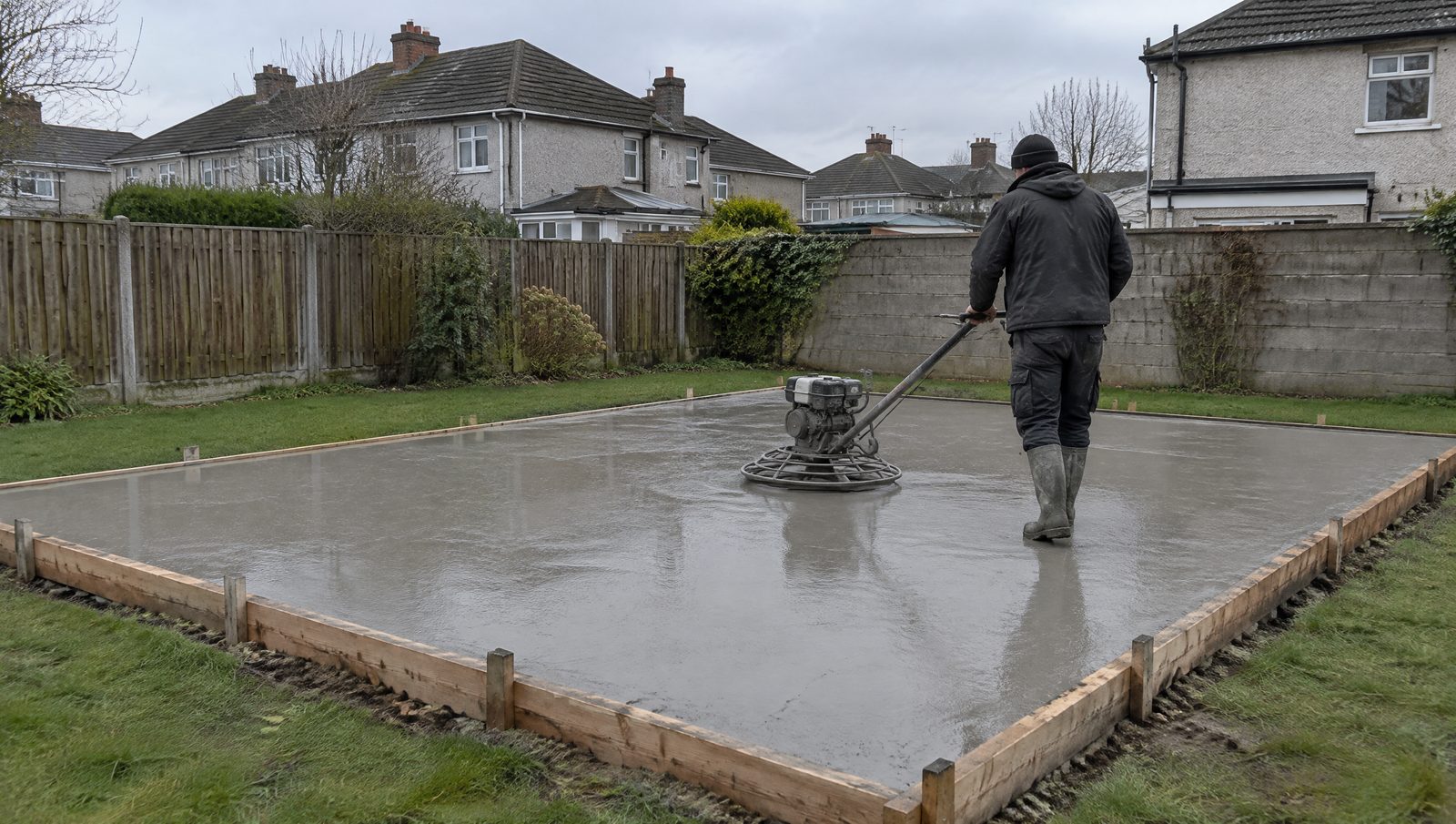
Where paths go around a Dublin house.
On a semi-detached or end-of-terrace house in Dublin the side passage is often the hardest-working strip of ground on the property. It is the route to the back garden, the place the bins are kept, and the gap between the gable wall and the boundary that every downpipe and gully drains into. Many of the passages on older estates were poured when the house was built and have since cracked, sunk at the gully or lifted where a tree root found its way under them.
The other common jobs are a path from the back door to a shed or garden room, a strip along the back wall of the house, and a hard standing beside the door for bins or bikes. Each is a small pour on its own. Done together, they are planned so the falls work as one surface and the water from all of them ends up in a gully or the lawn.
Side passage concrete: falls and the damp course.
Side passage concrete has two jobs that pull against each other. It has to be high enough to meet the gate, the back door step and the path at the front, and low enough to stay under the damp-proof course of the house. If the surface is poured up to or above the damp course, rain splashing off it soaks into the wall above the barrier and you get damp inside. We find the damp course on the site visit, mark it, and set the levels from it.
The surface then falls away from the house wall so water runs across to the boundary side or along the passage to a gully, never back against the brickwork or render. Where an air brick or vent sits low on the wall, the new surface is kept below it. Getting this right sometimes means digging the old passage out deeper than it was, which is in the quote from the start.
Expansion joints and why paths crack.
Concrete shrinks as it cures and moves with the temperature for the rest of its life. A long path with no joints will crack somewhere to relieve that, usually in an ugly line across the middle. Joints decide where the movement goes instead. We put them in at regular intervals along a path, at changes of direction, and wherever the concrete meets the house wall, a step or an existing slab, so each bay can move on its own.
Underneath, the ground is dug out, soft spots removed and compacted, and MOT Type 1 hardcore laid and compacted before the formwork goes in. A path that sinks at one end usually sinks because that layer was skipped.
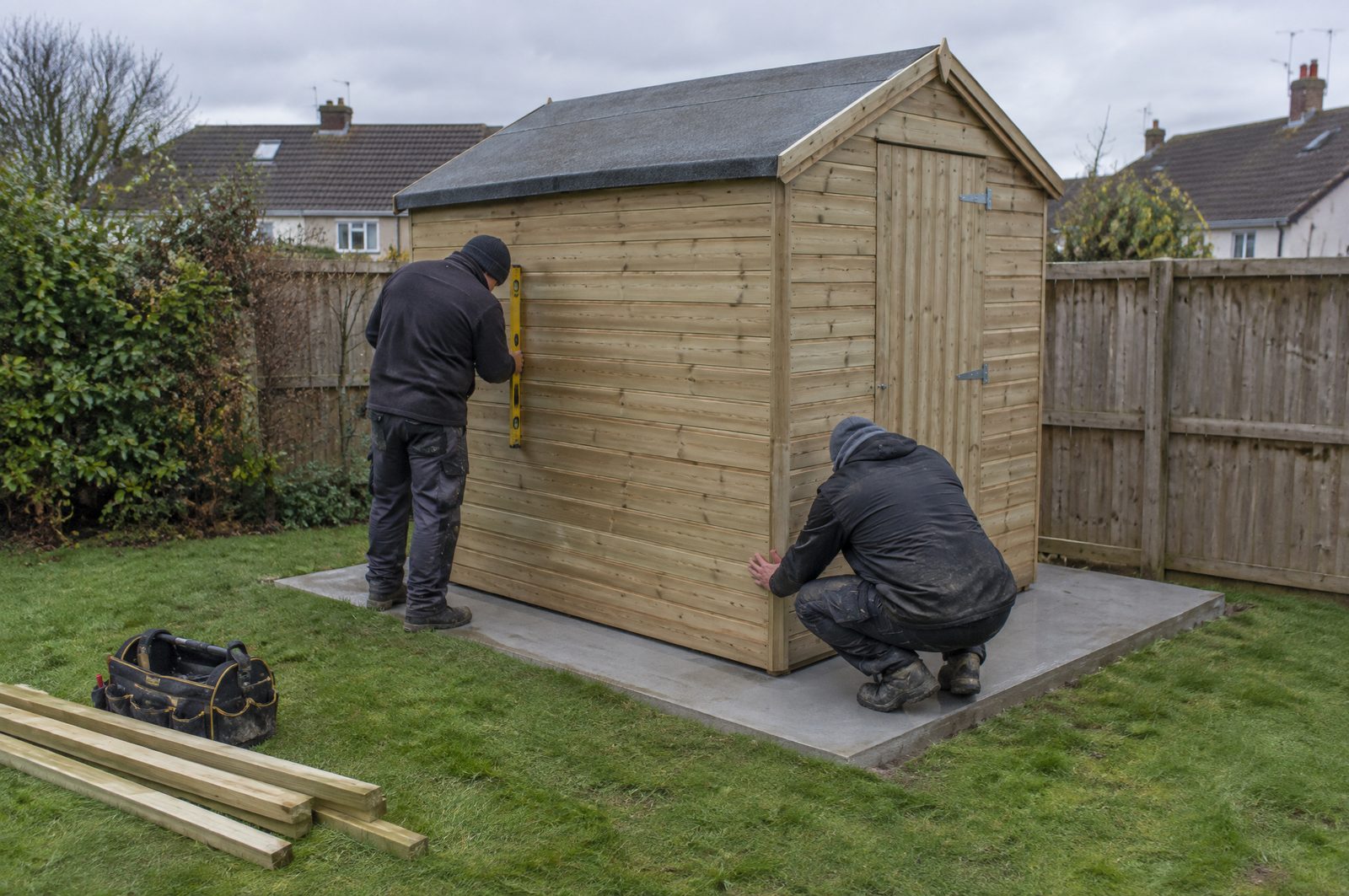
A brush finish for grip.
Once the concrete is screeded and floated, a stiff brush is drawn across it to leave a fine ribbed texture. On a side passage that is in shade for most of the day and stays damp from October to April, that texture is what keeps it safe to walk on. The brush lines run across the path, at right angles to the way you walk, and the edges are finished with an edging tool so they do not chip.
A float finish is smoother and suits a covered area or the inside of a bin store. Outside in the open we recommend the brush.
Bin stores, small slabs and steps.
The same crew pours the small pieces of concrete around a house that tend to get left for years. A level slab for a bin store or a bike shed. A pad for an oil tank or a hot tub, sized to the base of the unit. Steps from a back door down to the garden, or between two levels of a sloping garden, formed in timber and poured in one go so each tread is the same height.
- 01Side passages and paths broken out and relaid
- 02New paths to a shed, garden room or back gate
- 03Slabs for bin stores and bike sheds
- 04Pads for oil tanks and hot tubs
- 05Concrete steps at doors and between garden levels
- 06Old concrete, gravel and spoil taken away
From the call to the photos.
The same crew looks at the job, quotes it and does it. You get before and after photos when it is finished.
- First01.
Photos and rough sizes.
A photo of the passage or path from each end, roughly how long and wide it is, and where the water goes now.
- Then02.
A free look and the levels.
We find the damp course, check the gullies and the falls, and send a written quote within 48 hours.
- Next03.
Break out, compact, form and pour.
The old surface comes up, hardcore goes down and is compacted, formwork and joints are set, and the concrete is poured and brushed.
- Last04.
Cure and hand back.
The new concrete is covered while it cures, the waste is removed, and before and after photos are sent once the job is complete.
Where we draw the line.
We pour plain concrete paths, passages, small slabs and steps at houses. We do not build retaining walls holding up a neighbour's ground, structural foundations, or commercial slabs. If a gully or manhole needs to be moved or raised rather than worked around, we will say so on the site visit and tell you who to call for the drainage before we pour.
Concrete questions.
Anything else, ring 085 781 4603.
How deep should a concrete path be?
It depends on what is under it and what it carries. A garden path gets a compacted hardcore layer and a concrete slab on top, set out in the quote. On a side passage the depth is often set by the damp course, which can mean digging out more than the old surface.
Can you pour over my old cracked path?
We do not recommend it. A new layer on top raises the level towards the damp course, and the cracks below usually come back through. Breaking out the old path costs more on the day and lasts far longer.
Why is my side passage always wet?
Usually because it falls the wrong way, or towards a gully that is blocked or sitting too high. On the site visit we check which way the water runs now and set the new surface so it goes where it should.
When can I walk on a new concrete path?
The day after the pour, with care. Keep heavy loads such as a full wheelie bin or a barrow off it for about a week while it gains strength.
Will the brush finish be hard to clean?
No. A stiff yard brush and a hose keep it clean. The texture is fine enough that leaves and grit sweep off it easily.
More on concrete.
Or go back to the main concrete page.
Get your job priced properly.
Tell us what needs doing and where. Free site visit, then one written price inside 48 hours, with no pressure to go ahead.