Patios in Kildare, built for clay ground and bigger gardens.
We build patios in Kildare for houses in Naas, Newbridge, Maynooth, Celbridge, Leixlip, Kildare town, Athy, Clane, Sallins and Kilcock, and the country around them. A lot of Kildare ground is heavy clay, so patio installation here starts with what happens to the rain once it is under the stone.
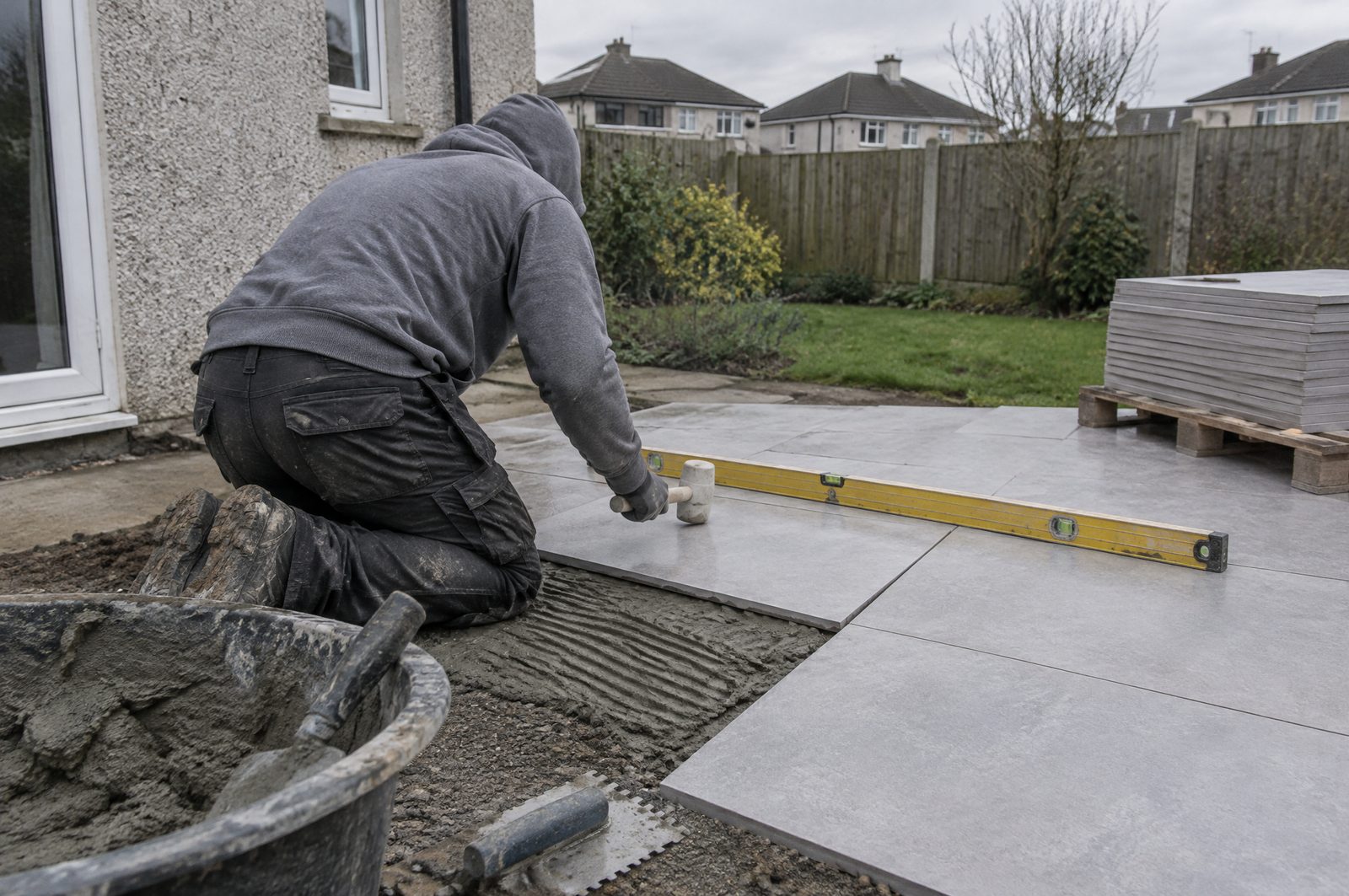
On heavy Kildare clay a patio fails from underneath: water sits in the sub-base, the ground softens, and the slabs move.
We dig out to depth, lay a compacted Type 1 sub-base, bed every slab on full mortar and set falls of at least 1:80 to a lawn or a channel drain.
The site visit is free, we bring stone samples, and the written quote comes within 48 hours.
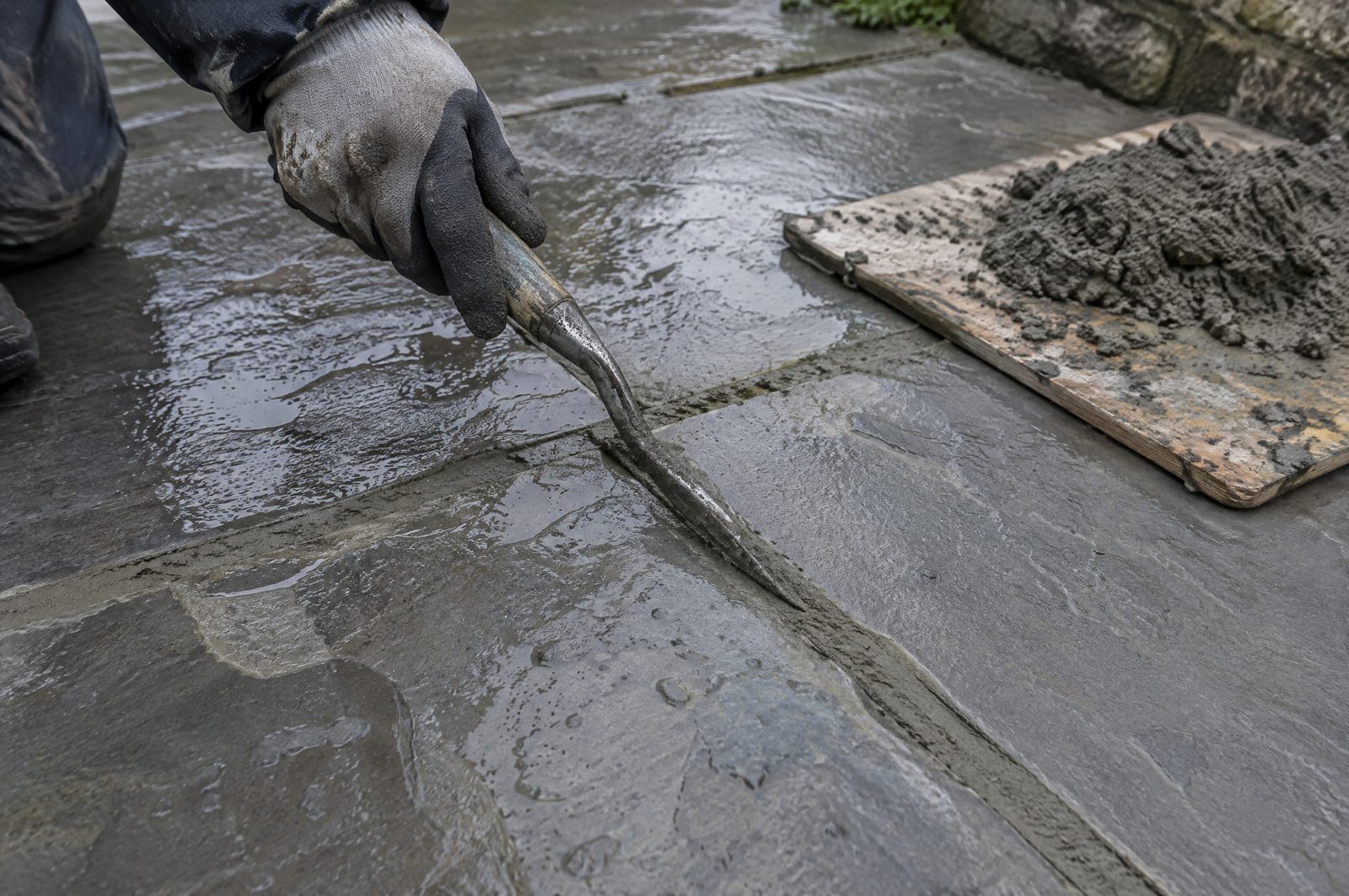
Heavy clay and drainage under a patio.
Clay is slow to drain. Dig a hole in a Kildare lawn in November and it can fill with water and stay full for days. Put a patio on top of that without thinking about where the water goes, and the sub-base turns into a tray holding water under the stone. Over a few winters the clay below softens, the Type 1 settles unevenly, and slabs start to rock or dip along one edge.
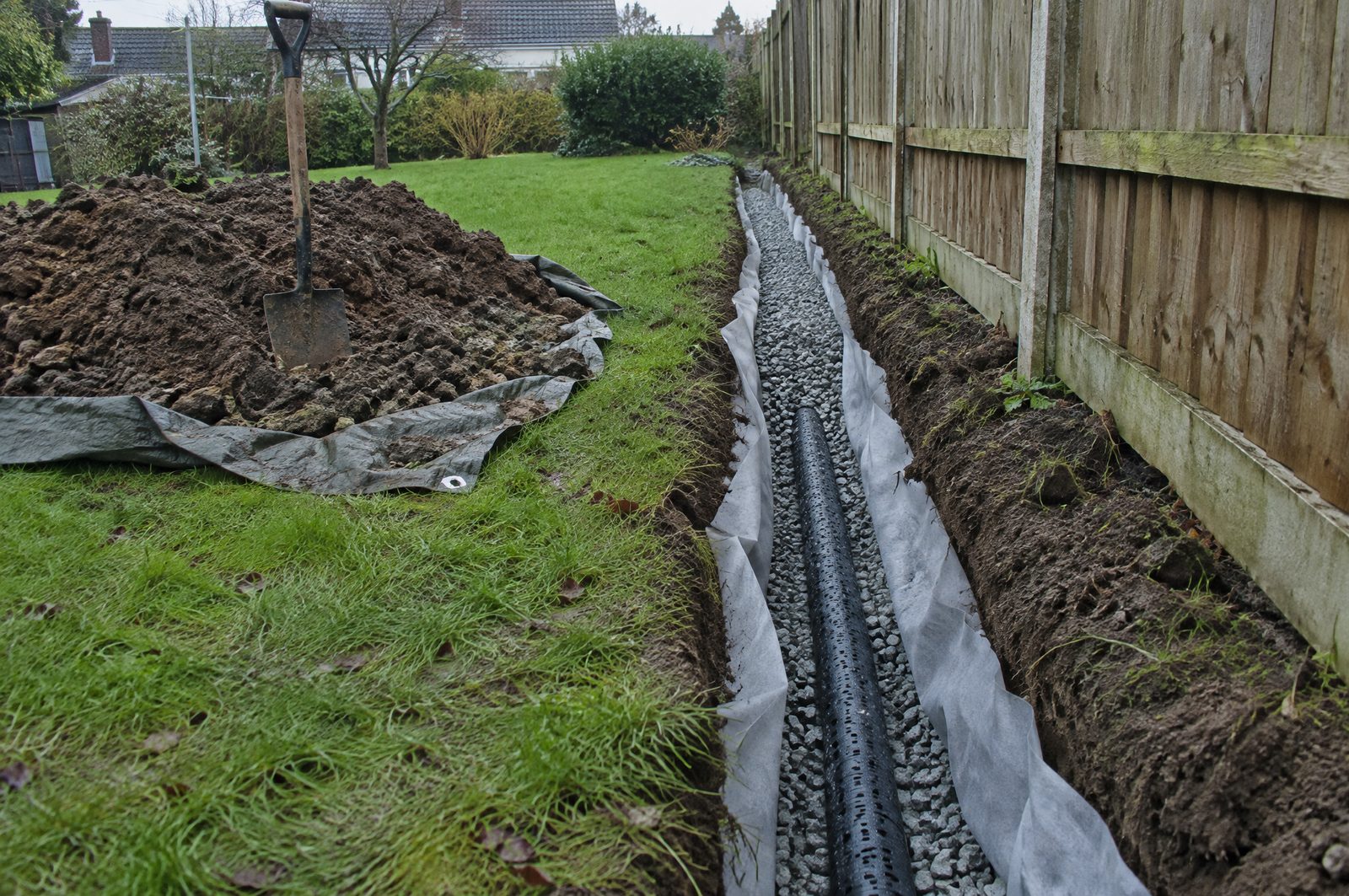
So the build-up is planned for the ground. We dig out the topsoil and any soft clay under it to a firm formation, lay the Type 1 in layers and compact each one, and look at where the surface water and the water in the sub-base will end up. On a site where the ground stays wet, a patio that falls towards a lawn may need a soakaway or a land drain at the low edge to keep the water moving. That is drainage work, and we flag it on the site visit if the garden needs it.
Falls to a lawn or a channel.
Every patio we lay has a fall of at least 1:80, enough that rain runs off but too gentle to notice when you put a table on it. The direction matters more than the amount. Against the back of the house, the fall runs away from the wall so water never sits at the door or the damp course. Where the patio meets the lawn, the water can run off the edge into the grass. On clay, a lawn that is already waterlogged will not take much more.
Where the lawn cannot take it, or the patio runs right up to the house on two sides, a channel drain along the low edge collects the water and carries it to a gully. We check the levels against the door threshold and the existing drains before quoting, and the quote says which way the patio falls and where the water goes.
Bigger back gardens on Kildare estates.
Many houses in the Kildare commuter towns are on estates built in the last few decades, and the back gardens there are often larger and squarer than in older town centres. That gives room for a patio sized to be used: a dining area by the kitchen door, a second seating area at the far end where the evening sun lands, and a path between the two.
On a larger patio the details count for more. Joints run in long straight lines that show any wander. Cuts around a drain or a step are visible from the house. And the falls have to work over a wider area without creating a dip in the middle. Access is also easier on many of these sites, with a wider side entrance, so materials come in quicker and the work moves faster.
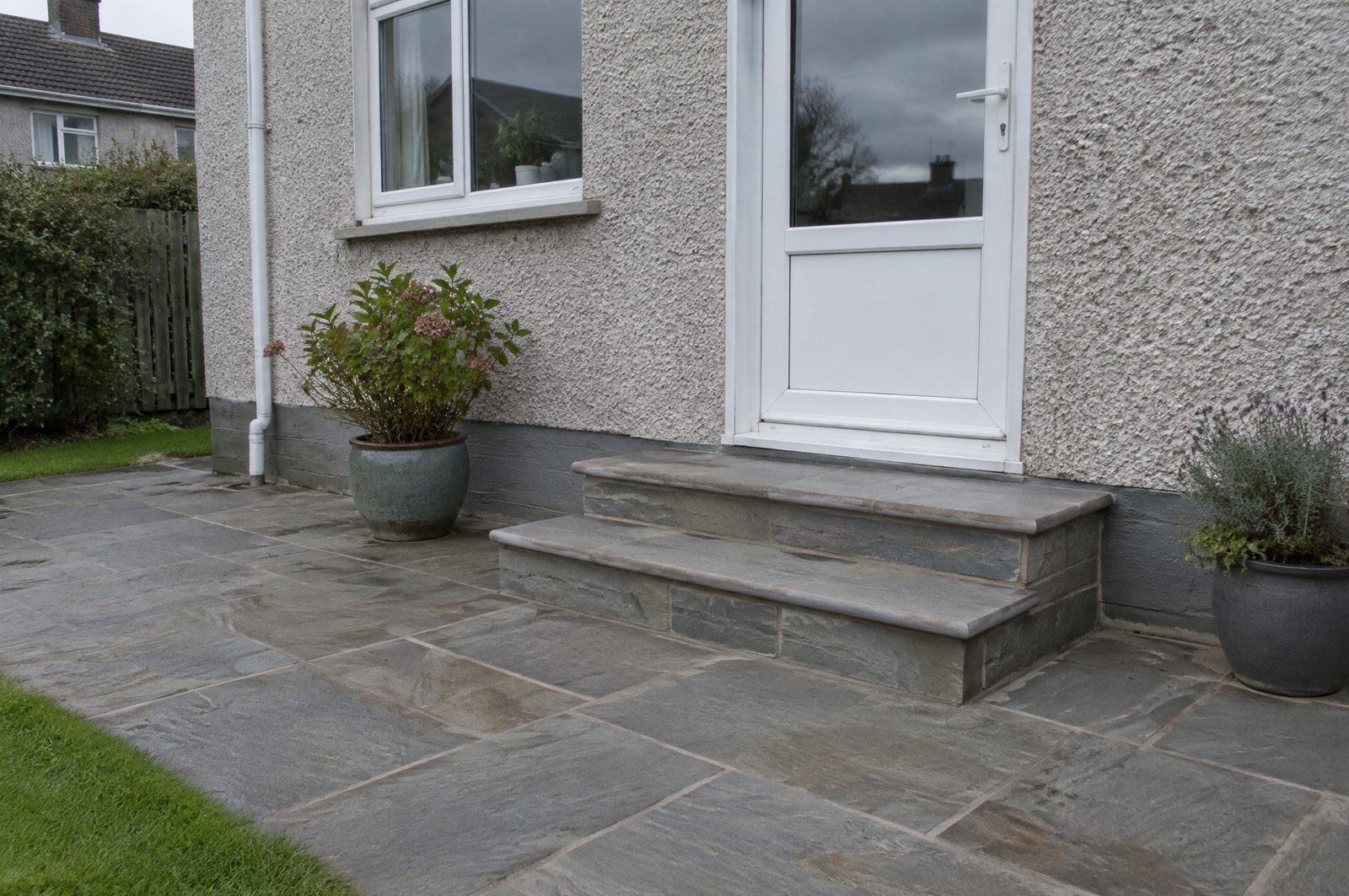
Open ground and the sun.
Kildare is flat and open, and plenty of gardens on the edge of a town look over fields with little shelter. Before deciding where the patio goes, it is worth watching the garden for a day: where the sun is at lunchtime and at seven in the evening, and which corner the wind comes round. A patio placed for the view but in the wind does not get used. One placed against a wall or hedge on the sheltered side, in the evening sun, often does.
Sun also affects the stone. Dark porcelain in full afternoon sun gets warm underfoot, and pale stone reflects more glare. A south or west facing patio with no shade suits a mid-tone finish.
Patio stone choices for Kildare gardens.
We lay five materials, and we bring samples on the site visit so you can see them in your own light.
- 01Indian sandstone: warm colours, natural variation between slabs, forgiving to lay; porous, so it darkens in the wet and benefits from sealing
- 02Porcelain: flat, dense and stain resistant, needs no sealing, laid on a full bed with a primer on the back of every slab
- 03Granite: the hardest wearing, suits a plainer and more formal garden
- 04Limestone: smooth and pale, works well beside a modern extension, softer, so it wants sealing and some care
- 05Block: a tight-jointed patio with kiln-dried sand in the joints, practical for a large area
From the call to the photos.
The same crew looks at the job, quotes it and does it. You get before and after photos when it is finished.
- First01.
A free site visit.
We measure, check the levels at the door and the drains, look at how wet the ground is, and show you stone samples.
- Then02.
Written quote within 48 hours.
It states the area, the stone, the depth of dig, the sub-base, the falls and where the water goes, and the jointing.
- Next03.
Dig, base and lay.
Soft ground out, Type 1 in and compacted, then every slab bedded on full mortar with cuts made to fit around drains and steps.
- Last04.
Joints, clean and photos.
Joints finished to suit the stone, the patio pressure-washed, waste taken away, and before and after photos sent when the job is done.
Where we draw the line.
We build patios in stone, porcelain and block. We do not lay decking, and we do not put a patio down on sand alone or on mortar dabs to bring the price down. If an old patio has sunk because the base has failed, we take the base out and build it again rather than relay the slabs on top. Where the ground is wet enough to need a soakaway or land drain, we say so on the site visit, before the quote.
Patios questions.
Anything else, ring 085 781 4603.
Will a patio work on heavy clay?
Yes, if the base is built for it. The soft clay is dug out, the Type 1 sub-base goes in deep enough and compacted, and the patio falls towards somewhere the water can go. On very wet sites a drain at the low edge keeps the base dry.
Which stone is best for a Kildare garden?
It depends on the house and how you use the garden. Indian sandstone and porcelain are the most asked for. Granite wears hardest. Limestone suits a modern extension. We bring samples so you can compare them on site.
Can you lay a patio in winter?
Yes, while overnight temperatures stay above freezing. In a cold spell we hold the laying rather than risk frost in a fresh mortar bed.
Do you build steps and walls with the patio?
Yes. Steps, paths, raised beds and low walls around a patio are landscaping work, and the same crew does them so the levels and finishes match.
Does a patio need planning permission?
Not normally for a patio in your own back garden. A very large hard surface, or one that sends water towards a neighbour, can raise questions, and we flag it on the site visit if it applies.
More on patios.
Or go back to the main patios page.
Get your job priced properly.
Tell us what needs doing and where. Free site visit, then one written price inside 48 hours, with no pressure to go ahead.