Roofers in North Dublin.
Roofers for North Dublin, repairing roofs on the northside from Cabra, Glasnevin and Finglas across to Marino, Clontarf, Coolock, Artane and Raheny, and out to Howth and Malahide. We look, quote the repair in writing and send photos of the finished work.
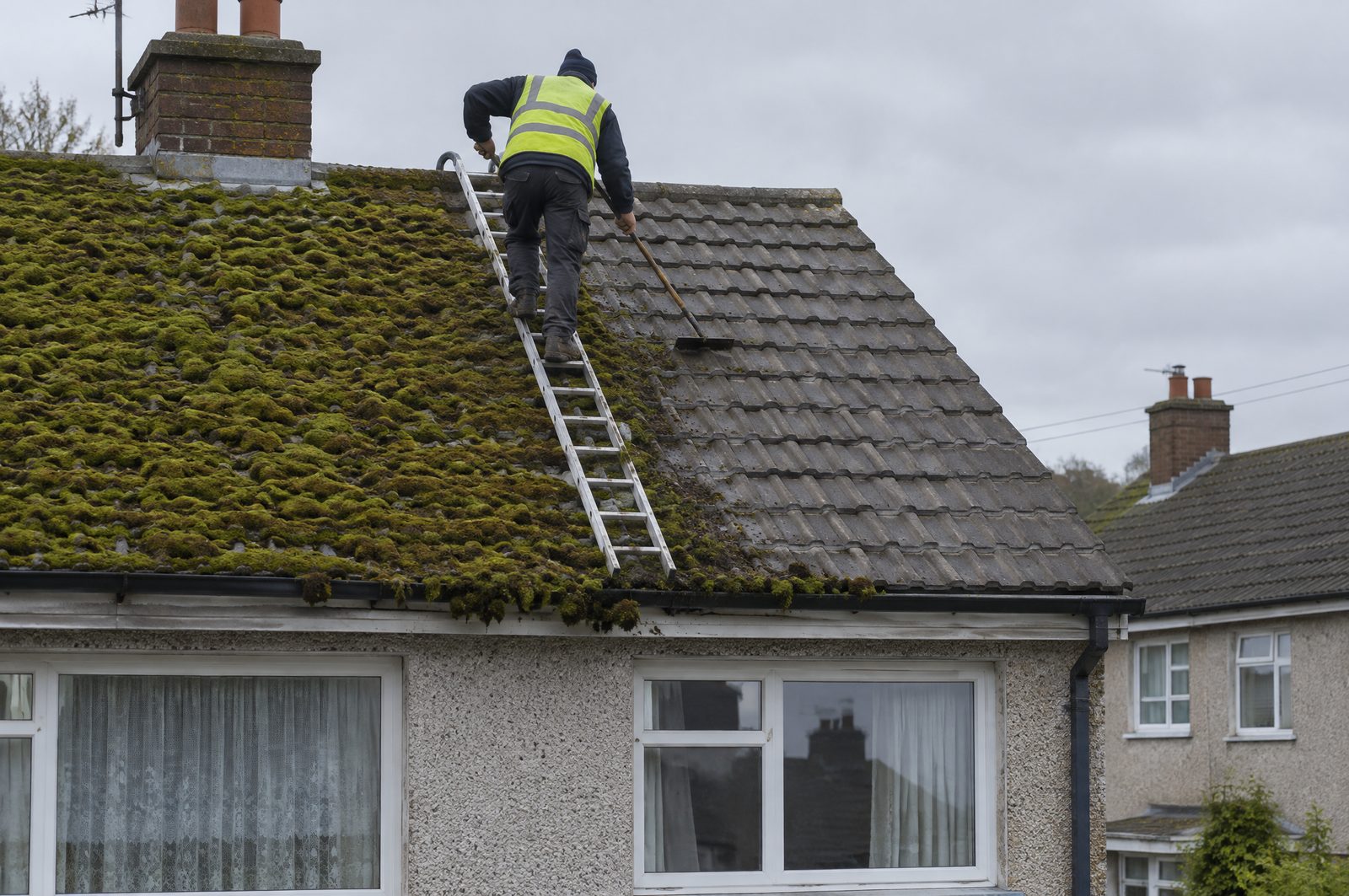
The northside has a long run of housing eras, from the 1920s Marino scheme through the post-war estates to newer builds, and each era has its own weak spots on the roof.
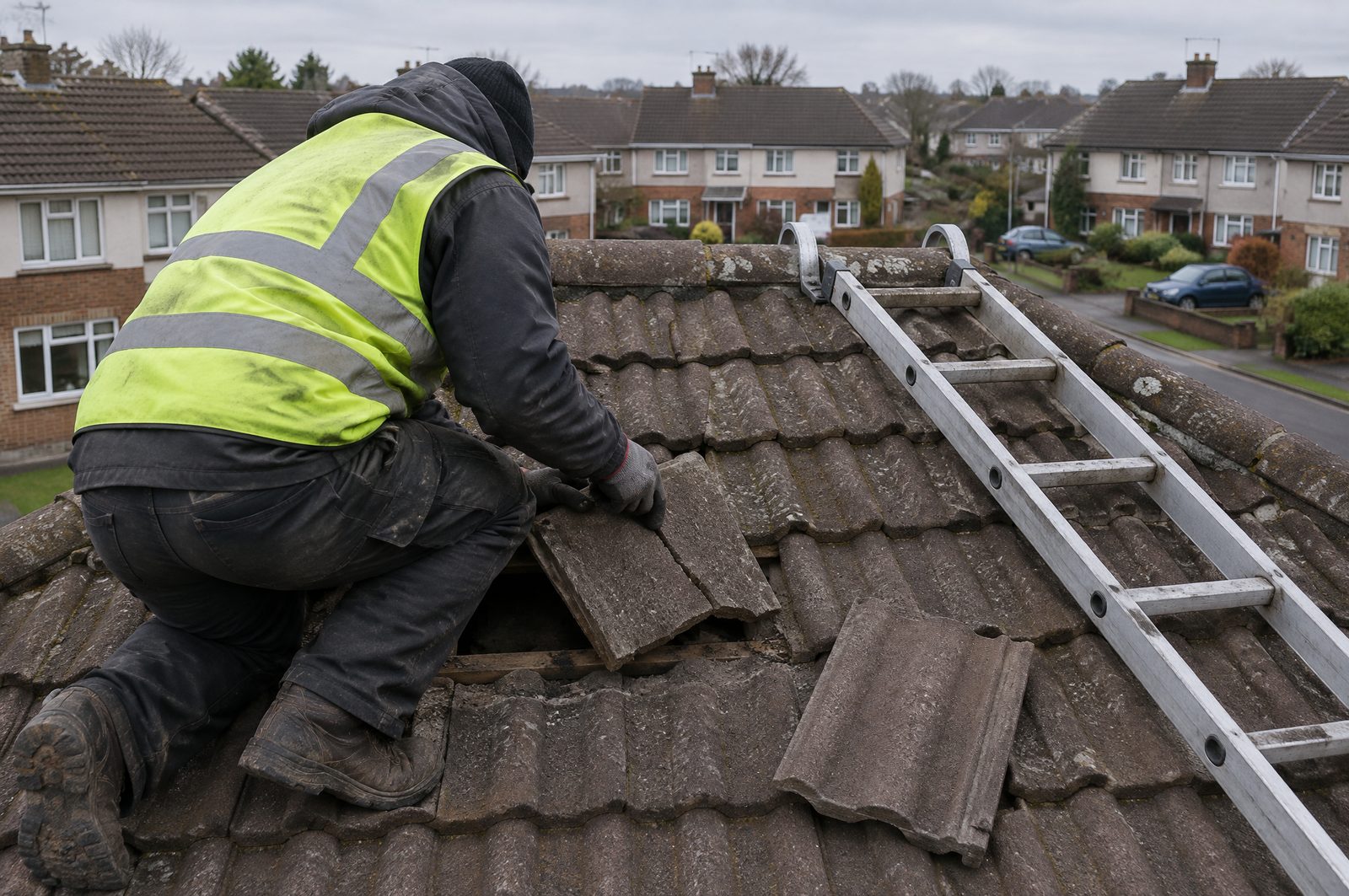
We repair them: slipped slates, broken tiles, loose ridges, lead flashing, valleys, chimneys, gutters and fascia. Repairs only; re-roofs go to a re-roofing contractor.
Ring 085 781 4603 or send a photo of the roof from the road. The look is free and usually happens the same week, with a written quote within 48 hours.
Northside housing, decade by decade.
Marino was built in the late 1920s and 1930s as a garden suburb on the old Charlemont estate, around a large circular green. Around 1,300 houses went up, built in concrete. Those houses are coming up on a hundred years old, and many of their roofs have been patched, partly re-covered or extended at the back over that time.
After the war the city spread north. Finglas was built up with large estates in the 1950s to rehouse families from the north inner city. Most of Coolock was built by Dublin Corporation between the 1950s and 1980s, with Kilmore, Bonnybrook, Darndale and Priorswood among its estates. Artane, Santry, Ballymun and Donaghmede grew up around them, with council and private estates of semis and terraces.
Between and before all of that are the older suburbs: Drumcondra, Phibsborough, Glasnevin, Clontarf and Fairview, with Victorian and Edwardian redbrick under natural slate, and plenty of 1930s semis with hipped roofs, tall chimneys and bay windows. Swords, further out in Fingal, has a page of its own.
What tends to fail, and where.
On the redbrick and slate houses in Drumcondra, Glasnevin and Clontarf, it is usually the fixings: nails corroded after a century, slates sliding out of their courses, and lead at the chimney and the back return that has cracked or lifted. Valleys between the main roof and the return, often hidden from the street, fill with leaves and moss and back water up under the slates.
On the post-war estates the concrete tiles are often still in fair condition. The problem is the mortar at the ridges, hips and verges, and the felt at the eaves, which has had decades sitting in a damp gutter. Hipped roofs on 1930s semis have more ridge than a plain gable, so there is more bedding to fail. Where one house in a terrace has been re-roofed and the next has not, the junction between them is a regular source of leaks.
Along the coast at Clontarf, Raheny, Sutton and Howth, the houses face Dublin Bay and take wind and salt air off the water. Ridges, chimney pots and flashings on that side of the house get more weather and are worth checking after a storm.
Roof repairs we do on the northside.
Quoted from photographs taken on the roof, with slate and tile matched to the house.
- 01Slipped natural slates refixed with tingles or replaced, using reclaimed slate where a new one would stand out
- 02Cracked and missing concrete and clay tiles replaced
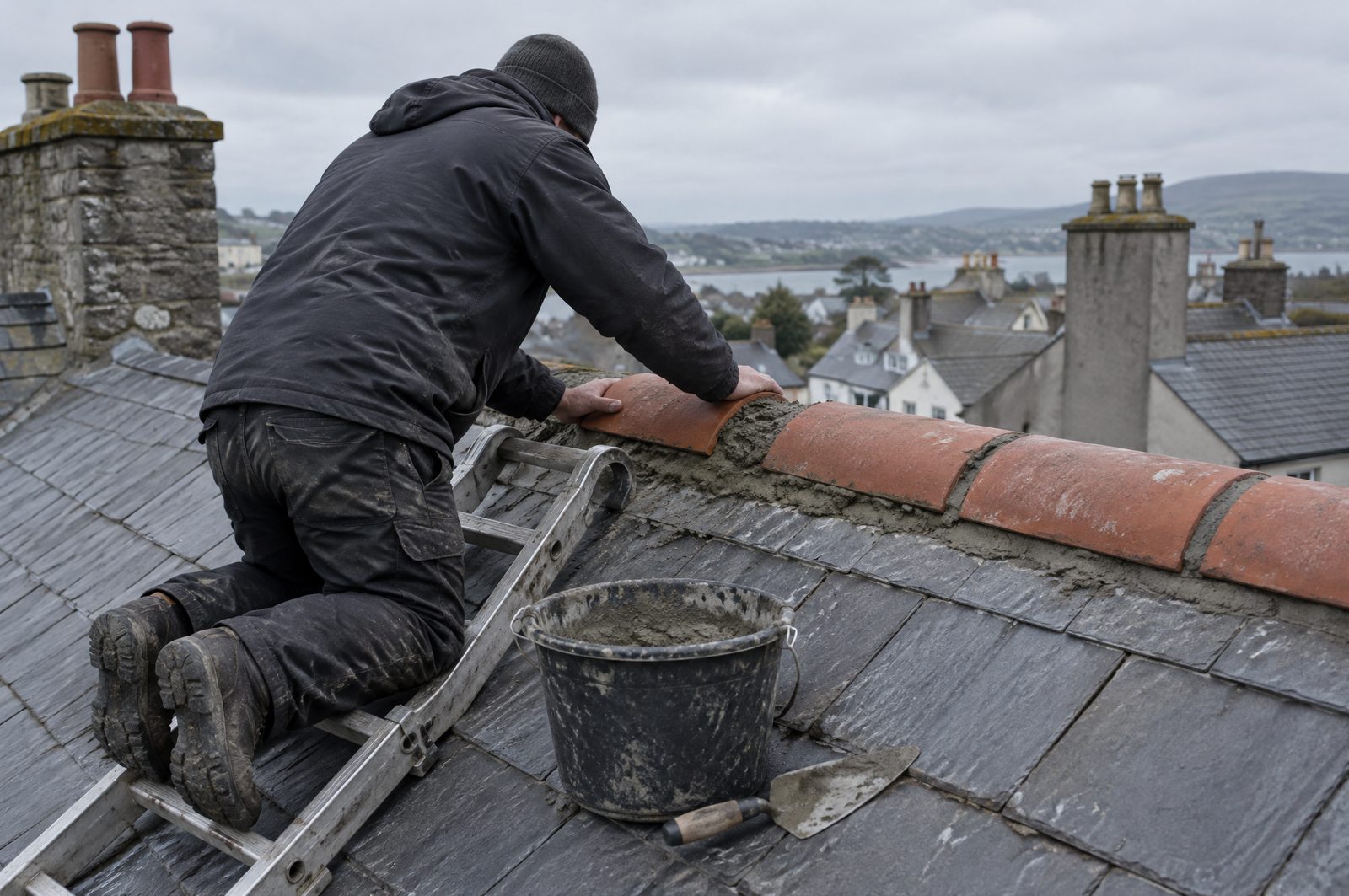
- 03Ridge and hip tiles rebedded, or refixed on a dry ridge system on exposed roofs
- 04Lead flashing renewed at chimney stacks, back returns, party walls and dormers
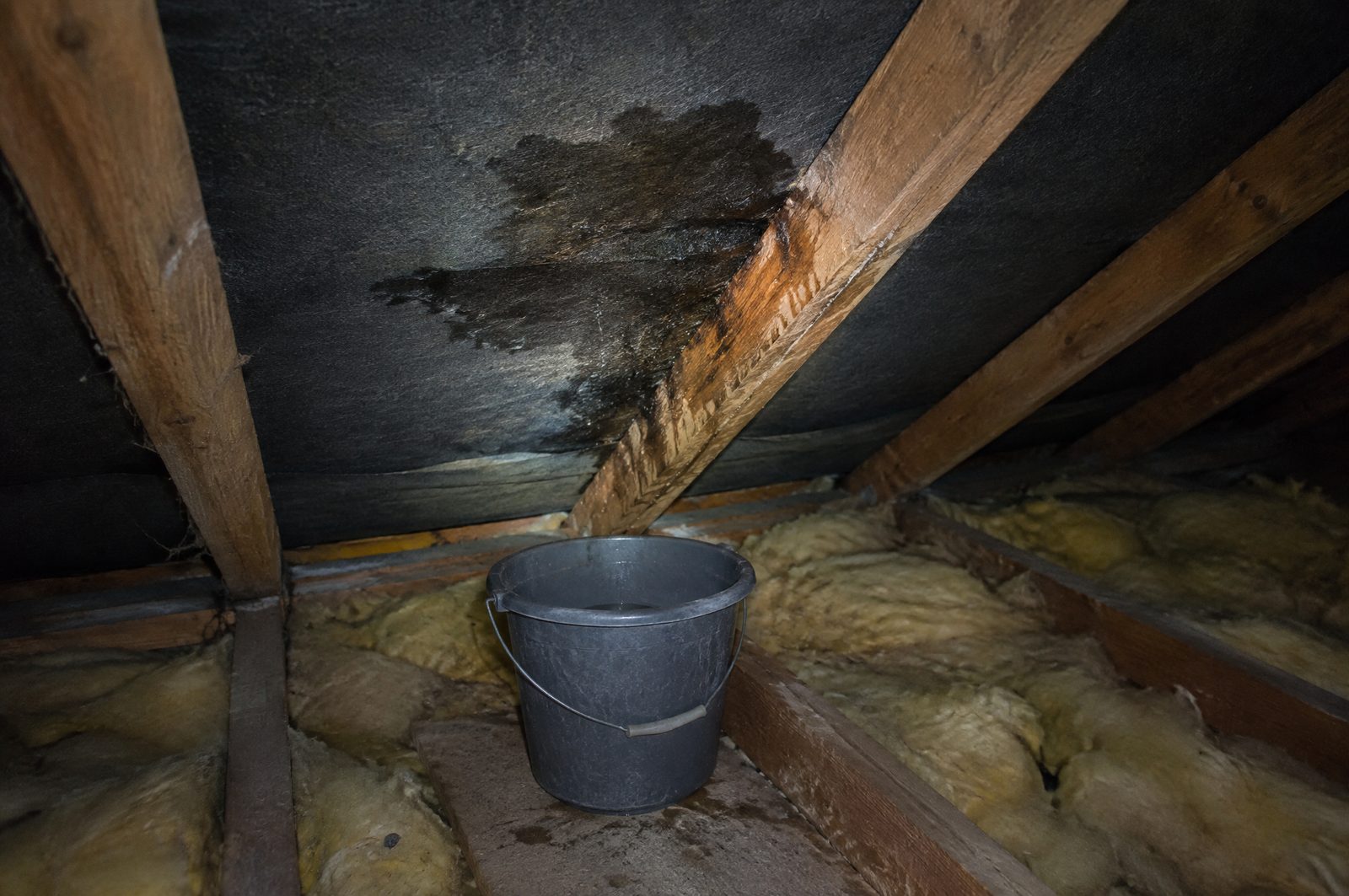
- 05Hidden valleys at the back of terraced houses cleared, patched or relined
- 06Junctions with a neighbour's newer roof sealed and flashed properly
- 07Chimney stacks repointed, flaunched and capped, and loose pots refixed
- 08Leaks traced from the loft and the roof, and the source repaired
- 09Gutters, downpipes, fascia and soffit repaired or renewed, including old cast iron
Where we cover.
All of North Dublin city and the northern suburbs: Cabra, Phibsborough, Drumcondra, Glasnevin, Finglas and Ballymun on the west and middle; Marino, Fairview, Clontarf, Killester, Artane, Coolock, Beaumont and Santry across the centre; and Raheny, Kilbarrack, Donaghmede, Baldoyle, Sutton, Howth and Malahide towards the coast. Swords has its own page. If you are anywhere north of the Liffey and not listed, ring and ask.
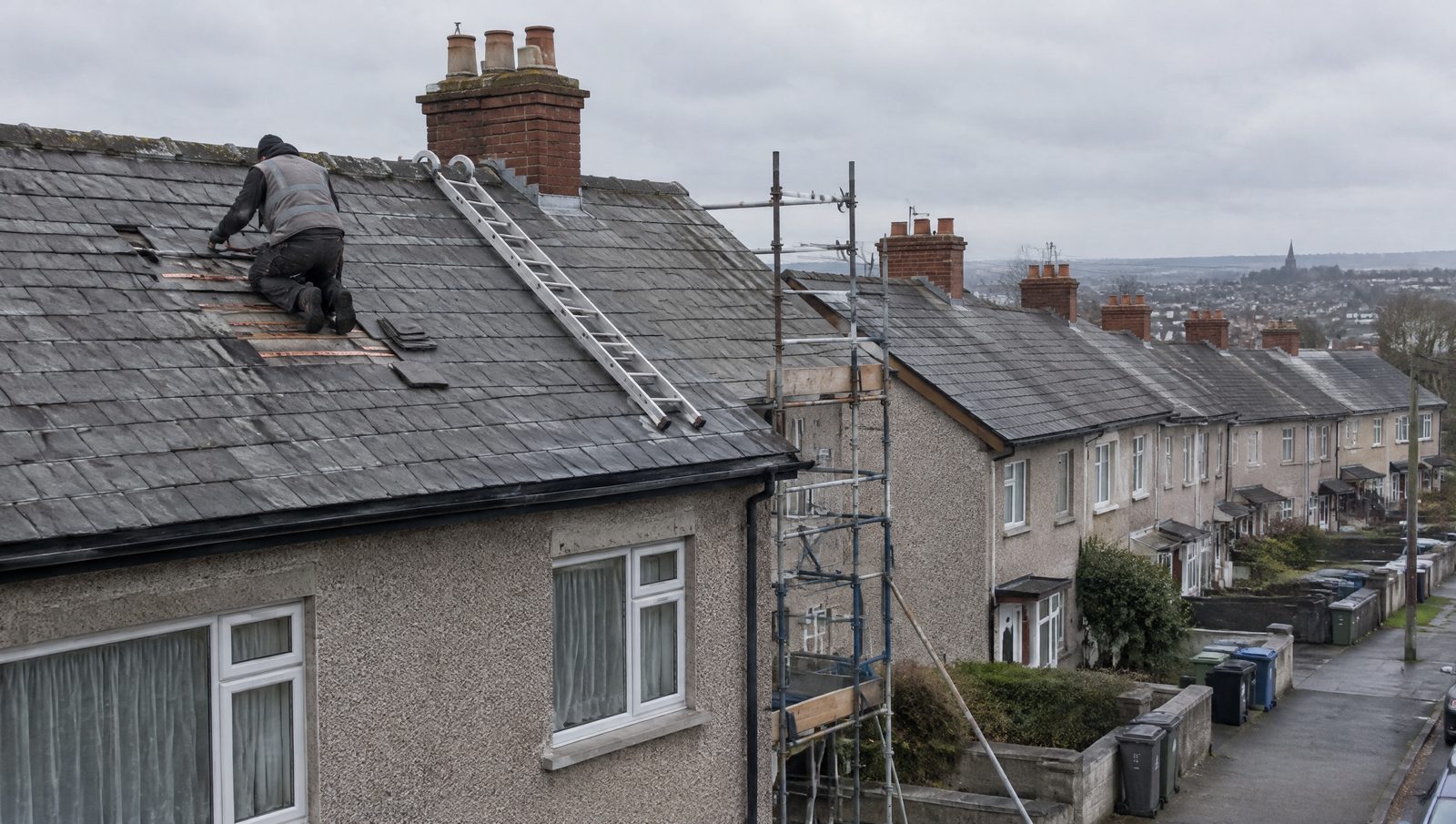
Many northside terraces have no side access and a small front garden onto the street. Work on those is done from the front with a tower or a scaffold, planned so the footpath stays clear, and that is written into the quote.
From the call to the photos.
The same crew looks at the job, quotes it and does it. You get before and after photos when it is finished.
- First01.
Tell us what you have seen.
Ring or send a photo: a slate on the path, damp in a bedroom, daylight in the attic. Say what kind of house it is and roughly when it was built if you know.
- Then02.
Free look from the ladder.
Usually the same week on a repair call. We photograph the fault and the roof around it, including the back return and valleys you cannot see from the road. If water is coming in, say so when you ring and we come as early as we can.
- Next03.
Written quote within 48 hours.
A price for the repair, the materials and the access, with the photos attached. No call-out fee for the look and no obligation to go ahead.
- Last04.
Repair and before and after photos.
Most slate, tile, ridge and flashing repairs take a half day to a day. You get photos from the same spot on the roof before and after, so you can see the work without going up.
Repairs, not re-roofs.
We repair roofs on the northside; we do not re-roof them. If a slate roof is nail-sick across every slope, or the felt and battens under a tiled roof have failed throughout, a repair will not last and we will say so with the photos and refer you to a re-roofing contractor. Commercial buildings, apartment blocks and large flat roofs are not work we take on.
Roofing questions.
Anything else, ring 085 781 4603.
Do you work on Marino and other older northside houses?
Yes. Older houses in Marino, Drumcondra, Glasnevin and Clontarf are a large part of the repair work on the northside. We match the existing slate or tile, use reclaimed slate where it suits the roof, and photograph everything before quoting.
My neighbour has a new roof and water comes in where it meets ours. Can you fix that?
Yes. The junction between a new roof and an older one beside it is a common leak on terraces and semis. We look at how the two meet, renew the flashing or the cover at the party wall, and repair the edge of your roof so it seals against theirs.
Do you cover Howth, Sutton and Malahide?
Yes. Those are covered along with the rest of North Dublin, Swords and the wider county, as well as Wicklow and Kildare.
How fast can you get to a leak?
Most repair calls get a look the same week. If water is coming in, tell us when you ring and we come as early as we can.
More on roofing.
Or go back to the main roofing page.
Get your job priced properly.
Send a photo from the ground if you can, or we come out and look from the ladder. One written price inside 48 hours, no call-out fee and no pressure to go ahead.