Roofers in Dún Laoghaire.
Roofers for Dún Laoghaire and the streets around it, from the seafront terraces and the town centre out to Monkstown, Sandycove, Glasthule and Glenageary. We repair slate and tile roofs, put the price in writing first and send you photos of the finished work.
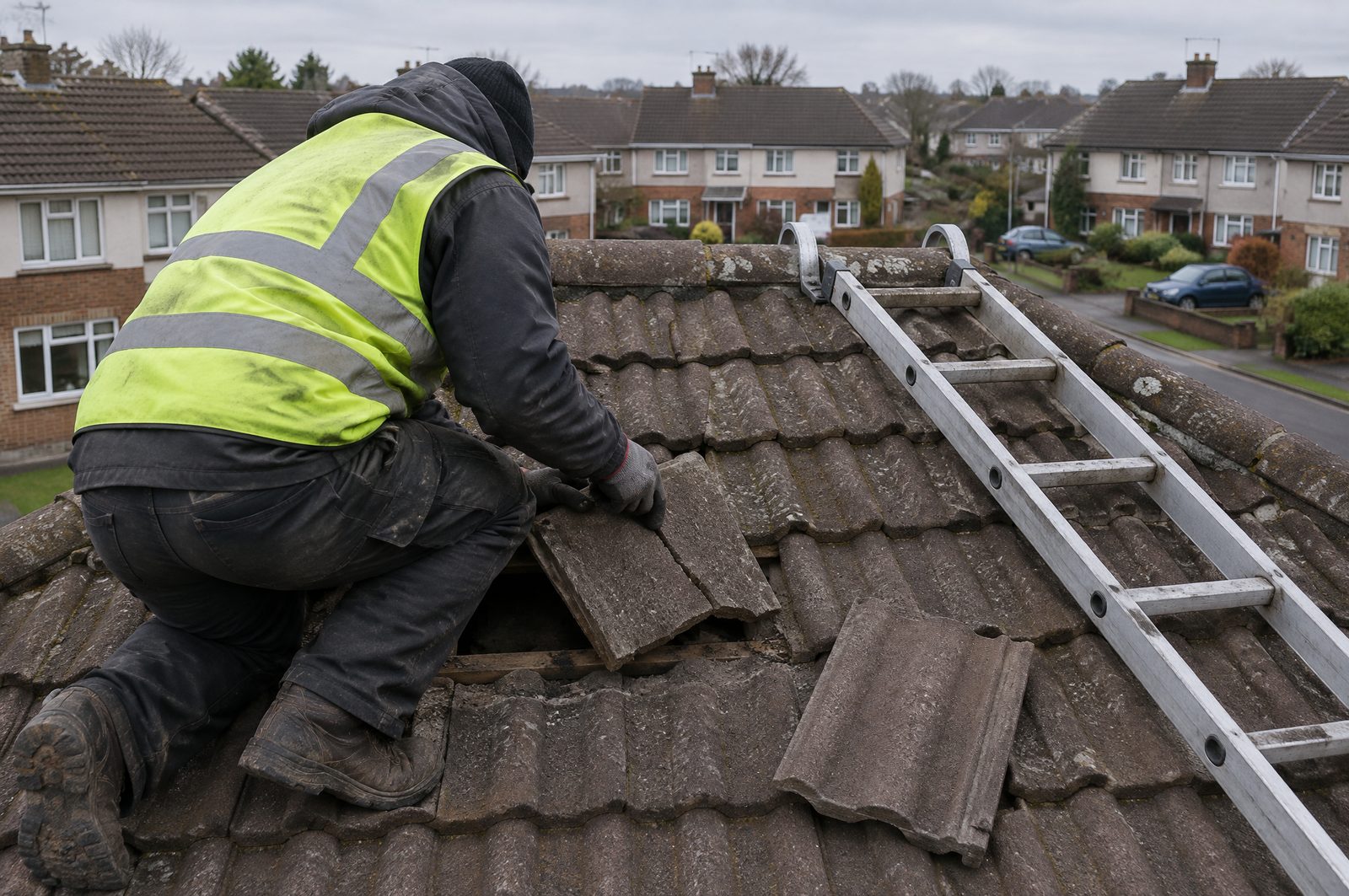
A lot of Dún Laoghaire was built in the nineteenth century, and its roofs are slate, hidden behind parapets, with valleys and gutters you cannot see from the street.
We repair them: slipped and broken slates, blocked and split valleys behind the parapet, lead at chimneys and party walls, chimney stacks, and the leaks those cause. Repairs only; we do not re-roof.
Ring or send a photo. We come out the same week on most repair calls with no call-out fee for the look, and a written quote follows within 48 hours.
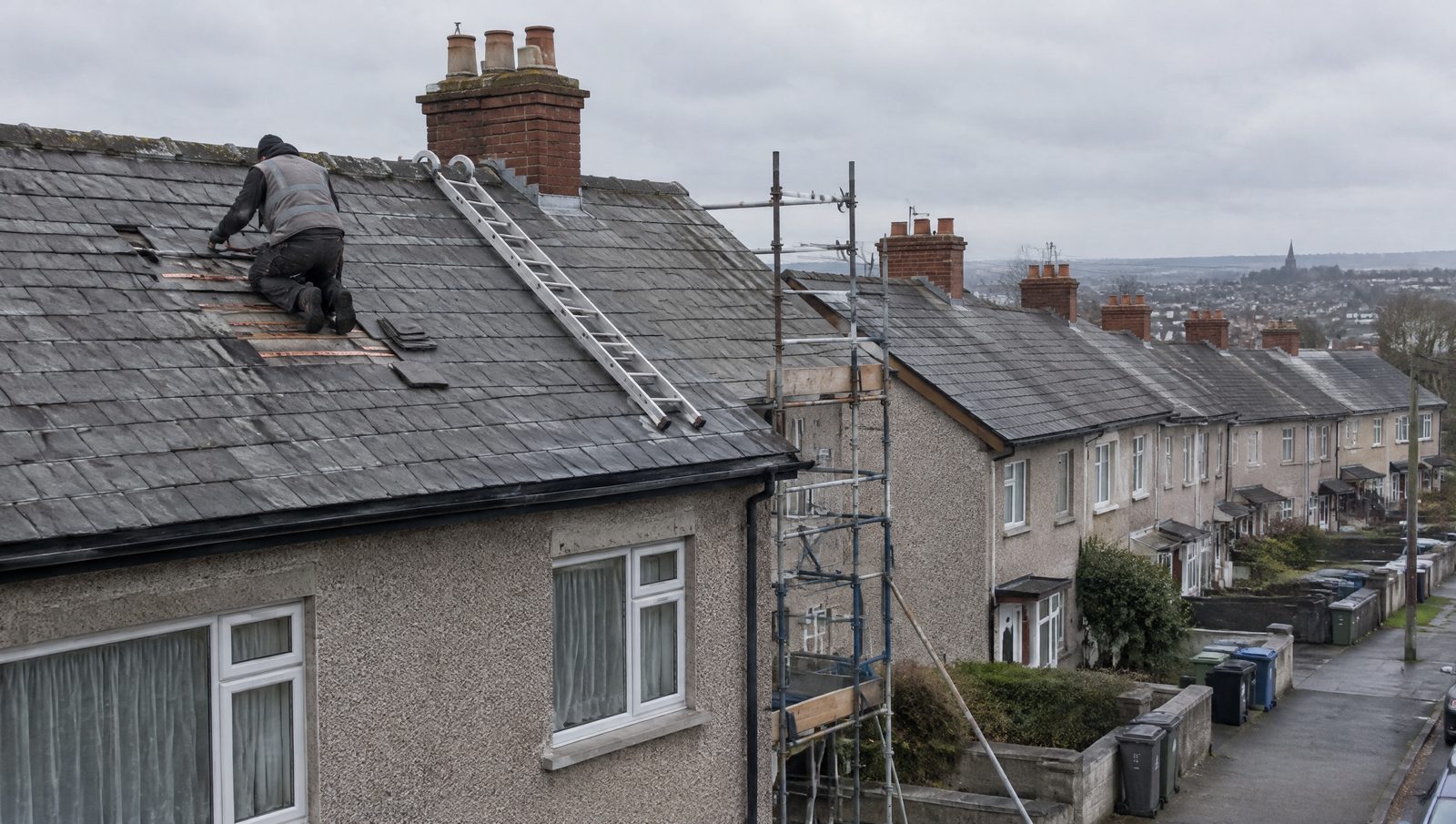
A Victorian town on the bay.
Dún Laoghaire grew fast once the harbour was under way in 1817 and the railway from Dublin opened in 1834. As Kingstown, it became a seaside town for people who worked in the city, and most of its streets were laid out in the middle decades of the 1800s. Terraces with stucco fronts were the style along the new railway line, and the council's conservation appraisals single out the town for that style of building.
Parts of the town are now Architectural Conservation Areas, including Haigh Terrace to Park Road, and De Vesci Terrace and Vesey Place on the Monkstown side. If your house is in one, or is a protected structure, repairs should match what is there, and we work that way regardless: natural slate is repaired in natural slate, and lead is replaced in lead.
How those roofs are built, and where they leak.
The council's appraisal of the town centre describes the roofs as natural Welsh slate or modern equivalents, set low and arranged around internal valleys so they cannot be seen from the street. On many terraces the front wall carries up into a parapet, and behind it the roof drops into a gutter that runs the width of the house before emptying into a hopper and a downpipe, often at the back.
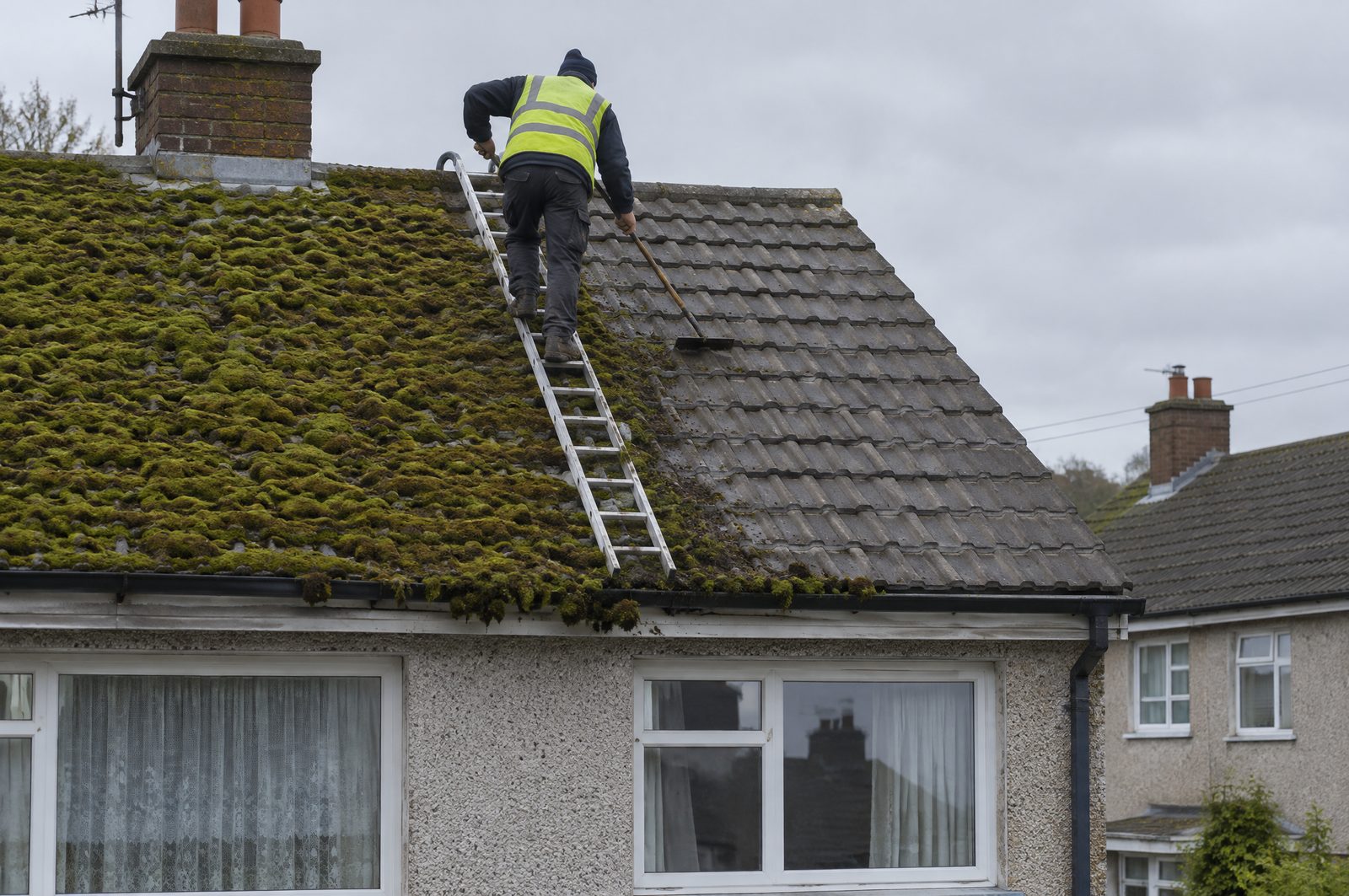
That design looks well from the footpath, and it is behind a lot of the leaks on these houses. Leaves, moss and slate grit gather in the parapet gutter and the central valley where nobody sees them. Water backs up, finds the top edge of the lead, and comes through a ceiling on the top floor, sometimes a long way from where it got in. The fix is to get up there, clear the gutter and valley, find the split or lifted lead, and renew that section.
Chimney stacks are part of the same picture. The appraisals point out how the stacks sit on the party walls with rows of clay pots along the top. Those stacks catch the weather from every side, the flaunching on top cracks, the pointing goes, and the lead where the stack meets the slates lifts. A damp chimney breast on the top floor is the usual sign.
Weather off the sea.
Dún Laoghaire faces straight onto Dublin Bay. An easterly blows in off open water, and the houses near the front and on the higher ground behind it get no shelter from it. Salt in the air is hard on old nails and on galvanised fixings, so slates on the seaward slope tend to slip earlier than the ones on the back of the same roof. Mortar on ridges and verges takes a beating too, and older lead that was dressed thin can lift at the corners.
Away from the period streets, Sallynoggin, Glenageary and the roads further back have plenty of twentieth-century houses under concrete tile, and those get the usual ridge, verge and flashing repairs.
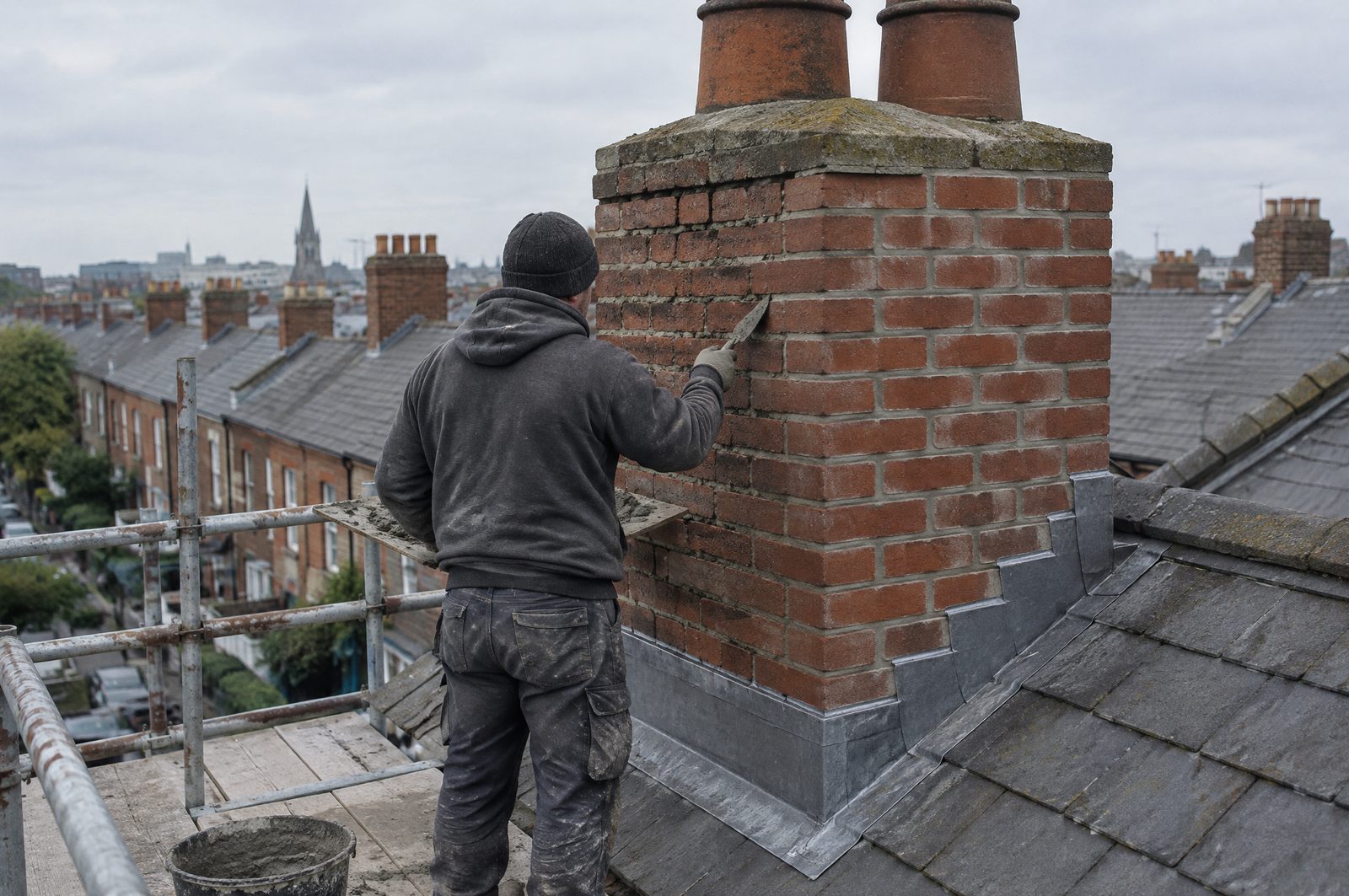
Repairs we take on in Dún Laoghaire.
Every quote is written from photos taken on the roof.
- 01Slipped and broken slates refixed on copper or lead tingles, or swapped for a reclaimed or matching natural slate on a natural slate roof
- 02Parapet gutters and hidden valleys cleared, patched or relined in lead
- 03Lead flashing renewed at chimneys, party walls, parapets and dormers in milled lead
- 04Chimney stacks repointed, flaunched and capped, and the lead around them renewed
- 05Hoppers and downpipes cleared and refixed, cast iron repaired where it can be
- 06Ridges and verges rebedded on later tiled houses
- 07Leaks traced from the top floor and the roof to the point of entry, and that point repaired
- 08Storm damage made watertight first, then finished in dry weather
Access on a terrace.
Many of these houses are three storeys over a basement, with a front garden and no side access. A ladder will not do for most of that work, so the quote includes a scaffold tower or a scaffold where one is needed, and how it will be set up. Old slates and lead come away with us.
From the call to the photos.
The same crew looks at the job, quotes it and does it. You get before and after photos when it is finished.
- First01.
Ring or send a photo.
Tell us the road and send what you can see: the ceiling stain, the chimney, the roof from the street or from an upstairs back window.
- Then02.
A look from the roof.
Same week on most repair calls and no call-out fee. On a parapet roof we get up to see the valley and the gutter behind it, and photograph what we find.
- Next03.
The written quote.
Within 48 hours, saying what is being repaired, with what material, and what access is needed to do it safely.
- Last04.
The repair and the photos.
Done as quoted, with before and after photos sent on completion so you can see the parts of the roof you cannot see from the street.
Repairs, not re-roofs.
We repair roofs in Dún Laoghaire; we do not re-roof. If the slates are failing across every slope, or the timbers under a valley have rotted along their length, a repair will not hold. We will tell you so with photos and send you to a re-roofing contractor, rather than patch a roof that needs replacing.
Roofing questions.
Anything else, ring 085 781 4603.
Water is coming through the top-floor ceiling but the roof looks fine from the street. What is it?
On a parapet house it is very often the hidden gutter behind the parapet or the central valley: blocked, or with lead that has split. You cannot see either from the footpath. We get up, clear it, find the fault and quote to repair it.
My house is in a conservation area. Can you repair the roof?
Yes. We repair like for like: natural slate with natural slate, lead with lead. If you are planning anything that changes the look of the roof, check with Dún Laoghaire-Rathdown County Council first. A straight repair to match the original is what we do.
Water is coming in now. How soon can you get there?
Tell us water is coming in when you ring and we come as early as we can. If it is near a light fitting, turn that circuit off and put a bucket under the drip until we get there.
Do you cover Monkstown, Sandycove and Glenageary?
Yes, along with Glasthule, Sallynoggin and the rest of south Dublin. We cover all of Dublin, Wicklow and Kildare.
More on roofing.
Or go back to the main roofing page.
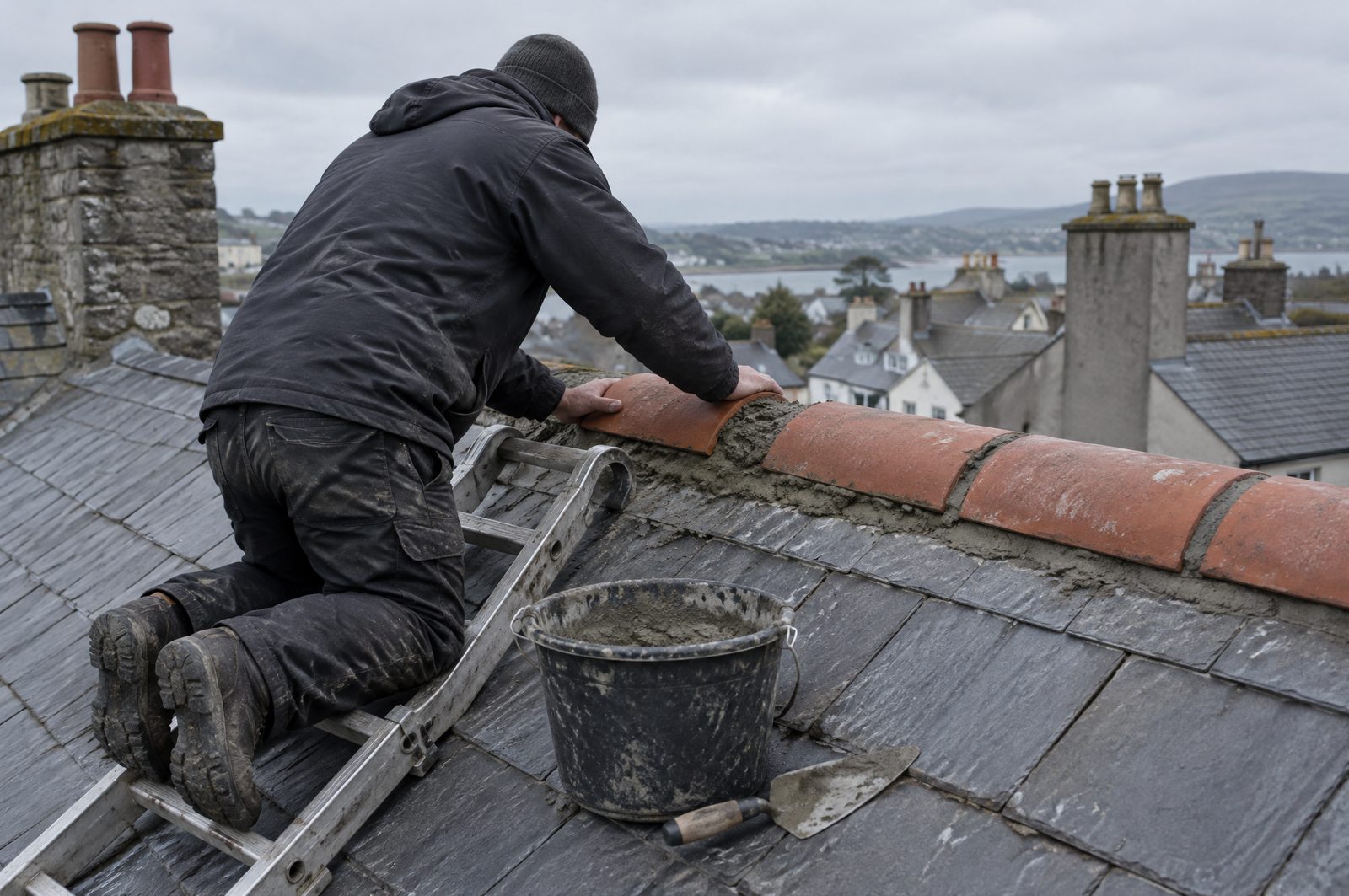
Get your job priced properly.
Send a photo from the ground if you can, or we come out and look from the ladder. One written price inside 48 hours, no call-out fee and no pressure to go ahead.