New roof cost in Ireland: what drives the price.
The cost of a new roof in Ireland comes down to the size and shape of the roof, the scaffold it needs, the covering you choose and how much of the timber underneath has to be replaced, so no honest roofer can give you a figure before seeing it. We do not re-roof; we repair. This guide explains what goes into a re-roofing price so you can compare quotes properly, and how to tell whether you need a new roof at all.
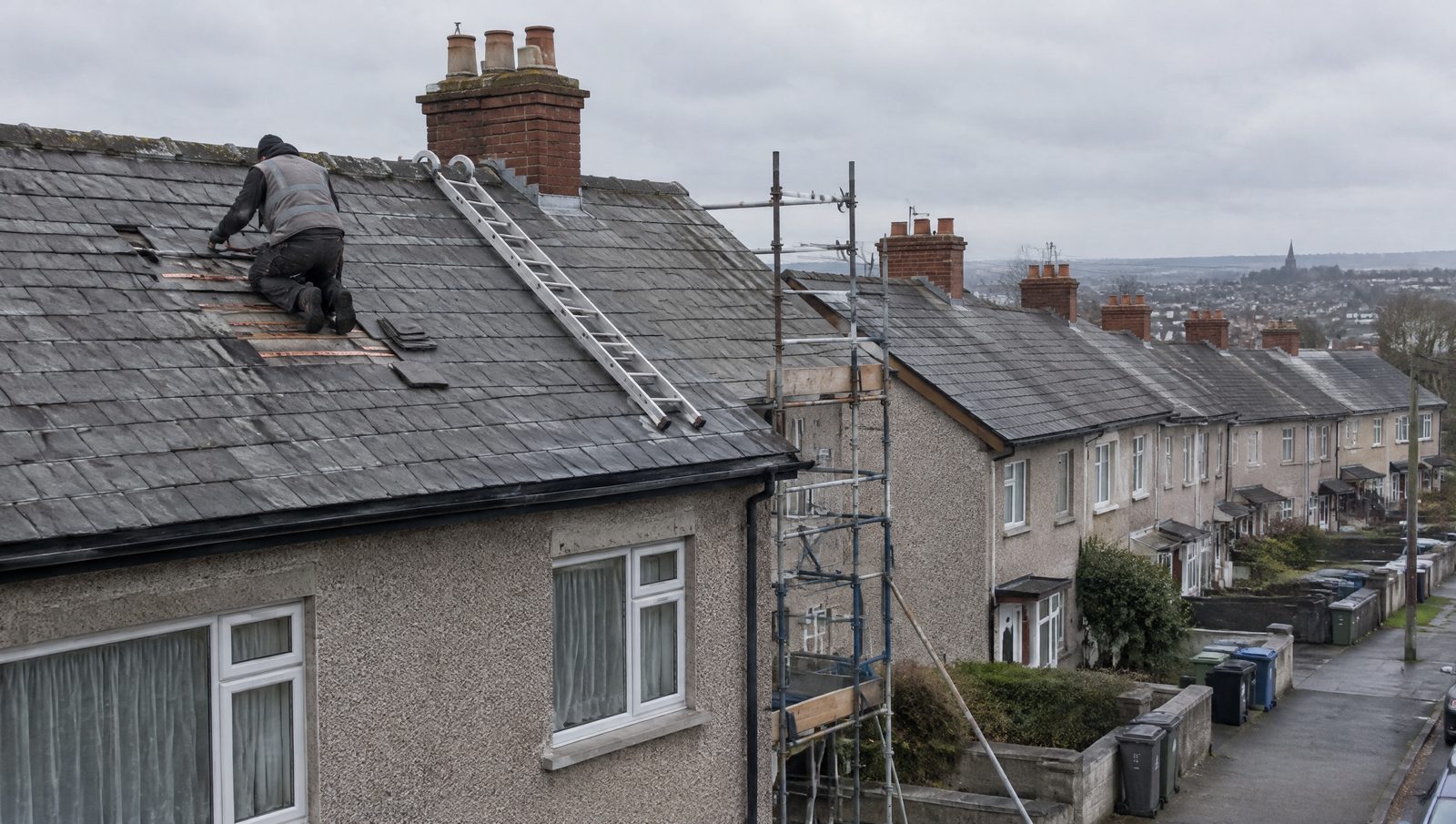
A re-roof is priced on area, pitch and complexity, the scaffold, the new covering, the felt and battens, the leadwork at every junction, and what is found when the old roof comes off.
Many roofs that people expect to replace need a repair: one failed valley, a chimney flashing, a run of slipped slates or a ridge that has lost its mortar.
Get the roof looked at before you get re-roofing prices. If it needs replacing, a re-roofing contractor will quote it; if it does not, the repair is ours and the written quote is free.
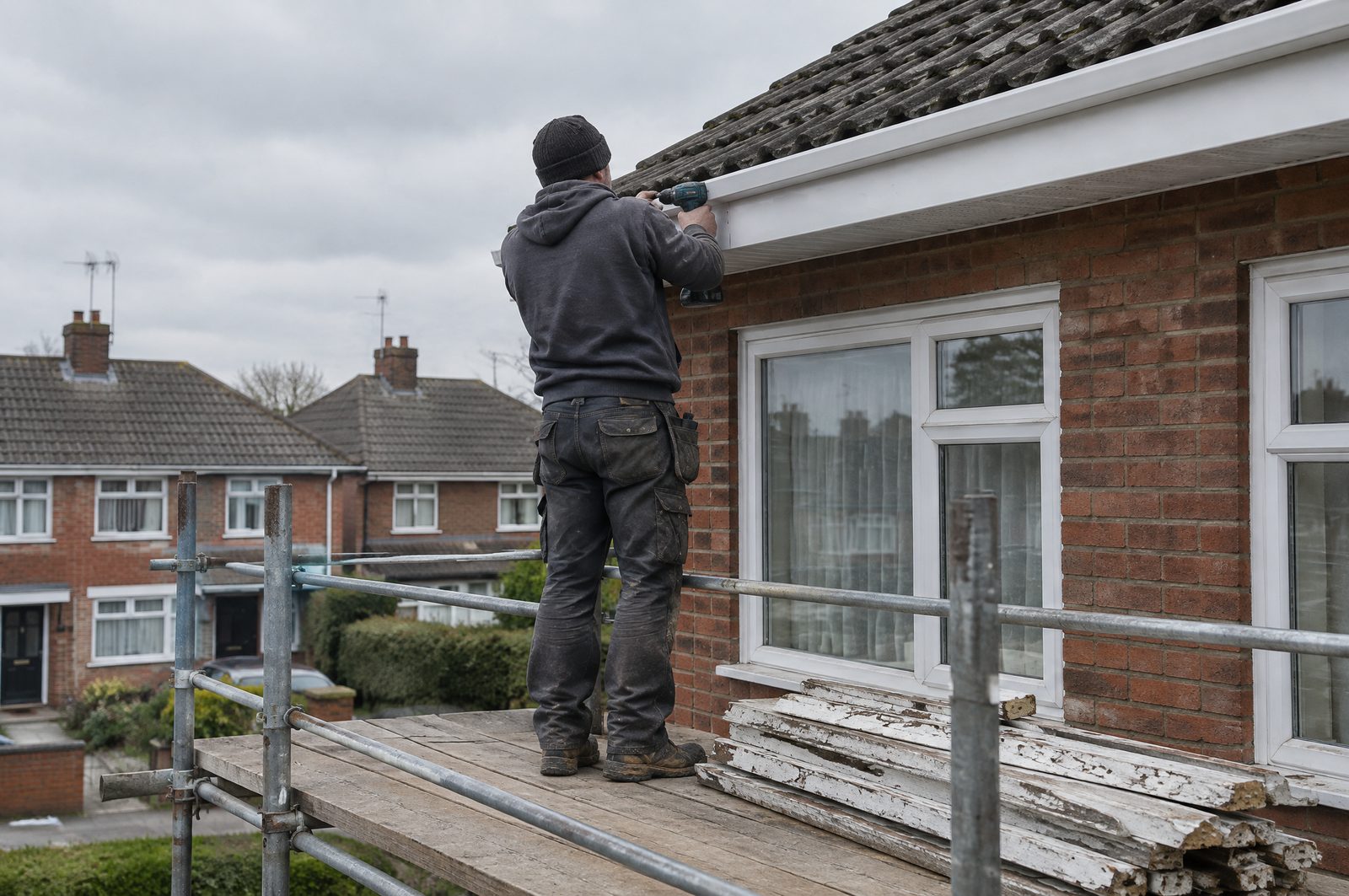
Why there is no fair figure on a page.
Prices you see online for a new roof lump together very different jobs: a small bungalow, a two-storey semi with a chimney and a hip, a terrace whose scaffold has to go over the footpath. That tells you little about your own house. A quote is only worth something once someone has been up a ladder, measured the roof and looked into the loft.
What you can do before any quote arrives is understand the parts that make up the price. That way, when two quotes come in a long way apart, you can see which one has left something out.
What goes into a re-roofing price.
Every one of these moves the final number, and a proper written quote should mention each of them.
- 01Roof area and shape: a plain gable roof is quicker to strip and cover than one with hips, valleys, dormers and a chimney, because every junction is cut and flashed by hand
- 02Pitch and height: a steep roof or a three-storey house needs more scaffold and more time, and work is slower where nobody can stand on the slope
- 03Scaffold: usually a full scaffold around the working faces, sometimes with a licence or permit where it stands on a public footpath, plus the weeks it stays up
- 04Stripping and disposal: the old slates or tiles, felt and battens come off and go to a skip or a licensed facility
- 05The new covering: natural slate, fibre-cement slate, concrete tile and clay tile all differ in material cost and in how long they take to fix
- 06Underlay and battens: a new breathable membrane and treated battens go on under the new covering
- 07Timber repairs: rafters, wall plates or fascia found rotten once the roof is open, which nobody can price for certain until they see them
- 08Leadwork: new flashings at the chimney and any abutment walls, and new valley linings, all in milled lead or an approved dry system
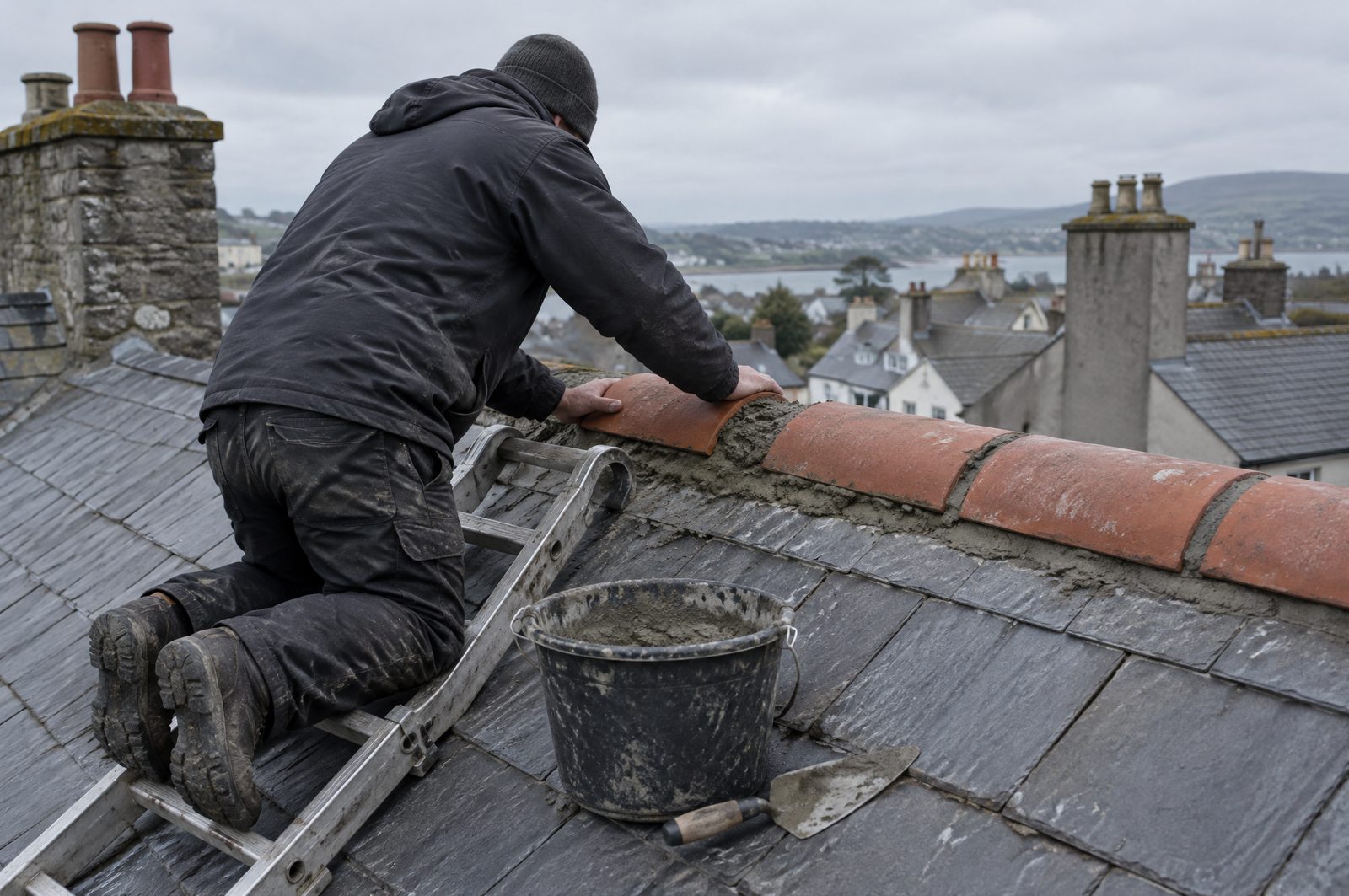
- 09Ridges, hips and verges: bedded in mortar or fixed on a dry system
- 10Gutters, fascia and soffit: replaced as part of the job or left as they are
The roof type matters more than people expect.
On a natural slate roof, the slate itself often outlives the nails holding it. A roof that is slipping slates every winter is usually nail-sick: the fixings have rusted through across the whole roof. Some re-roofing contractors strip the roof, set the sound slates aside and refix them on new battens and membrane, topping up with matching reclaimed slate. Others quote for all new slate. Both are legitimate, and the price is very different, so ask which one you are being quoted for.
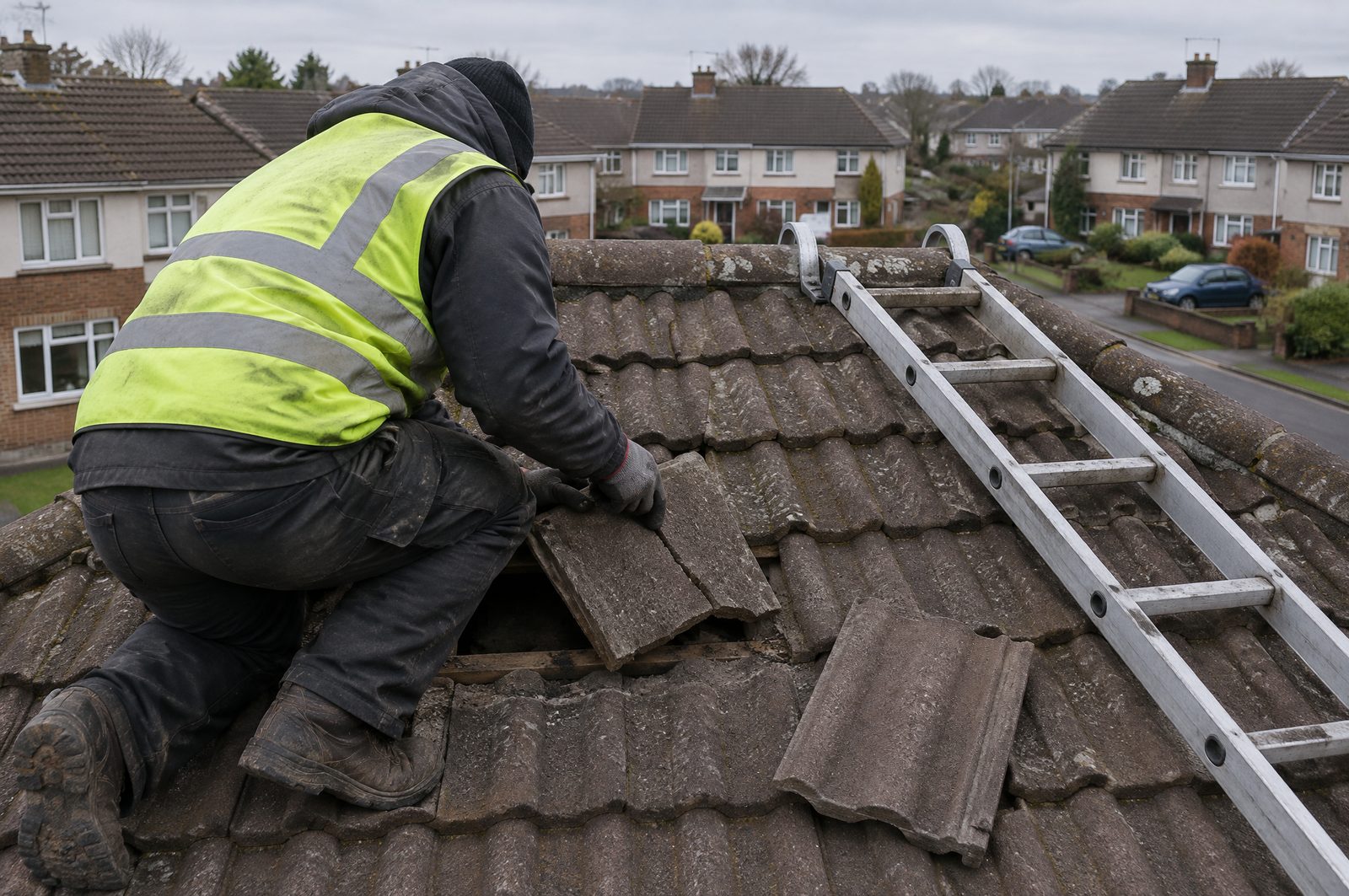
Concrete tile roofs on the estates built from the sixties on fail differently. The tiles tend to last; what goes is the felt underneath, which on older houses was a bitumen sheet that turns brittle and tears, and the mortar on the ridges and verges. A roof with sound tiles and failed felt is still a re-roof if the felt has gone everywhere, because the tiles have to come off to replace it.
If your house is a protected structure, or you want to change from one covering to another, check with the local council before you sign anything. Under the Planning and Development Act, works that materially affect the character of a protected structure are not exempt, and the council can issue a Section 57 declaration on what is allowed.
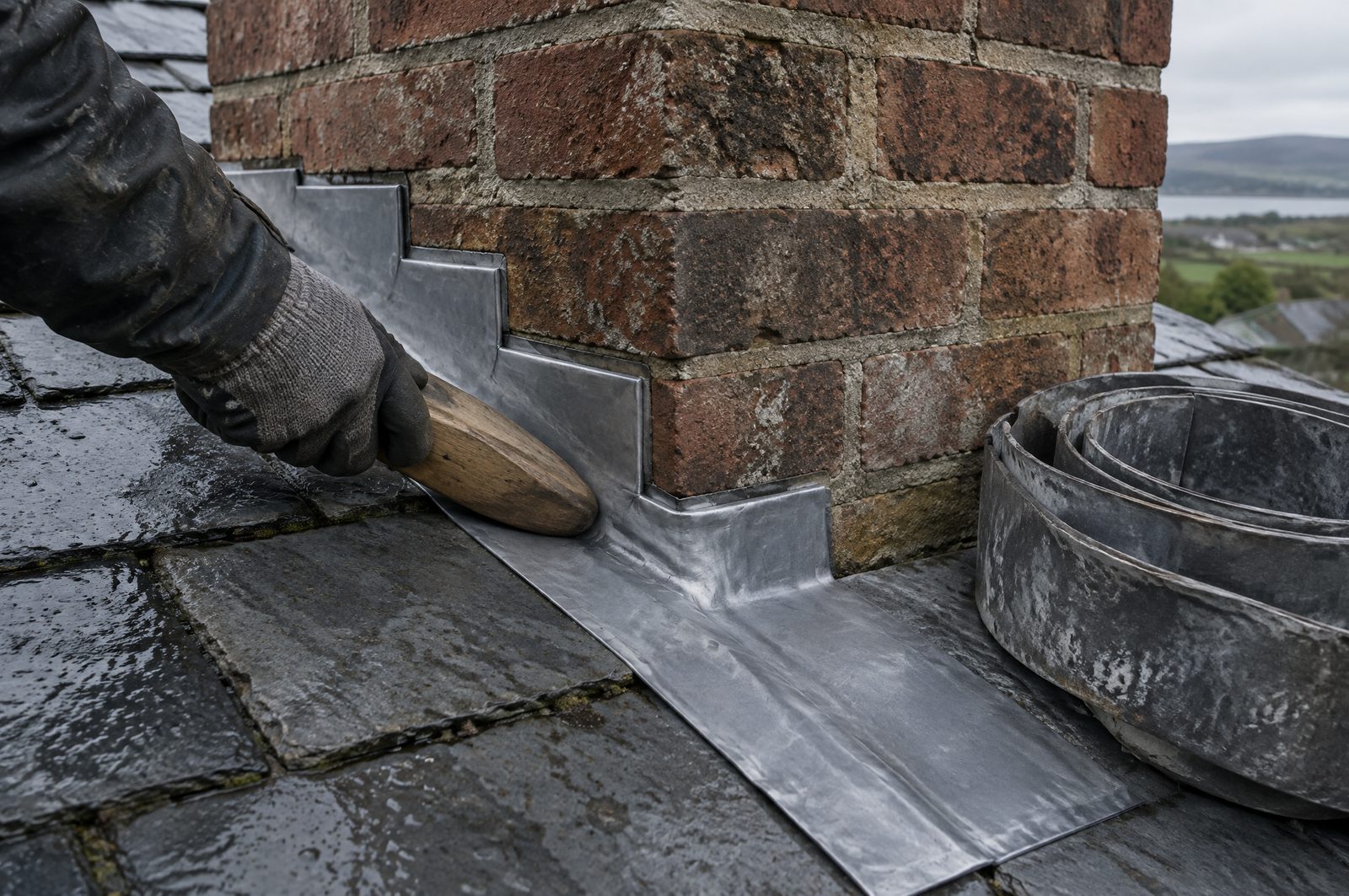
When a repair is enough.
Many calls from people who think they need a new roof turn out to be one fault. The signs that point to a repair rather than a replacement are fairly clear.
- 01The leak is in one place, and it sits below a chimney, a valley, a wall or the ridge
- 02A few slates or tiles have slipped or cracked, on a roof where the rest are tight
- 03The ridge or verge mortar has fallen out but the tiles under it are sound
- 04From the loft, the felt is intact apart from one area, and the battens are firm
- 05The trouble started after a storm rather than building up over several winters
When it really is a new roof.
The honest signs of a roof at the end of its life are spread across the whole roof, not in one spot. Slates delaminating, flaking or going soft on every slope. Slates slipping all over the roof every winter because the nails have gone. Felt that tears when you touch it across the loft, with daylight in several places. Battens that are soft or sagging. A roof that has been patched so many times that each repair now disturbs the one beside it.
If we see that from the ladder, we say so, send you the photos and point you to a re-roofing contractor. We would rather lose the job than sell you a repair that buys one winter.
Comparing re-roofing quotes.
Put the quotes side by side and check each one covers the same things: scaffold and how long it is included for, stripping and disposal, the exact covering by name, the membrane, battens, leadwork, ridges, any timber allowance and how extra timber is charged, and whether gutters and fascia are in or out. A quote that is much lower than the others has usually left one of those out, and it will come back as an extra once the roof is open.
From the call to the photos.
The same crew looks at the job, quotes it and does it. You get before and after photos when it is finished.
- First01.
Send a photo or ring.
A photo of the roof from the road and one of any stain inside. Tell us when it leaks and for how long it has been going on.
- Then02.
We look from the ladder and the loft.
A same-week look on most repair calls, with no call-out fee. We photograph the covering, the junctions and the felt.
- Next03.
An honest answer in writing.
A free written quote within 48 hours if it is a repair. If the photos show the roof is finished, we say so and refer you to a re-roofing contractor.
- Last04.
Repair and photos.
Where it is a repair, we carry it out and send before and after photos on completion.
Repairs, not re-roofs.
All Trades does not re-roof. We repair slate and tile roofs across Dublin, Wicklow and Kildare: slates, tiles, ridges, valleys, flashings, chimneys and gutters. This guide is here because many people searching for a new roof need one of those repairs instead. If yours needs replacing, we will tell you that plainly and refer you on.
Questions people ask.
Anything else, ring 085 781 4603.
Can you give me a rough price for a new roof?
No. We do not re-roof, and a figure from someone who has not seen the roof is not worth much. What we can do is look at it and tell you whether it needs replacing or repairing, with photos. If it is a repair, the written quote is free and comes within 48 hours.
How do I know if my roof is beyond repair?
Look for problems spread across the whole roof rather than in one place: slates flaking or slipping on every slope, felt torn throughout the loft, soft battens. One leak, one valley or a few slipped slates on an otherwise sound roof is a repair.
Can old slates be reused on a new roof?
Often, yes. Natural slate frequently outlasts its nails. A re-roofing contractor can strip the roof, keep the sound slates and refix them on new battens and membrane, topping up with matching reclaimed slate. Ask whether your quote is for reused or new slate.
More on roofing.
Or go back to the main roofing page.
Want us to take a look?
Send a photo from the ground if you can, or we come out and look from the ladder. One written price inside 48 hours, no call-out fee and no pressure to go ahead.