Guide · Moss
Moss on the roof: does it matter?
Nearly every house in Ireland has some moss on the roof. A little on a north slope is normal and harmless. A thick green blanket is not, and it is doing damage you cannot see from the ground. Here is how to tell the difference and what to do about it.
The short answer
Moss matters when it is holding water. Wet moss against a tile in a frost cracks the tile; wet moss in a valley backs water up under the slates; moss that dries and rolls off blocks the gutters.
It is removed by hand from the roof, scraping and brushing, then the gutters are cleared and a treatment is applied. It is not removed with a pressure washer, whatever the flyer through the door says.
If the moss is thin and patchy, leave it and clean the gutters. If it is thick, in the valleys, or the gutters are filling with it, have it taken off.
Why moss grows on roofs
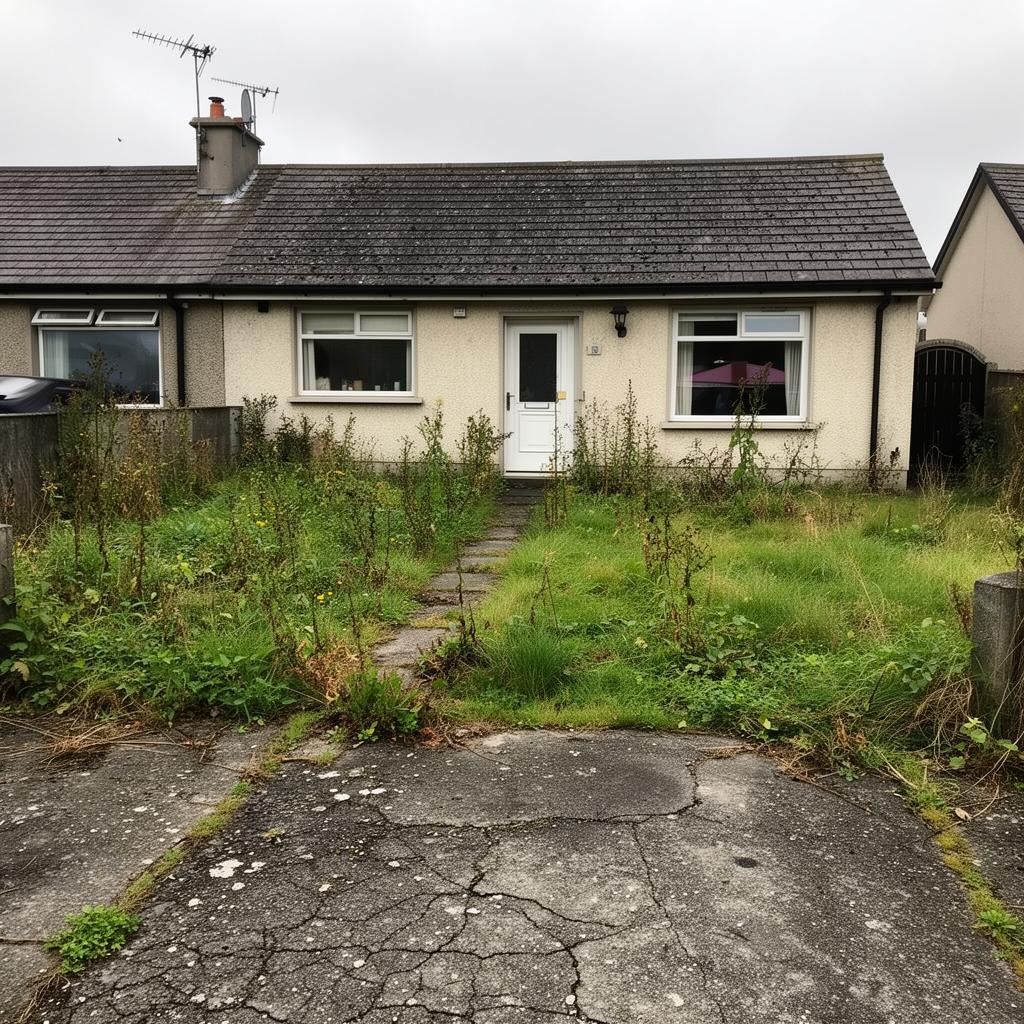
Moss wants damp, shade and something to hold on to. An Irish roof gives it all three. The north-facing slope of a house stays damp because it rarely sees the sun; a slope under a tree stays damp because the tree drips on it and shades it; and the surface of a concrete tile is rough enough for spores to catch, which is why the estates of concrete-tiled houses built from the sixties on go green faster than a smooth slate roof does. Slate gets it too, along the bottom edge of each course where water sits longest.
It spreads slowly and then all at once. A few tufts on the shaded slope become a strip along every course, and once the roof holds water for longer because of the moss, more moss grows. A roof can look fine for years and then, over a couple of wet winters, turn.
What moss actually does
Three things, none of them good. It holds water: a clump of moss soaks up rain like a sponge and keeps the tile under it wet for days. In a frost that water freezes and expands, and over enough winters it cracks the tile or pushes it up off the one beside it. Concrete tiles that have lost their surface are worst for this because they are porous underneath.
It blocks things. Moss dries out in summer, shrinks, breaks off and rolls down the roof into the gutter. A gutter full of moss overflows at the back edge onto the fascia and the wall. Moss in a valley is worse again: it dams the valley, water backs up sideways under the slates, and you have a leak that appears in the wettest weather and is a misery to trace.
And it lifts. On a slate roof, moss wedged into the gap between slates slowly levers them apart. Wind-driven rain gets under the lifted edge, and the slate is easier for the wind to take.
Why pressure washing is the wrong answer
A pressure washer strips moss in an hour, and it strips the roof with it. Concrete tiles have a thin coloured face over porous concrete; the jet takes that face off, the tile soaks up water, goes dark and grows moss faster than before. On slate the jet drives water up under the courses and into the loft. On any roof it washes the moss, the grit and the surface into the gutters and down the drains, and it is done from a ladder or the ground by someone who never sees whether the tiles are cracked.
The coatings sold afterwards to seal the stripped tile are a second mistake on top of the first. They trap moisture in the tile and peel within a few winters.
How moss is removed properly
From the roof, by hand, course by course. It is slower and it is the only way that does no harm.
- The roof is scraped from the ridge down with a tile scraper, so the moss comes off without the surface
- The roof is brushed to take off the loose growth and grit
- Valleys, ridges and hips are cleared and checked at the same time
- The gutters and downpipes are cleared of everything that came down and flushed
- A biocide treatment is sprayed over the clean roof to kill what is left in the joints and slow regrowth; it keeps working for weeks after
- Any cracked, slipped or lifted slates and tiles found under the moss are photographed and priced separately
- The ground and beds are cleared and the moss is taken away
Keeping it off
Nothing stops moss for good on a shaded Irish roof, but a few things slow it. Keep the gutters clear so the eaves dry out. Cut back any tree that overhangs the roof. Where one slope grows moss every year, copper or zinc strips fixed along the ridge help: rain picks up a trace of the metal on the way down and moss does not like it. And a treated roof stays clean far longer than an untreated one, so have the biocide applied after any clean.
How often a roof needs cleaning depends entirely on the roof. A south-facing slate roof with no trees might never need it. A north-facing concrete tile roof under a sycamore will need looking at again in a few years. Someone who has been on your roof can tell you which yours is.
How it goes
- Send a photo from the road. One photo of each slope shows how heavy the growth is and what the roof is made of. That is usually enough for a price.
- A written price within 48 hours. One price covering the clean, the gutter clear, the treatment and any access equipment.
- The clean, by hand, from the roof. A morning for a bungalow, a day for most two-storey houses. Anything found under the moss is photographed and priced separately.
- Treatment and photos. Biocide applied, before and after photos sent the same day, and a note on how long we would expect it to stay clear.
What we do not do
This guide is about pitched slate and tile roofs on houses, which is what we clean and repair across Dublin, Wicklow and Kildare. We do not pressure wash, coat or paint roofs, and we do not clean flat roofs or asbestos-cement sheeting. If the moss turns out to be hiding a roof that is at the end of its life, we will show you the photos and say so.
Common questions
Is a bit of moss on the roof harmful?
A thin scatter on a shaded slope is normal and does no harm. It becomes a problem when it is thick enough to hold water, when it fills the valleys, or when the gutters are blocking with it every year. Then it is cracking tiles and causing leaks and it should come off.
Can I remove roof moss myself?
You can, but it is a job done from the roof on a proper roof ladder, in dry weather, working from the ridge down and staying off the gutters. The moss is not the dangerous part; the roof is. If you are not used to being up there, ring a roofer.
Do moss killer sprays from the ground work?
They kill the moss where they land, but the dead moss stays on the roof until it weathers off, which takes a long time, and it still ends up in the gutters. They are useful after a proper clean to slow regrowth, not instead of one.
Will removing the moss reveal damage?
Sometimes. Moss hides cracked tiles, slipped slates and failed ridge mortar. That is a reason to have it done by someone who can see and photograph the roof as they go, and price any repair separately rather than leave it.
Get a free quote
Call 085 781 4603 or request a quote. Free site visit, written quote within 48 hours.