Gutter replacement cost in Dublin: what sets the price.
The cost of replacing gutters on a Dublin house depends on how many metres of gutter there are, how many downpipes, how high the eaves are, what the new gutter is made of and whether the fascia behind it is sound. Those five things are what a written quote is built on, and this guide goes through each one so you know what you are paying for, and when a repair would do the job instead.
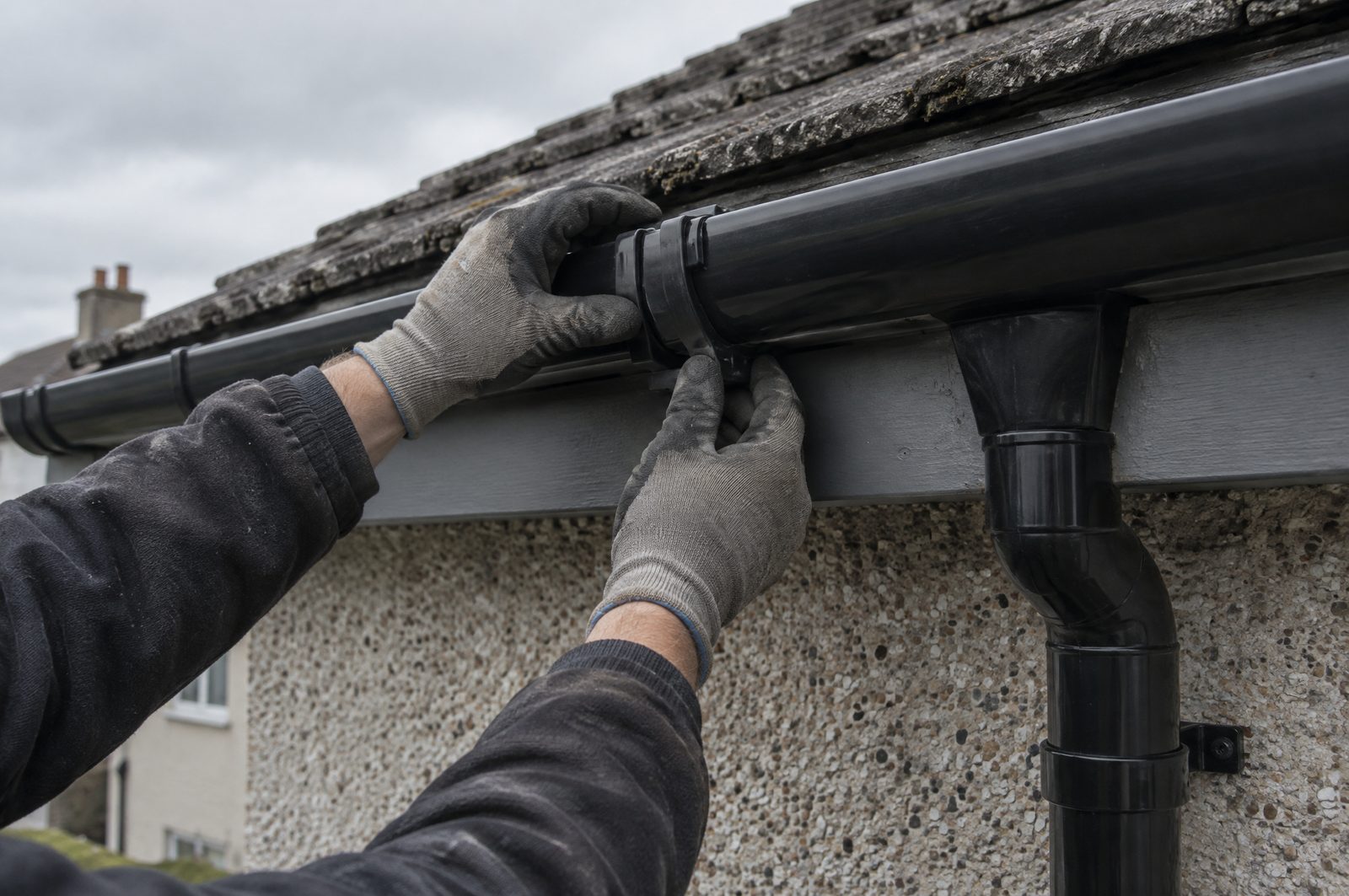
Gutter replacement is priced on the length of the runs, the number of downpipes and outlets, the access, the material and profile, and the condition of the fascia the brackets screw into.
A gutter that leaks at one joint or sags in one spot is usually a repair; a run that drips at several joints, has been resealed before and is brittle is usually a replacement.
Send a photo of the front and back of the house and we will tell you which it is, with a free written quote within 48 hours.
What goes into the price.
A gutter quote is mostly labour and access, with the material second. These are the parts that move it.
- 01Length of gutter: measured along every eave, front, back, any extension and any porch or bay
- 02Number of downpipes: each one has an outlet, offsets or a swan neck at the top, clips down the wall and a shoe or connector at the bottom
- 03Corners and stop ends: every internal or external angle is a fitting and a joint
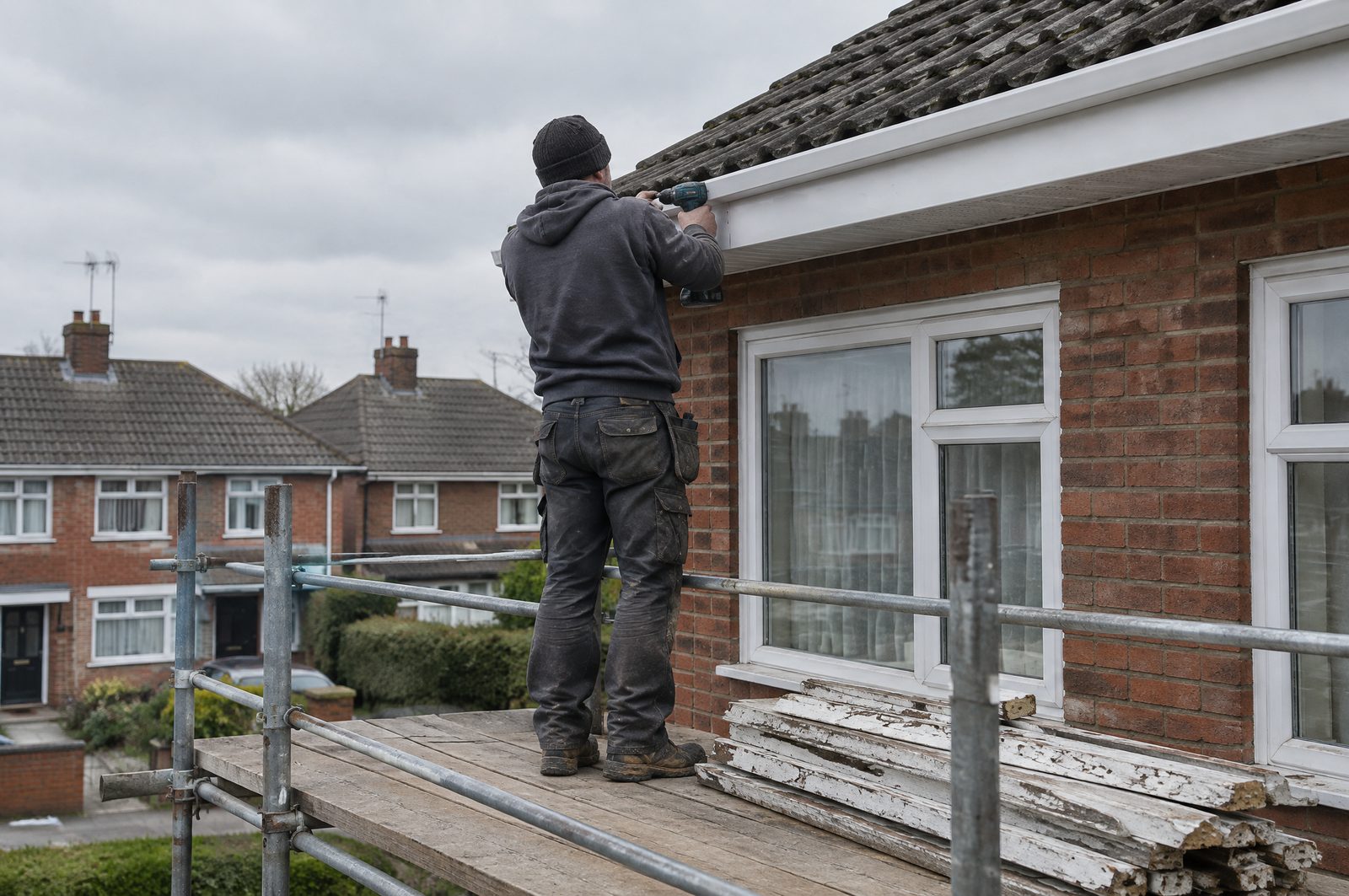
- 04Height: a bungalow is ladder work; a two-storey or three-storey house, or a gable over a conservatory, may need a tower or scaffold
- 05Access: terraces with no side passage mean everything comes through the front, and a downpipe behind a glass roof is slower to reach
- 06Material and profile: uPVC, cast iron, cast aluminium or seamless aluminium, in half-round, square, ogee or deep-flow
- 07Fascia condition: new brackets need sound timber or uPVC to screw into, and a rotten fascia has to be dealt with first
- 08Old gutter removal: taking down and disposing of the old run, which is heavier work with cast iron
Gutter materials on Dublin houses.
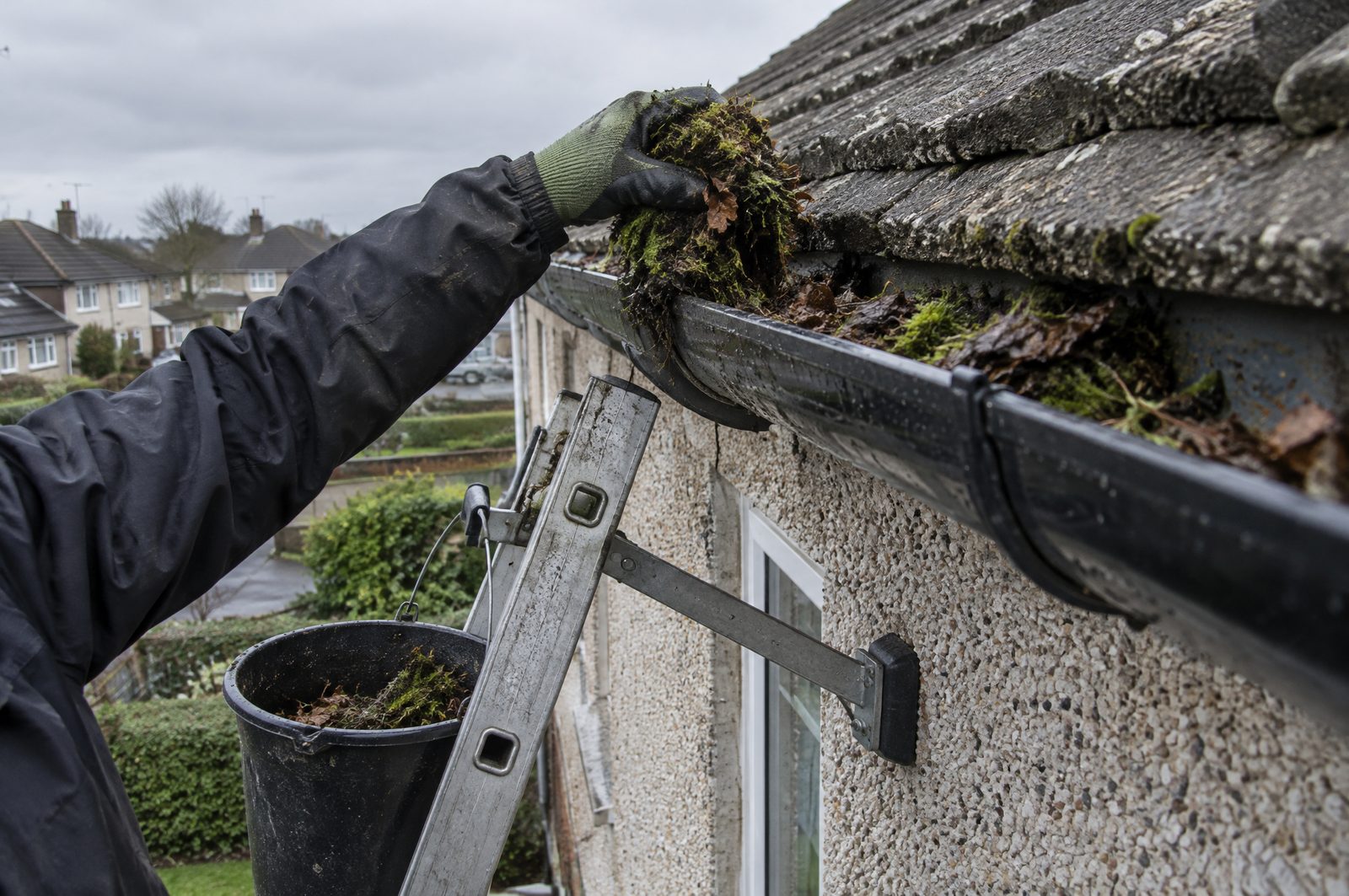
uPVC is on a great many Dublin houses built or re-guttered in recent decades. It is light, does not rust, and comes in several profiles and colours. It joins with clip-in unions that carry a rubber seal, and those seals are what eventually fail. The gutter itself goes brittle and chalky after long exposure to sun, and that is often the point where replacing makes more sense than resealing.
Cast iron is still on many Victorian and Edwardian houses in the older suburbs. It is heavy, it looks right on a period house, and it lasts a long time if it is painted. When it is left unpainted it rusts at the joints and along the back where it sits against the wall. Replacing cast iron with new cast iron costs more than uPVC, partly the material and partly the weight of handling it. Cast aluminium in a matching profile looks very close from the ground and is lighter to fit.
Seamless aluminium is rolled to length on site from a coil, so a run has no joints along it apart from corners and outlets. Fewer joints means fewer places to leak. It needs a specialist with the machine, and it is a different quote from sectional gutter.
If the house is a protected structure, check with the council before swapping cast iron for anything else. Rainwater goods are part of the character of a protected building.
Profile and size.
Half-round is the traditional shape and the one you see on most houses. Square and ogee profiles are mostly about the look of the house. Deep-flow gutters hold more water, which matters on a large roof slope draining to a single outlet, or where a valley empties into one point of the gutter. A new gutter that is too small for the roof above it overflows in heavy rain however well it is fitted, so the size should match the roof area and the number of downpipes, not only what was there before.
When a repair is enough.
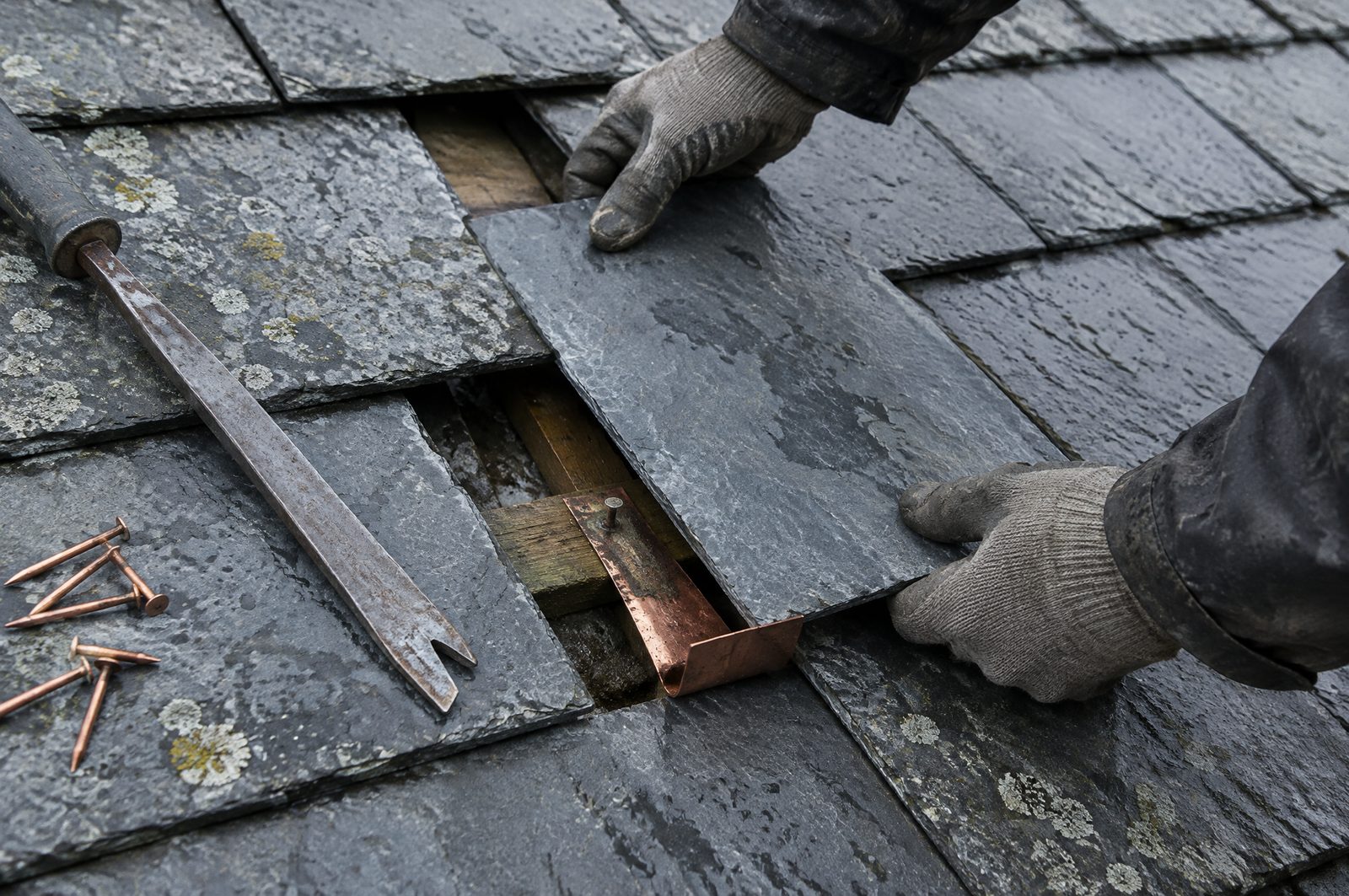
Plenty of gutters do not need replacing. If the run is sound and one joint drips, the union or seal is replaced. If it sags between two brackets, the brackets are refixed into sound timber and the fall reset. If a downpipe is split, that length is replaced. Any of those is a small job compared with a new run.
Replacement starts to make sense when the faults are spread out: several joints dripping at once, joints that have been resealed before, gutter that cracks when you press it, or a run that has been patched in two different profiles. At that point you are paying for repairs that will be followed by more repairs.
Where it is borderline, we quote both ways so you can choose.
What a proper replacement includes.
New brackets at the maker's recommended spacing, set to a string line so the gutter falls towards each outlet. Outlets positioned over the existing downpipes or the drain below. Downpipes clipped to the wall so they do not rattle or pull away. Old gutter and brackets taken away. Then a water test, running water through each run to check it reaches the outlet and the downpipe takes it away.
Ask for that list on any gutter quote. A quote that says "replace gutters" and nothing else leaves too much open.
From the call to the photos.
The same crew looks at the job, quotes it and does it. You get before and after photos when it is finished.
- First01.
Send photos of each side.
The front, the back and any extension, plus a close-up of a leak or sag if you can get one. Note the house type: bungalow, semi, terrace or detached.
- Then02.
A look, if needed.
A same-week look on most repair calls, with no call-out fee. We check the joints, brackets, downpipes and the fascia behind.
- Next03.
Written quote within 48 hours.
Free, with the length, the number of downpipes, the material and the access written down. A repair price as well where one would do.
- Last04.
Fit, test and photos.
The gutters go up, water is run through to check the fall, and you get before and after photos on completion.
Repairs, not re-roofs.
We repair and replace gutters and downpipes on houses, extensions and garages across Dublin, Wicklow and Kildare. Blocked drains below ground are a drain contractor's job. We do not re-roof, so if the gutter problem turns out to be the eaves of a roof that has failed throughout, we will tell you and refer you on.
Questions people ask.
Anything else, ring 085 781 4603.
How much does it cost to replace gutters in Dublin?
It depends on the length of the runs, the number of downpipes, the height of the house, the material you choose and the state of the fascia. We do not put figures on a page because two houses on the same road can be very different jobs. Send photos and we will send a free written quote within 48 hours.
Is it worth replacing the fascia at the same time?
If the fascia is rotten, yes, because new brackets need something solid to hold. If it is sound, there is no need. We check it before quoting and tell you which, with photos.
Should I replace cast iron gutters with uPVC?
That is your choice and it depends on the house. uPVC costs less and needs no painting. Cast iron or cast aluminium suits a period house better. On a protected structure, ask the council first.
Can you replace one side of the house only?
Yes. If the back gutter is fine and the front is failing, we replace the front and match the profile and colour where it meets the neighbour or the side.
More on roofing.
Or go back to the main roofing page.
Want us to take a look?
Send a photo from the ground if you can, or we come out and look from the ladder. One written price inside 48 hours, no call-out fee and no pressure to go ahead.